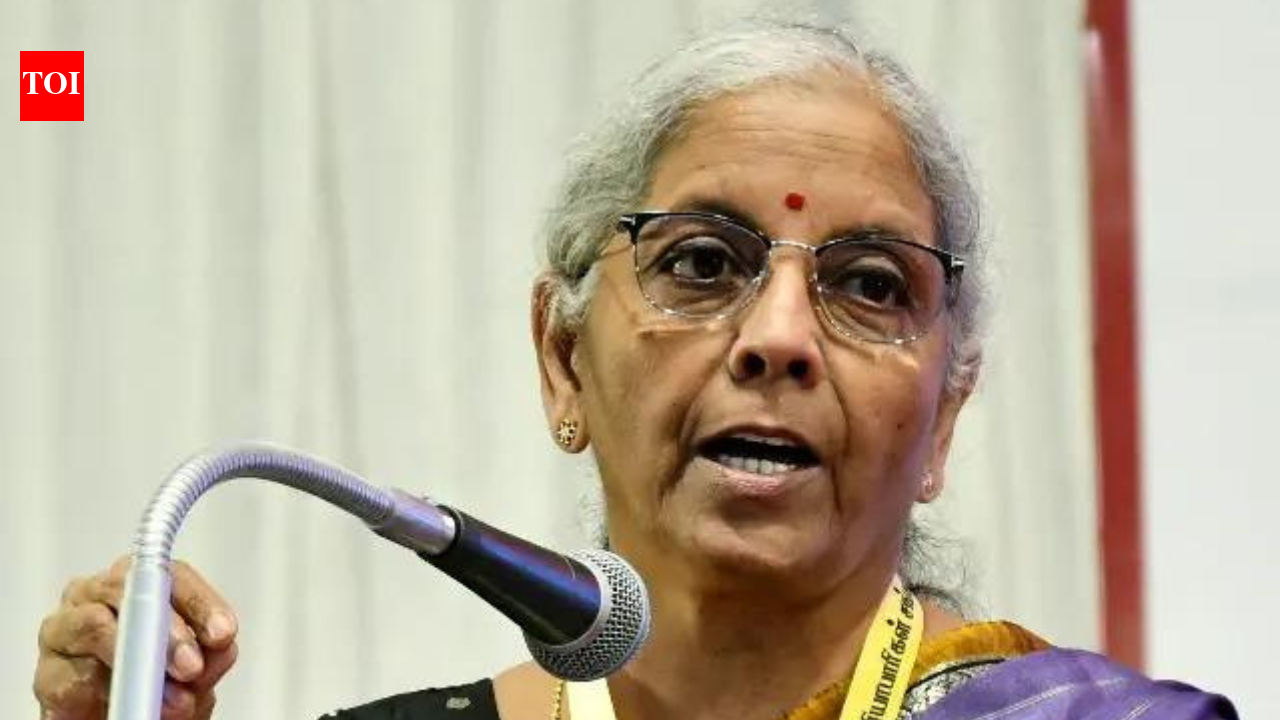
Finance Minister Nirmala Sitharaman on Friday described the Indian middle class as the country's growth engine and revealed that nearly 500 cities are poised to emerge as the next centres of economic activity, according to her remarks at the Rencontres Economiques d'Aix-en-Provence, a major economic forum in France.
Middle-Class Demographics and Spending Power
Sitharaman stated that 31% of India's population currently belongs to the middle class. Since the country opened its economy, the middle class has been growing at an annual rate of 6.3%, she noted. This demographic shift has profound implications for consumer markets and investment strategies.
"We think 93% of all spending in India will be because of the middle class or the slightly affluent consumers," Sitharaman said, adding that this class is not confined to metropolitan cities but is increasingly present in tier-two and tier-three cities.
The finance minister cited an OECD study projecting that India will surpass China in absolute terms in its middle-class population size between 2030 and 2035, driven by government measures.
| Metric | Value |
|---|---|
| Middle class share of population | 31% |
| Annual growth rate of middle class (since liberalization) | 6.3% |
| Middle-class share of total spending | 93% |
| Projected overtake of China's middle-class size | 2030–2035 (OECD) |
Emergence of 500 New Economic Hubs
Sitharaman emphasized that India remains the fastest-growing large economy after Covid-19, primarily because of consumption driven by the middle class. She declared, "Nearly 500 cities are poised to emerge as the new centres of economic activity." This development signals a shift away from concentration in major metros, opening up opportunities for infrastructure investment, real estate, retail, and services across a broader geographic base.
AI and Skilling Initiatives
Addressing concerns about technology's impact on employment, Sitharaman noted that people are continuously upgrading their technical skills. For those who fear that AI may displace jobs, the government provides extensive support through AI-focused skilling programmes, she said. This positions India to harness technological shifts while mitigating disruption.
Implications for Business and Investment
For C-suite executives and investors, the finance minister's remarks underscore a decentralized growth model where consumption and economic activity are spreading to hundreds of smaller cities. Companies targeting the Indian market should consider tier-two and tier-three city strategies for retail, logistics, and digital services. The sustained expansion of the middle class — growing at over 6% annually and projected to become the world's largest by 2035 — presents a multi-decade opportunity in consumer sectors. However, the pace of urbanization and infrastructure development in these 500 cities will be critical to realizing this potential. Investors should monitor policy support for urban infrastructure and skilling programmes as key enablers.
Sources: