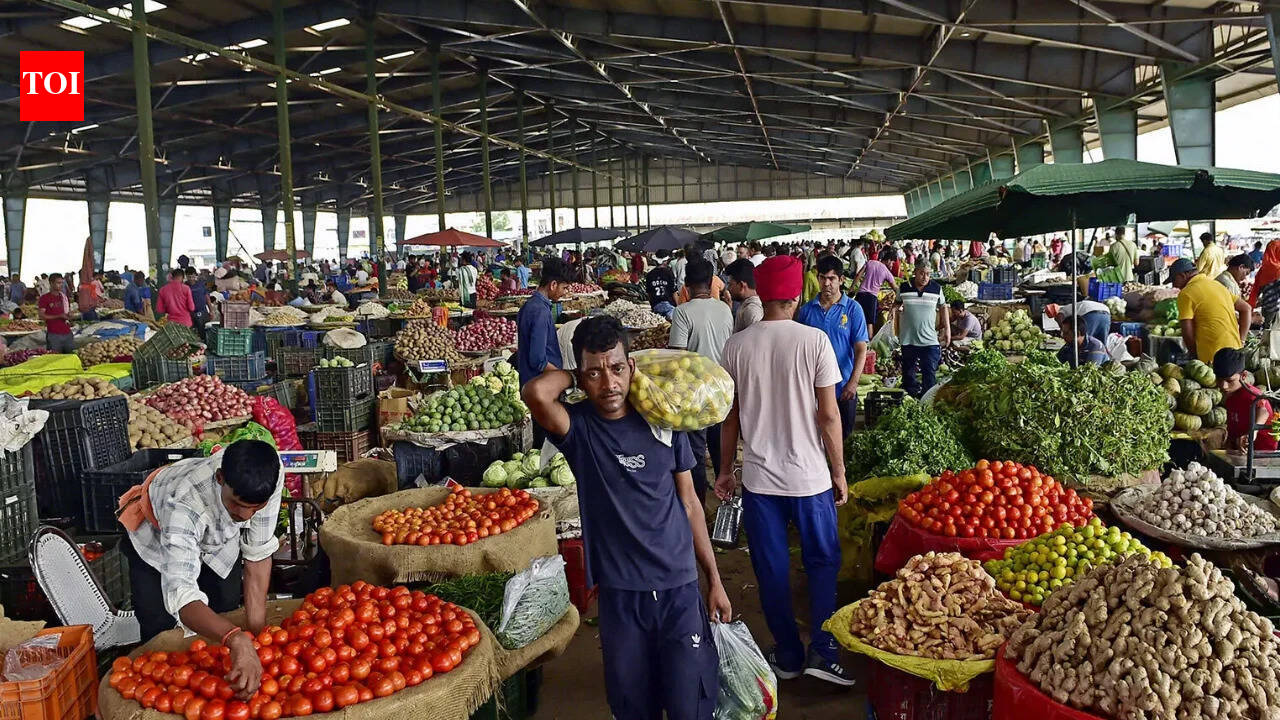
India's retail inflation inched up to 4.45% in July 2026 from 4.38% in June, driven by expensive kitchen staples including onion and ginger, according to data from the National Statistics Office (NSO) reported by Business-Today. The price rise remained above the Reserve Bank of India's (RBI) median target of 4% for the second consecutive month, and the July reading is the highest since the new CPI series with base year 2024 came into effect in January.
Inflation data at a glance
According to the NSO data, the national average inflation stood at 4.45% (provisional) in July, with rural areas at 4.84% and urban areas at 3.96%. Telangana recorded the highest state-level inflation at 6.32%, while Mizoram recorded the lowest at 1.84%.
| Component | June 2026 | July 2026 |
|---|---|---|
| CPI retail inflation | 4.38% | 4.45% |
| Food inflation | 5.32% | 5.52% |
| Transportation costs | 4.3% | 4.4% |
| Restaurant prices | 6.9% | 7.7% |
| Onion inflation | 4.73% | 22.54% |
The July reading is the highest since the new CPI series, with base year 2024, came into effect in January.
Business-Today reported that transportation costs rose to 4.4% from 4.3%, while inflation in restaurant prices went up 7.7% from 6.9%.
Food prices drive the rise
Food inflation in July rose to 5.52% from 5.32% in the preceding month, according to CPI data released by the NSO. The key contributors were:
- Onion inflation increased significantly to 22.54% in July from 4.73% in June.
- The rate of price rise in ginger shot up to 83.62%.
- Inflation in garlic also rose significantly.
On the other hand, inflation in the following items remained negative:
- Potatoes
- Ladyfinger
- Peas
- Tomatoes
RBI outlook and inflation target
Earlier this month, RBI Governor Sanjay Malhotra said higher inflation was mostly on account of fuel and food, with few signs of generalisation of price pressures so far, according to Business-Today. Core inflation, excluding precious metals, continues to be benign, he noted.
As projected earlier, Malhotra said headline inflation is expected to rise further in the near term and peak in Q3 2026-27, primarily due to food and fuel prices, before moderating thereafter. The central bank has projected CPI inflation for 2026-27 at 5%, marginally lower than its June estimate.
The government has mandated the RBI to ensure retail inflation remains at 4%, with a margin of 2% on either side.
Economist's take
Dipti Deshpande, senior director and principal economist at Crisil, said July brought some relief on the inflation front as food inflation saw a slower rise and non-food inflation remained steady, according to Business-Today.
Context and outlook
The July reading, at 4.45%, is the highest since the new CPI series with base year 2024 came into effect in January. With the RBI projecting headline inflation to peak in Q3 2026-27, the path of food and fuel prices will remain central to the inflation narrative in the coming quarters. The sharp divergence between double-digit inflation in onion and ginger and negative inflation in potatoes, ladyfinger, peas and tomatoes highlights the uneven nature of price pressures across essential commodities.
Sources: