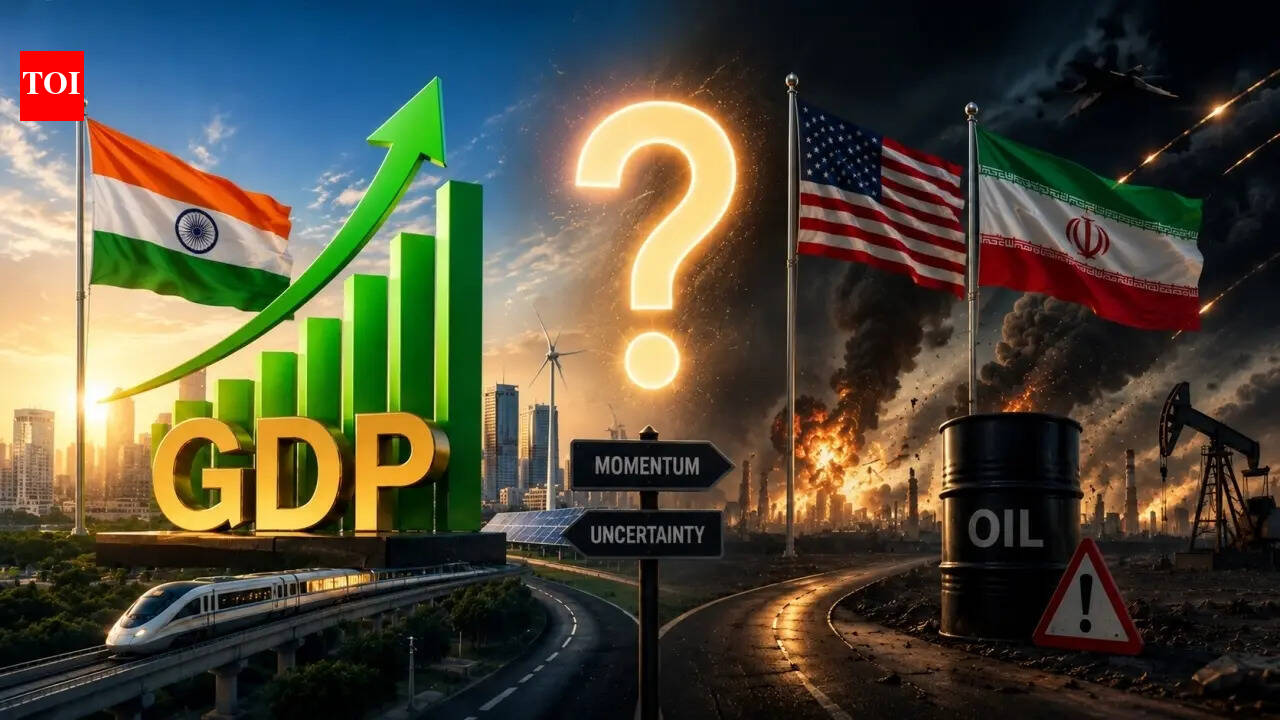
India's economy has demonstrated remarkable resilience, achieving a 7.7% GDP growth in FY26, surpassing all slowdown predictions. This performance underscores India's position as the fastest-growing major economy, even as geopolitical tensions loom.
Economic Drivers
The robust growth was primarily driven by:
- Strong consumer spending
- Vigorous investment activity
- Key sectors such as manufacturing, construction, and services
Yuvika Singhal, Economist at QuantEco Research, noted the resilience in Q4 FY26 GDP growth, which eased only marginally to 7.8% from an upwardly revised 8.0% in Q3 FY26.
"Despite the moderation, economic activity remained largely insulated from the initial effects of the Middle East conflict," said Singhal.
Ranen Banerjee, Partner and Leader, Economic Advisory at PwC India, highlighted the strong performance of manufacturing, trade, travel, and services sectors.
Potential Risks
While the current fiscal year showed little impact from the US-Iran conflict, the Reserve Bank of India (RBI) has adjusted its GDP growth forecast for FY27 to 6.6%, down from 6.9%.
Challenges Ahead
- Depreciating rupee
- Record foreign investment outflows
- Rising crude oil import bills
- Pressure on balance of payments and current account deficit
DK Srivastava, Chief Policy Advisor at EY India, emphasized the impressive post-COVID recovery, with real GDP growth rates of 7.2% and 7.1% in the previous two fiscal years.
Comparative Data
| Fiscal Year | GDP Growth (%) |
|---|---|
| 2023-24 | 7.2 |
| 2024-25 | 7.1 |
| 2025-26 | 7.7 |
Outlook
The RBI's cautious outlook reflects the potential impact of ongoing geopolitical tensions. However, India's economic fundamentals remain strong, supported by government-led capital expenditure and GST rate rationalization.
The next milestone to watch is the RBI's monetary policy review, which will provide further insights into India's economic trajectory.