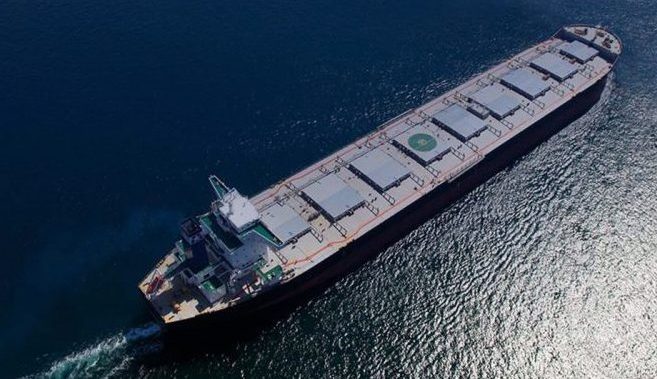
Global seaborne bauxite trade has more than tripled over the past decade and is charging ahead at another record pace in 2026, driven overwhelmingly by shipments from Guinea to China, according to analysis from Ursa Shipbrokers reported by Splash247.
Record loadings
Ocean loadings of bauxite rose from 81.3m tonnes in 2016 to a record 247.5m tonnes last year (2025), according to Ursa Shipbrokers. Volumes reached 160.5m tonnes in the first seven months of 2026, up 9.5% year on year, with July loadings jumping 20.9% to 22.8m tonnes. Bauxite now accounts for 4.8% of global dry bulk loadings, compared with 1.8% in 2016. The trade has expanded at an annual rate of more than 13%, far outpacing growth across the wider dry bulk market.
| Metric | 2016 | 2025 | 2026 (Jan–Jul) |
|---|---|---|---|
| Global seaborne bauxite loadings | 81.3m tonnes | 247.5m tonnes | 160.5m tonnes |
| China-bound bauxite volumes | 52.7m tonnes | 218.7m tonnes | ~92% of cargoes |
China's dominance
China remains the dominant destination, receiving almost 92% of bauxite cargoes loaded so far this year, according to Ursa Shipbrokers. China-bound volumes climbed from 52.7m tonnes in 2016 to 218.7m tonnes in 2025, accounting for virtually all the net growth in the global trade over the period. Sustained Chinese demand has underpinned the expansion of supply from West Africa.
Guinea tightens its grip
On the supply side, Guinea has tightened its grip on the market. The West African country exported a record 127.4m tonnes during the first seven months of 2026, up 19.2% year on year, with July shipments surging 44.3% to 17.1m tonnes, according to Ursa Shipbrokers. Guinea now supplies close to four-fifths of internationally traded bauxite.
Splash247 reported that Guinean exports have continued to rise despite government moves to exert greater control over raw ore shipments and push miners towards more domestic refining. The country's bauxite output rose 25% in the first quarter of 2026, supported by sustained Chinese demand.
Shipping and vessel demand
The long-haul Guinea-China route has made bauxite an increasingly important source of employment for larger bulk carriers. According to Ursa Shipbrokers, capesizes have carried 27.7% of cumulative bauxite volumes tracked since 2013, followed by newcastlemaxes at 18.3% and post-panamaxes at 16.2%. Together, the three segments account for more than 62% of cargo intake.
| Vessel segment | Share of cumulative bauxite volumes since 2013 |
|---|---|
| Capesize | 27.7% |
| Newcastlemax | 18.3% |
| Post-panamax | 16.2% |
| Combined | 62.2% |
With 160.5m tonnes loaded in the first seven months of 2026, seaborne bauxite trade is running at another record pace for the year, according to the Ursa Shipbrokers analysis reported by Splash247. Bauxite now accounts for 4.8% of global dry bulk loadings, up from 1.8% in 2016, as the trade's expansion continues to outpace the wider dry bulk market.
Sources: