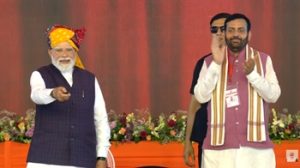
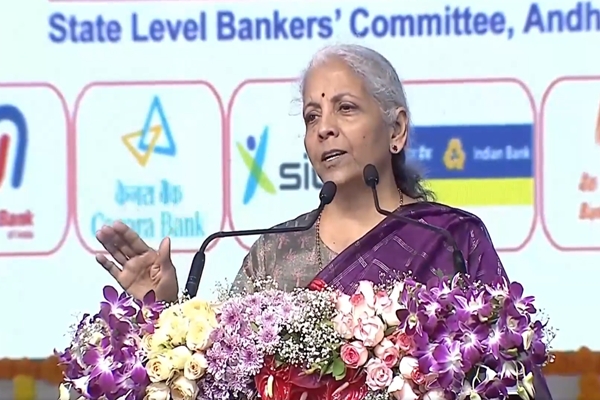
Union Finance Minister Nirmala Sitharaman, along with Andhra Pradesh Chief Minister N. Chandrababu Naidu, distributed loans worth ₹3,216 crore to 1,03,246 beneficiaries under various Central Government schemes at the Credit Outreach Programme held in Narasaraopet, Palnadu district, Andhra Pradesh, according to News on AIR. The assistance included ₹2,363 crore for the agriculture sector, ₹325 crore for MSMEs, and ₹624 crore towards housing, education, vehicle and solar energy loans.
Government’s Banking Inclusion Strategy
Addressing the gathering, Ms. Sitharaman said Prime Minister Narendra Modi’s vision is to ensure banking services reach every village and every eligible citizen. She noted that the Prime Minister has been pursuing this goal since 2014 so that farmers, agricultural labourers, handloom workers and people engaged in every occupation have access to institutional banking. The government first strengthened the banking sector by addressing the problem of Non-Performing Assets inherited from the previous UPA period, and then focused on taking banking services directly to the people, she explained.
Ms. Sitharaman said the Centre introduced government-backed guarantee schemes to enable banks to provide collateral-free loans to small farmers, fishermen, street vendors and other self-employed persons. The initiative was aimed at protecting poor borrowers from exploitation by private moneylenders charging exorbitant interest rates, according to the Finance Minister. She also said banks have changed their approach by going to villages, identifying eligible beneficiaries, and extending loans instead of waiting for people to visit bank branches.
Impact on MSMEs and Agriculture
The substantial allocation of ₹2,363 crore to agriculture and ₹325 crore to MSMEs directly supports two critical sectors for trade and rural supply chains. For treasury professionals and CFOs, this credit infusion may improve the financial health of small suppliers and reduce payment delays. The collateral-free nature of loans under guarantee schemes lowers the cost of capital for micro-entrepreneurs and farmers, potentially enhancing their creditworthiness. The government’s focus on identifying eligible beneficiaries in villages could expand the formal credit footprint, reducing reliance on informal lenders and improving cash flow stability for businesses that source from these segments.
| Sector | Loan Amount (₹ crore) | Beneficiaries Covered |
|---|---|---|
| Agriculture | 2,363 | Included in total |
| MSMEs | 325 | Included in total |
| Housing, Education, Vehicle, Solar Energy | 624 | Included in total |
| Total | 3,216 | 1,03,246 |
State Government Support
Chief Minister N. Chandrababu Naidu said the Credit Outreach Programme would improve the living standards of people by extending timely institutional credit to Self-Help Groups, farmers, entrepreneurs, industrialists and street vendors. The Chief Minister appreciated the Centre’s support to Andhra Pradesh and said the State Government was working towards building a healthy, wealthy and happy society by 2047.
For investors and economic analysts tracking emerging markets, such credit outreach initiatives signal a strengthening of rural banking infrastructure and a deliberate push to formalize the informal economy. By ensuring institutional credit reaches the last mile, the government aims to boost consumption, investment, and productivity in rural areas—factors that can influence aggregate demand and, over time, the trade balance as agricultural and MSME output improves.
Ms. Sitharaman urged beneficiaries to make productive use of the assistance and strengthen their livelihoods to contribute towards the vision of Viksit Bharat by 2047. The event underscores a coordinated policy effort between the central and state governments to expand financial inclusion, which remains a key pillar for sustainable economic growth and enhanced participation in formal trade finance channels.
Sources: