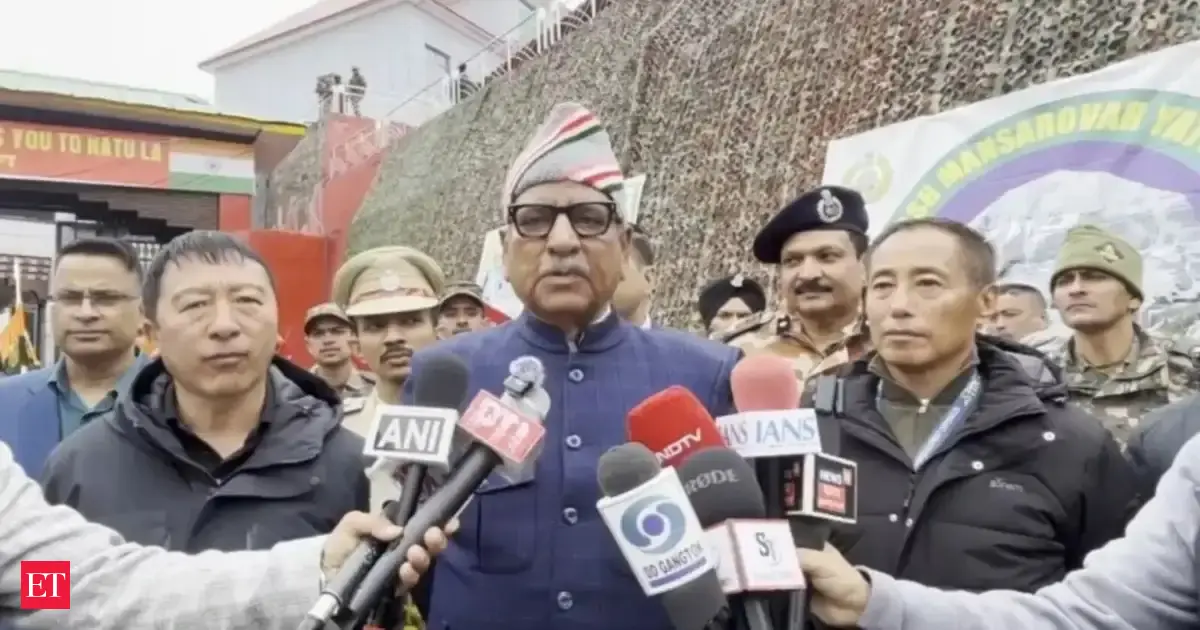
India-China border trade has resumed after a six-year suspension, with the first batch of 16 traders flagged off for Tibet, according to the Economic Times. The first group departed through Himachal Pradesh's Shipki-La pass, while a separate 20-trader first phase was approved for the Lipulekh Pass route in Uttarakhand, where traders will cross without goods to inspect stock left behind in 2019.
Shipki-La: 16 traders flagged off with jaggery, rice, tea and more
According to the Economic Times, Himachal Pradesh Revenue and Horticulture Minister Jagat Singh Negi inaugurated the trade at Shipki-La and flagged off traders from Namgya, Dubling and Leo villages. The traders were felicitated with traditional Khata scarves before their departure.
Traders in the maiden batch carried jaggery, rice, tea, sugar, carpets, local grains, biscuits and other notified goods, the report said. The district administration said all security clearance and background verification formalities had been completed in advance, and the traders have been directed to return within 72 hours in accordance with the prescribed guidelines.
On the same occasion, Negi inaugurated a modern Trade Mart built at a cost of Rs 1.70 crore. He said the resumption after the COVID-19 pandemic would provide a major boost to local trade, employment, transport and the economy of the border areas, and he thanked the Central Government for facilitating the revival of the historic trade route.
Negi added that although the notified list includes live animals such as horses, sheep and goats, their trade will not take place this season because Kinnaur does not have a quarantine centre. A proposal for establishing a quarantine facility under the Vibrant Villages Programme has already been submitted, the Economic Times reported.
Deputy Commissioner Kinnaur Dr Amit Kumar Sharma, Superintendent of Police Sushil Kumar Sharma, ADM Pooh Ravinder Thakur, office-bearers of the Trade Union, senior administrative officials and a large number of local residents attended the inauguration. Residents of the border villages described the resumption as a major step towards strengthening the region's economy, and the event featured cultural performances by local women from Namgya village.
Lipulekh Pass: China approves 20 traders, first phase without goods
The Chinese administration approved an initial batch of 20 traders from the Indian side, citing inadequate accommodation facilities at the trading mart, according to the Economic Times. In the first phase, the traders will cross the border without carrying any goods to assess the arrangements and inspect the stock they had left behind in 2019.
Ashish Joshi, Sub-Divisional Magistrate (SDM) and Trade Officer of Dharchula, said the Border Trade Organisation was asked to submit the names of 20 traders for the first phase. The India-China Border Trade Association then decided to prioritise traders whose goods remained in rented warehouses in Taklakot after border trade was abruptly suspended in 2019 due to the COVID-19 pandemic.
Association President Jeevan Singh Rongkali said, "Before taking new goods from India, we want to inspect the old, unsold stock stored in the Taklakot warehouses, goods that were left behind when the trading season ended in 2019."
History and reopening timeline
Border trade through the Lipulekh Pass resumed in 1992 after remaining suspended following the 1962 India-China war, the Economic Times reported. The trade is primarily carried out by tribal traders from the Vyans, Darma and Chaudas valleys of Uttarakhand's Pithoragarh district, whose centuries-old trade ties with western Tibet were disrupted after the war.
The trade, suspended again in 2019 due to the pandemic, is considered crucial for the border region's economy, and its resumption is expected to provide significant relief to local traders and tribal communities.
Although border trade was initially scheduled to restart on June 1 this year, the Tibetan administration sought additional time, citing inadequate basic infrastructure, including accommodation and shops, at the Purang trading mart. With the required arrangements now in place, the historic trade resumed.
Route comparison
| Detail | Shipki-La route (Himachal Pradesh) | Lipulekh Pass route (Uttarakhand) |
|---|---|---|
| First-phase batch | 16 traders flagged off | 20 traders approved by Chinese administration |
| Traders / communities | Namgya, Dubling and Leo villages | Tribal traders from Vyans, Darma and Chaudas valleys |
| Goods carried | Jaggery, rice, tea, sugar, carpets, local grains, biscuits | No goods in first phase; traders to inspect 2019 stock in Taklakot |
| Key official | Minister Jagat Singh Negi | SDM & Trade Officer Ashish Joshi |
| Infrastructure | Trade Mart inaugurated at Rs 1.70 crore | Tibetan administration delayed restart from June 1 for accommodation and shops |
For importers, exporters, customs brokers and trade policy analysts, the resumption reopens two historic border trading channels that had been closed since 2019. The 72-hour return rule at Shipki-La, the exclusion of live animals this season pending a quarantine centre in Kinnaur, and the staged, goods-free first phase on the Lipulekh route are operational details that will shape how the notified goods list moves in the coming weeks.
Sources: