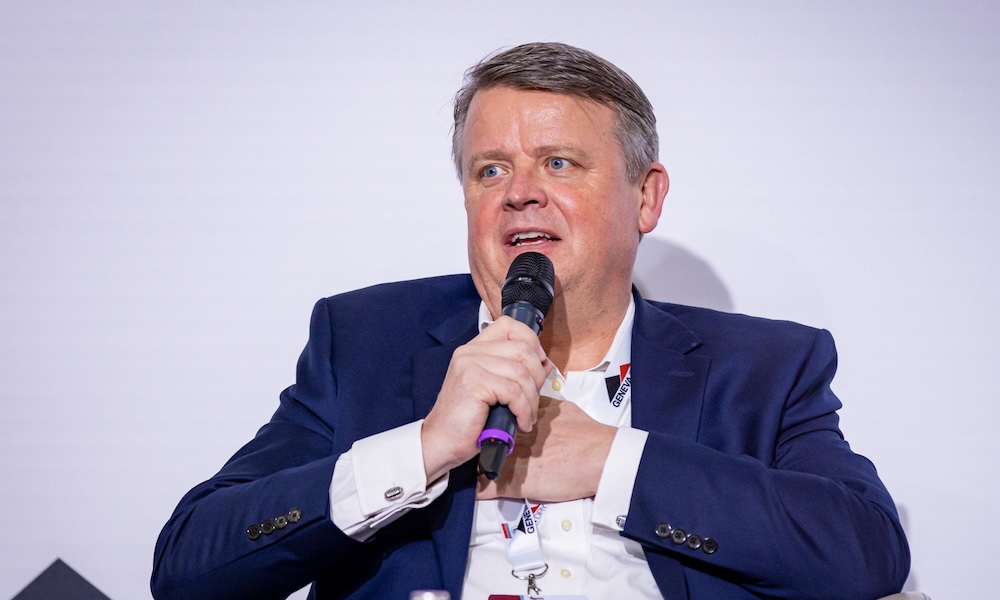
Dry bulk charterers and shipowners can expect near-term freight support from tight Atlantic tonnage and healthy grain volumes, but a growing orderbook and uncertain Chinese demand will dominate longer-term discussions when the industry gathers in Singapore, according to an interview with Splash247.
Torbjorn Gjervik, chief executive of dry bulk operator Western Bulk, spoke to Splash247 ahead of his appearance on the Chartering Spotlight panel at the inaugural Splash Singapore conference on September 24. He said a genuinely useful conference day is one where he leaves with new ideas and inspiration, and where he has had the chance to raise Western Bulk's profile along the way.
Near-term freight: Atlantic tightness and grain support
Gjervik is bullish on the near-term freight outlook, with disruption continuing to boost tonne-mile demand at the same time as vessel speeds remain low, according to Splash247. Atlantic fundamentals also look supportive.
"Atlantic tonnage is tight just as ECSA and USG have plenty of grain to load in the coming months," Gjervik says.
For freight forwarders and 3PLs moving Atlantic grain, the tight tonnage situation described by Gjervik implies limited slack in vessel supply on those routes in the near term. The disruption he cites continues to lift tonne-mile demand, and vessel speeds remain low, keeping effective capacity tighter than the raw orderbook would suggest.
Longer-term: orderbook and China uncertainty
Further out, the picture is considerably less straightforward. A growing dry bulk orderbook is beginning to loom over the market, while China remains the great uncertainty for commodity demand. Any easing of today's geopolitical disruption could shorten voyages and return efficiency to a fleet that has benefited heavily from longer trading patterns, according to Splash247.
"Further out, we are more uncertain," Gjervik admits. "We see a growing orderbook, uncertain Chinese demand, and the potential for some of the geopolitical disruptions to fade over time, leading to a more efficient market."
Technology and digital tools in dry bulk
Technology will inevitably feature heavily in discussions in Singapore, although Gjervik is sceptical that shipping is about to experience one dramatic breakthrough. Instead, he expects the next 12 months to deliver numerous smaller gains across existing processes.
One potentially significant change is how cheaply shipping companies can now build their own digital tools.
"Those at the sharp end will stop paying for user interfaces as the barriers to creating your own tools come down; it's the data that's important," Gjervik stresses.
For all the excitement surrounding artificial intelligence and digitalisation, however, he argues that shipping's fundamental competitive advantages remain stubbornly traditional.
"The core differentiator between the winners and losers will still be people, assets and timing," he argues.
Splash Singapore: what's on stage
Gjervik joins this year's Chartering Spotlight panel, with speakers from the likes of Vale, South32 and Heidelberg on the same stage, according to Splash247. The full Splash Singapore agenda can be accessed online, as can registration at S$750 and special hotel room rates.
| Event detail | Information |
|---|---|
| Event | Splash Singapore (inaugural edition) |
| Date | September 24 |
| Location | Singapore |
| Registration fee | S$750 |
| Panel | Chartering Spotlight |
| Companies on the panel | Western Bulk, Vale, South32, Heidelberg (among others) |
Implications for shippers and operators
For shippers and operators, the near-term Atlantic tightness and grain availability described by Gjervik point to continued pressure on vessel supply in the coming months, while the longer-term uncertainty around the orderbook, Chinese demand and geopolitical disruption means fixture decisions will need to weigh both directions. The CEO's comments on digital tools — that the cost of building proprietary systems has fallen and data is the key asset — are directly relevant to freight forwarders and 3PLs evaluating their own technology stacks. And the emphasis on people, assets and timing as the core differentiators suggests that even as automation advances, commercial judgement and asset positioning will remain decisive in dry bulk.
Sources: