Ocean freight rates from India have more than doubled on key lanes and port congestion is worsening as the West Asia conflict disrupts vessel schedules, according to exporters and trade bodies cited by the Economic Times. Emergency surcharges, peak season fees, and detention costs are inflating logistics bills and delaying shipments.
Exporters have raised the issue with the commerce ministry, according to the Economic Times, as foreign shipping lines impose emergency and peak season surcharges, detention and demurrage charges that are inflating logistics costs and delaying shipments.
Rate Surge on Key Lanes
Ocean freight rates from India’s west coast to Argentina, at $3,000–$4,000 earlier, have more than doubled to $9,000 in the past three months, said Khalid Khan, director at export house Geco Trading Corp. Rates to Africa have surged to $7,500, from $3,500. Container shipping rates to conflict-afflicted West Asia have seen the highest surge, to around $3,500, from $400, Khan added.
Rajeev Chitalia, chairman of Electrofocus Electricals, a manufacturer and exporter of electrical fittings, reported that container shipping rates for Bahrain have soared to $5,600, from $550 prior to the start of the Iran war on February 28. Rates to Trinidad & Tobago jumped to $10,000, from $6,000. "Our goods are ready to be shipped but dispatches have been affected due to unavailability of vessels," Chitalia said.
Port Congestion and Vessel Skipping
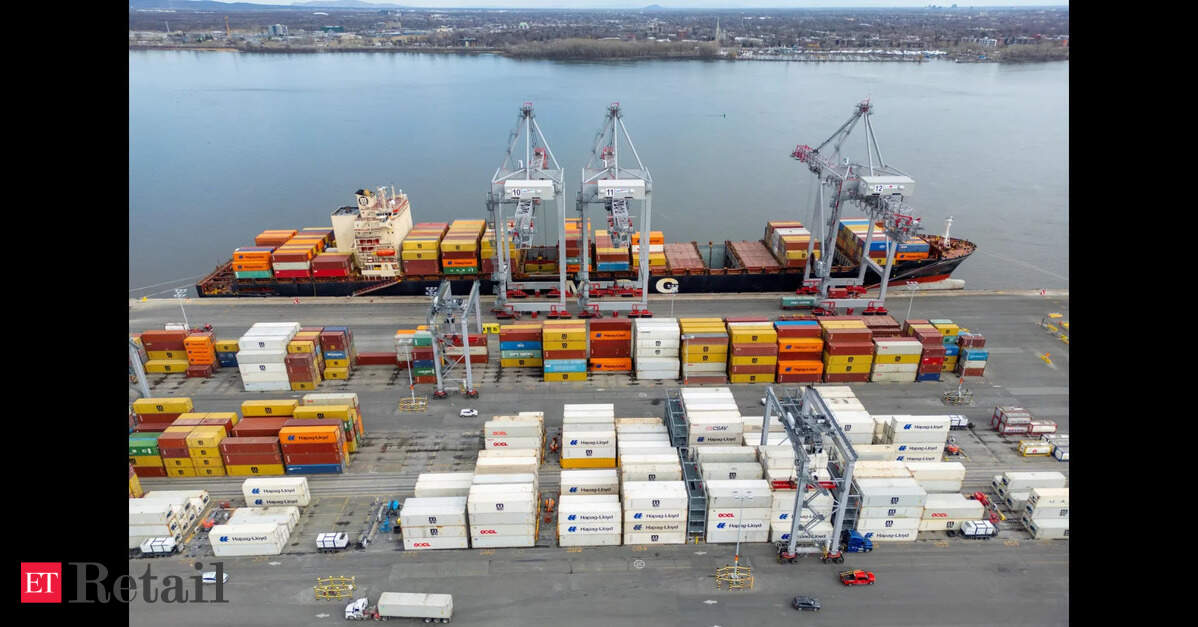
Nhava Sheva (JNPT) and Mundra ports on India's west coast are congested, vessels unable to berth on time, causing delays, said Khushwant Jain, managing partner at Mumbai-based GS Exports, an exporter of oilseed and spices. Chitalia noted that mother vessels are either not calling at, or skipping, JNPT, and smaller vessels are infrequent. Severe congestion is mainly due to the West Asia crisis, he said.
Bookings for ports such as Bahrain and Sydney have been paused for more than a month due to prevailing higher freight costs, Chitalia added.
Container Shortages and Stuck Shipments
Khalid Khan reported that vessels are giving blank calls and not touching ports, making containers unavailable. "Moreover, China is picking up more empty containers than before," he said. Khushwant Jain said for the last month or two, his company cannot get containers to export to Canada due to higher freight rates, and orders are getting cancelled as there is no space in vessels. Exporters also face a shortage of food grade containers, he said.
Jain added that his company is running short of 50 containers to fulfil export commitments. Containers on the way to Oman are stuck at transshipment ports due to the war. The company has paid around Rs 25 lakh in detention, compensatory and demurrage charges as the client refused delivery due to delays. The problem is compounded because foreign shipping lines are not registered in India and are present only through agents.
Electrofocus Electricals is saddled with Rs 8 crore worth of inventory due to supply chain bottlenecks, Chitalia said.
Route Diversions and Trade Impact
The conflict has affected the movement of cargo ships in international waters, particularly through the Strait of Hormuz. After initial disruption, India moved to using three ports in Oman — Duqm, Sohar and Salalah — to continue shipments. Ports on India's west coast are heavily reliant on Gulf shipping routes, which have been disrupted.
Despite the headwinds, India's exports to West Asia rose 7.3% on-year to $5 billion in June, the Economic Times reported.
Shipper and Operator Implications
Exporters emphasized that while the government cannot, on its own, control sea freight rates, the compounding of high rates with surcharges and port delays is eroding competitiveness. Ajay Sahai, director general of the Federation of Indian Export Organisations (FIEO), said exporters earlier primarily faced challenges related to frequency of long-haul services, but current concerns are increasingly centred around elevated freight rates and the imposition of various additional charges, which are adding to logistics costs and affecting competitiveness.
For freight forwarders and logistics managers, the key takeaways are: expect further rate volatility on West Asia and Africa lanes; factor in extended lead times for bookings through JNPT and Mundra; plan for potential blank sailings and consider alternative transshipment hubs such as Duqm, Sohar, or Salalah; and closely monitor detention and demurrage clauses as costs mount.
Sources: