
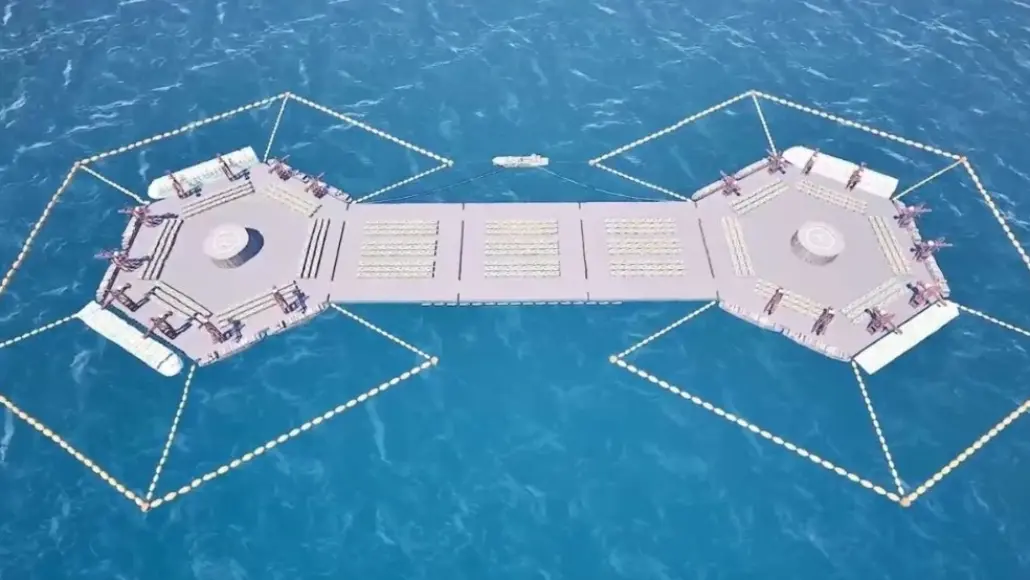
Chinese shipbuilder Jiangnan Shipyard has unveiled a radical concept for a nuclear-powered floating logistics hub that could transform the way goods move across the oceans, according to a report by Splash247. The concept, presented at the Posidonia exhibition in Athens, envisions an offshore platform that combines a container terminal, a power station, and a green-fuel factory, all powered by a molten-salt nuclear reactor.
Operational Impact: Decoupling Ports from Coastlines
The proposed hub would break the century-old link between ports and fixed coastlines, allowing shipping demand to determine location rather than geography. A large container ship could unload at a nuclear platform 200 nautical miles offshore, with smaller feeder ships shuttling boxes to and from coastal gateways. This would bypass port congestion, shallow waters, and dependence on local labor and regulations. According to Splash247, mainline voyages could be optimized for pure sailing time rather than berth windows in ports.
Affected Trade Lanes and Modes
While no specific lanes are named, the concept would impact ocean freight globally, particularly on deep-sea routes where mainline vessels could avoid entering congested ports. The use of feeder vessels would increase, potentially reshaping intra-regional shipping and transshipment operations. The platform itself would generate zero-carbon fuels on-site, reducing the need for land-based bunkering and fuel transport.
Shipper and Operator Implications
For shippers and logistics operators, the concept promises reduced delays from port congestion, but introduces new risks. According to Splash247, putting everything on a single offshore platform creates a concentration of energy, cargo, and risk. A failure—due to severe storm, cyberattack, or geopolitical clash—could cripple regional supply chains. The technical challenges are threefold: physical survival in heavy weather, safe operation of the molten-salt reactor, and a secure digital operating system.
Regulatory Barriers: The Biggest Challenge
The biggest roadblocks are not technical but regulatory. According to Splash247, floating nuclear plants sit between current laws, as a platform that is simultaneously a nuclear site, chemical plant, and container terminal challenges existing regulations. Key questions include:
- Which country licenses a reactor operating outside national borders?
- How do customs, labour laws, and port inspections apply?
- Who is liable if a nuclear accident spills across multiple coastal zones?
Currently, there is no international rulebook for this concept. Splash247 suggests that port states and the IMO should designate sovereign-neutral sandboxes in deepwater zones to test automated transhipment synchronisation and safety protocols. A dedicated nuclear oversight body could draft cross-border licensing templates and liability insurance schemes. Port operators and carriers should standardise open-architecture digital twin networks to manage weather-driven offshore crane movements.
Watch List
- Regulatory sandbox initiatives by the IMO and port states
- Industry collaboration on nuclear oversight bodies and digital twin standards
- Technological developments in molten-salt reactors and offshore engineering
- Potential first-mover advantage for Chinese state-backed entities in writing the rules of future trade
Sources:


