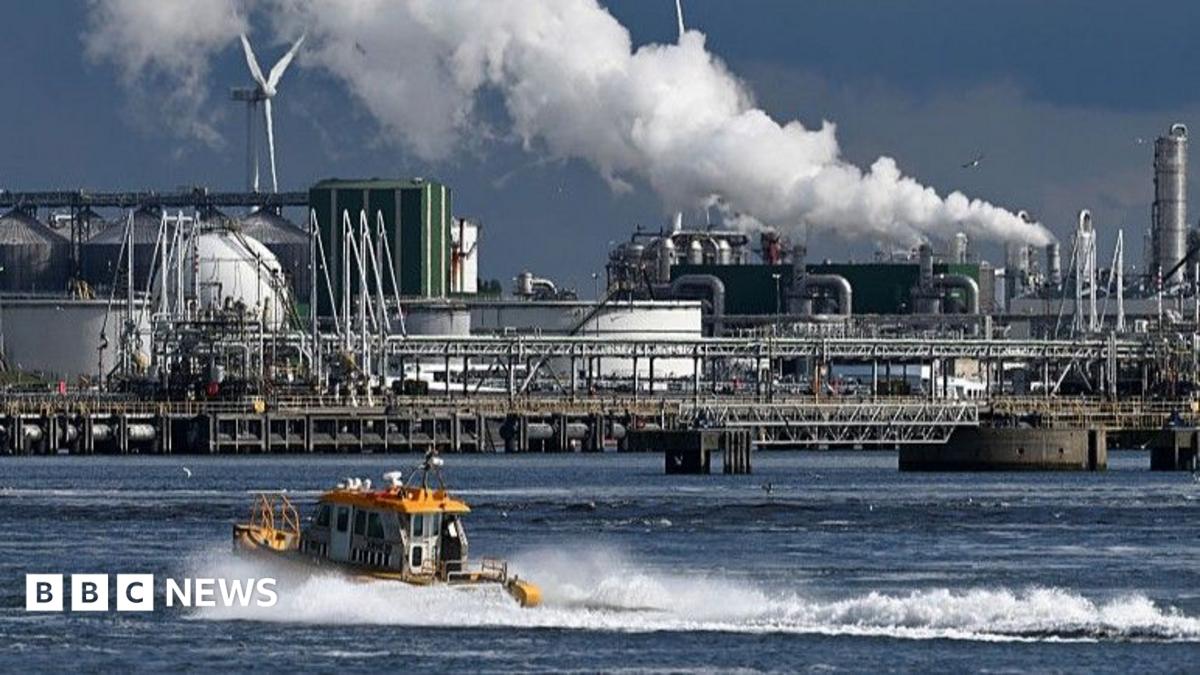
Operational impact for shippers and logistics operators: The Port of Rotterdam, Europe's largest freight port by cargo volume, is facing mounting legal and environmental pressure to transition away from fossil fuels, which could reshape energy supply chains and port infrastructure investments across the continent. According to BBC Business, the port handles nearly as much cargo as all UK ports combined, and its vast industrial complex — including five refineries and Shell's largest European plant — processes hundreds of thousands of barrels of crude oil daily.
Emissions Scale and Legal Challenge
Research by CE Delft found that the fossil fuels flowing through Rotterdam are ultimately linked to around 600 megatonnes of CO₂ per year — many times more than the output of Amsterdam's Schiphol Airport. The port's own industrial cluster emits about 29 million tonnes of CO₂ annually, roughly half of the Netherlands' domestic emissions, according to Mark van Dijk, head of external relations at the Port of Rotterdam Authority. "It's not good," van Dijk admitted.
A lawsuit brought by environmental group Advocates for the Future argues that the Port Authority is not doing enough to phase out fossil-based energy. The group is demanding a concrete plan to wind down coal, oil, and gas flows. Director Maikel van Wissen stated: "A state-owned enterprise should take legal obligations on states to reduce emissions. We are asking in the lawsuit to phase out that dependency, to create alternatives."
Port Authority's Green Plan
The Port Authority has developed a plan to cut its own direct and purchased energy emissions by 90% between 2019 and 2030. Key initiatives include:
- Developing a hydrogen hub where companies can test new fuels.
- Investing in onshore power so ships can plug into the grid instead of burning fuel at berth.
- Supporting bunkering of alternative fuels such as LNG, biofuels, and methanol.
- The Porthos project — a carbon capture and storage (CCS) scheme that will pipe industrial CO₂ emissions to depleted gas fields under the North Sea.
Van Dijk emphasized: "In the short term we're focusing on CCS – capturing CO₂ and storing it in depleted gas fields."
Implications for Shippers and Operators
The transition at Rotterdam will directly affect ocean carriers, freight forwarders, and logistics managers who rely on the port for European gateway services. The push for onshore power and alternative fuels may increase berthing costs or require vessels to meet new emissions standards when calling at Rotterdam terminals. The hydrogen hub and CCS infrastructure represent long-term shifts in energy sourcing for port-side industries. Shippers should monitor the lawsuit's outcome, as a court-ordered phase-out of fossil fuels could accelerate changes in cargo handling fees and terminal availability for coal, oil, and petrochemical products.
Watch List
- Lawsuit outcome: A court ruling in favor of Advocates for the Future could force the Port Authority to publish a binding fossil fuel phase-out timeline.
- Porthos CCS project: On track to start CO₂ injection; will set a precedent for emissions pricing at European ports.
- Hydrogen infrastructure: Pilot projects may expand, attracting new energy logistics providers and altering fuel supply chains for shipping lines.
- EU regulatory pressure: The port's emissions profile may prompt stricter EU mandates on port decarbonization, affecting all carriers calling at Rotterdam.
Sources: