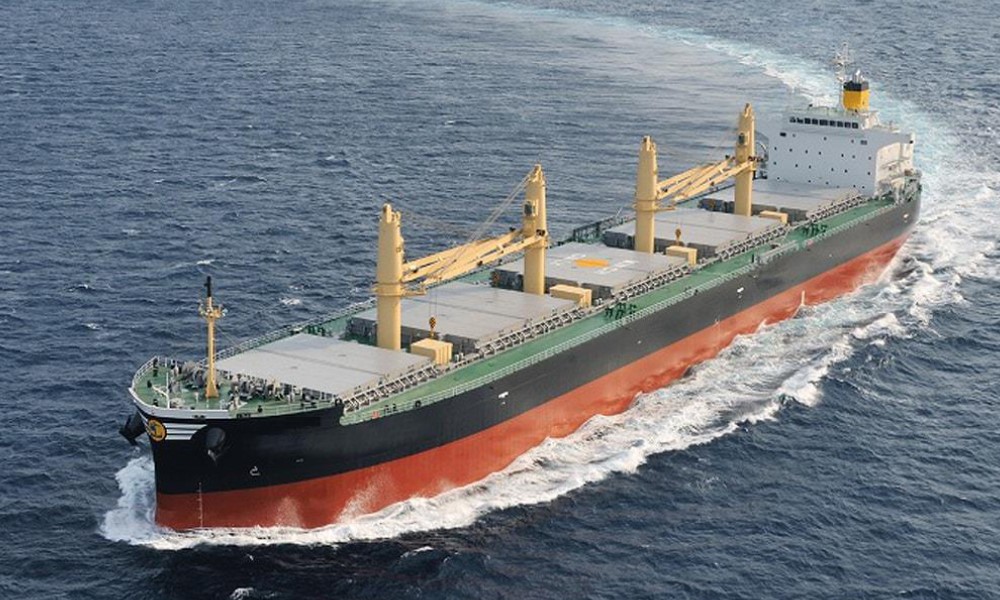
Sinotrans Container Lines is moving to double its feeder programme at China Merchants’ revived Qingshan Shipyard, issuing a direct procurement invitation for a second batch of four 1,800 TEU vessels, according to Splash247. The move signals sustained investment in intra-Asia feeder capacity and reinforces Qingshan’s return to commercial shipbuilding after a six-year hiatus.
The carrier’s Hong Kong subsidiary placed the invitation with Qingshan this month covering construction of the quartet. This follows a contract signed in May for an initial four ships of the same size. Investment in the first batch was capped at RMB940 million ($139 million), or close to $35 million per vessel. A second contract on similar terms would lift the overall programme to eight ships with an indicative investment of around RMB1.88 billion.
Feeder Fleet Expansion
The newbuildings will boost Sinotrans’s feeder capacity on regional routes. Feeders of this size are typically deployed on short-sea services connecting Chinese ports or linking Chinese hubs to Southeast Asia. Doubling the order suggests the carrier expects sustained demand for container feeder services, likely to feed mainline services at transshipment hubs.
| Batch | Vessels | Investment (RMB) | Investment per vessel ($) |
|---|---|---|---|
| First (May contract) | 4 x 1,800 TEU | 940 million | ~$35 million |
| Second (current invitation) | 4 x 1,800 TEU | ~940 million (projected) | ~$35 million |
| Total | 8 | ~1.88 billion | ~$35 million |
Qingshan Shipyard’s Revival
Qingshan, part of China Merchants Industry Holdings, formally returned to newbuilding this year after exiting ship construction in 2018. Since its return, the yard has secured feeder projects from Zhonggu Logistics, Sinotrans and Greek owner Goldenport Shipmanagement. The Sinotrans order is among the largest received so far, underscoring the yard’s role in supplying small containerships to Chinese operators.
Shipper and Operator Implications
For freight forwarders and logistics managers relying on intra-Asia feeder services, the additional tonnage could improve service frequency and potentially ease capacity constraints on high-density lanes such as Shanghai–Busan, Ningbo–Hong Kong, or Qingdao–Busan. However, the vessels will not deliver before 2026–2027 given typical construction lead times. In the near term, feeder capacity on Chinese coastal and short-sea routes remains tight, and charter rates for 1,800 TEU ships have been elevated amid steady demand. The order signals that Sinotrans expects this demand to persist, and the additional ships could eventually moderate spot rates on feeder lanes.
Watch List
- Delivery timeline: No firm delivery dates have been announced. The first batch from the May contract is likely to enter service in 2026–2027. The second batch could follow in 2027–2028.
- Further orders: If Sinotrans exercises options or places additional orders, the programme could exceed eight vessels.
- Other yard customers: Qingshan’s ability to attract additional orders from carriers like Zhonggu Logistics and Goldenport could signal broader feeder fleet renewal trends.
- Charter market: Continued high charter rates for feeder vessels may prompt other Asian carriers to order similar tonnage.
Sources: