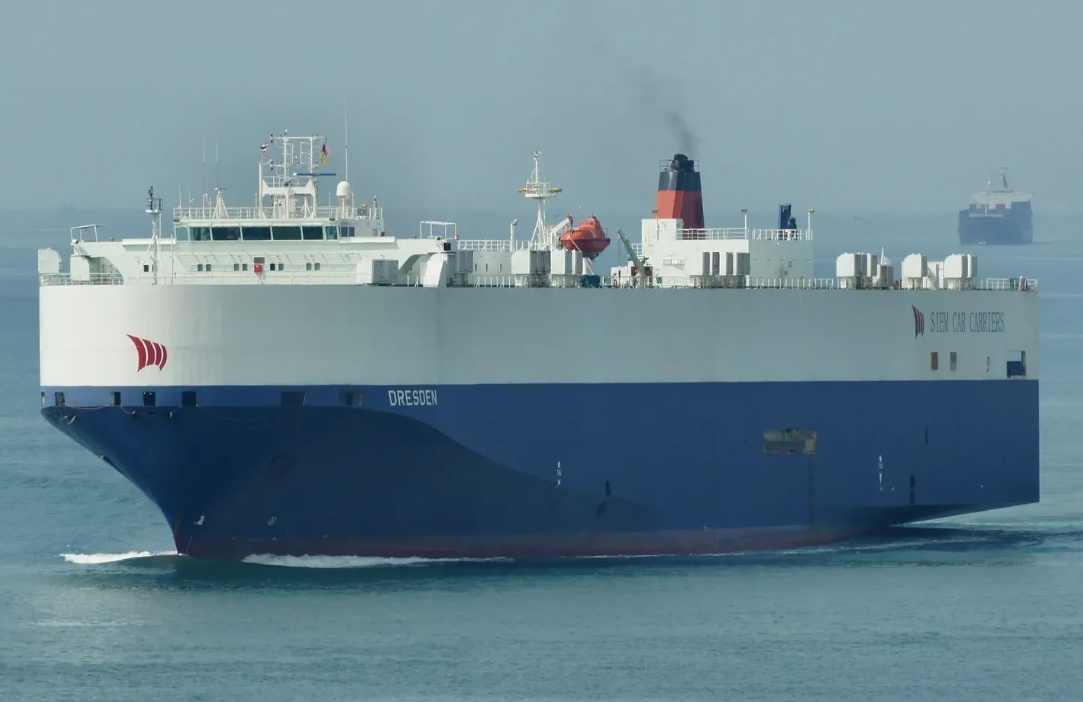
A 26-year-old midsize pure car and truck carrier (PCTC) has sold at auction for an exceptionally high price, underscoring the severe capacity crunch in the vehicle-shipping segment, according to sources.
Auction Details
The 4,310 ceu Chang Sheng Hong was sold at auction on Tuesday for around $42 million, according to sources. The Shanghai United Assets and Equity Exchange had marketed the China-flagged vessel with a reserve price of RMB95 million ($14 million), meaning the winning bid came in at roughly three times the asking price. The vessel was both the oldest and largest ship in the unnamed company’s fleet.
Vessel History
Built in 2000 at Croatia’s Uljanik shipyard, the vessel originally traded as Dresden. Sales databases show Wilh. Wilhelmsen sold the ship to undisclosed interests for $35.4 million in May 2002, when it was just two years old. The vessel was renamed Chang Sheng Hong in July 2017 after entering Chinese ownership. It has since been deployed in both domestic Chinese and international vehicle trades. The ship has 10 vehicle decks and a capacity of 4,310 cars.
Market Context
Splash247 reported yesterday that China’s explosive growth in car exports has led to a very tight car carrier market, with as many as 2 million cars being shipped on containerships this year due to insufficient PCTC capacity. This structural imbalance is driving secondhand asset values to record levels, as demonstrated by the Chang Sheng Hong sale — a 26-year-old midsize vessel commanding $42 million, nearly triple its reserve.
Implications for Shippers
| Metric | Value |
|---|---|
| Vessel | Chang Sheng Hong (ex-Dresden) |
| Built | 2000, Uljanik shipyard, Croatia |
| Capacity | 4,310 ceu (car equivalent units) |
| Reserve price | RMB95 million ($14 million) |
| Final sale price | ~$42 million |
| Price vs. reserve | ~3x reserve |
| Buyer | Undisclosed |
For freight forwarders and logistics managers who move vehicles, the sale signals that PCTC capacity will remain scarce and expensive in the near term. With record car exports from China absorbing available tonnage — and even pushing volumes onto containerships — shippers should expect sustained upward pressure on vehicle freight rates and longer lead times for capacity allocation. The auction outcome also suggests that older tonnage continues to command premium valuations, limiting the supply of scrapped vessels that might otherwise ease the shortage. Operators reliant on breakbulk or container-based vehicle shipping should lock in long-term contracts where possible and explore multi-modal alternatives to mitigate further rate escalation.
Sources: