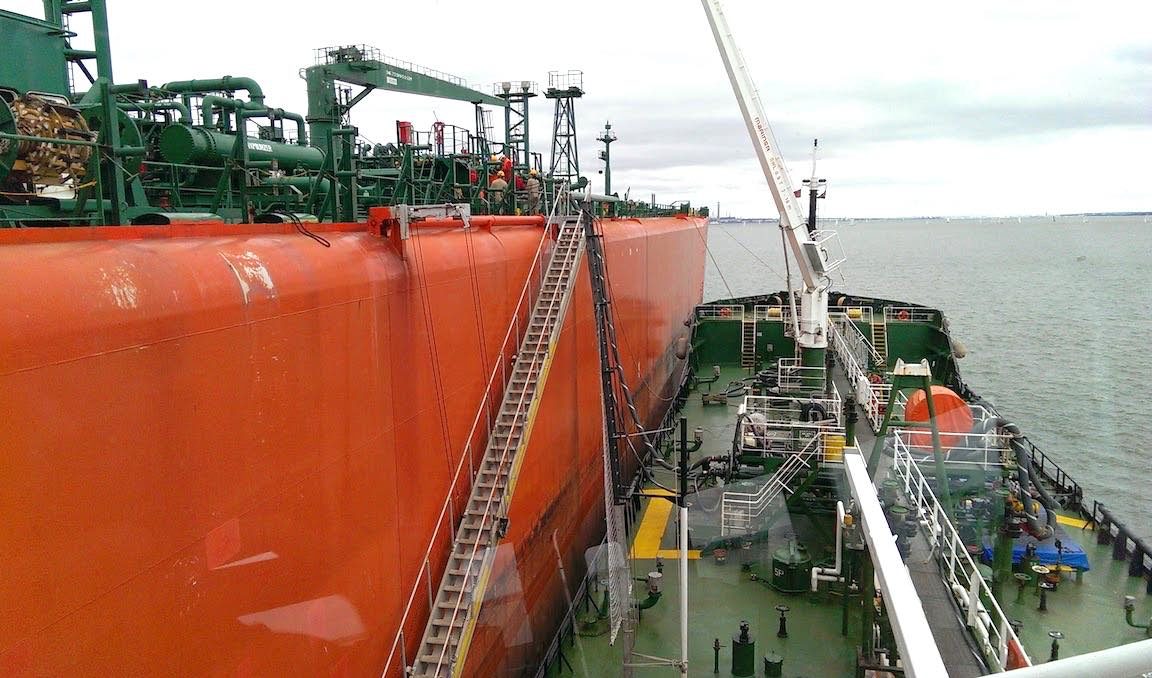
Energy trader BGN has launched its first US retail bunkering operation, supplying conventional marine fuels from Houston across the Gulf Coast, according to Splash247. The move marks BGN's entry into direct physical bunker supply in the United States, expanding beyond its wholesale fuel trading activities.
New Bunkering Operation Details
The new business will offer three types of marine fuels: high sulphur fuel oil (HSFO), very low sulphur fuel oil (VLSFO), and marine gasoil (MGO) to shipowners calling at ports across the US Gulf region. BGN will initially use the operation to supply its owned and chartered LPG fleet of around 40 vessels, while also targeting third-party customers. No investment figure, expected sales volumes, or individual supply locations were disclosed, Splash247 reported.
Partnership with Centerline Logistics
To support the launch, BGN has partnered with US marine transportation operator Centerline Logistics and chartered two bunker barges, the Jackson Eades and MGI 2100. Centerline operates a fleet of 123 vessels across the US Gulf, east and west coasts, Alaska, Hawaii and Puerto Rico. Its fleet includes bunker and terminal barges with a total liquid carrying capacity of around 3 million barrels.
BGN’s Expanding Maritime Footprint
The move takes BGN beyond wholesale fuel trading and into direct physical supply. The company's fuel oil business handles an average of approximately 4 million tonnes annually across bunker and industrial markets, according to Splash247.
In addition to the bunkering expansion, BGN has been building up the shipping side of its US LPG trading operation. The company ordered six dual-fuel very large gas carriers (VLGCs) at HD Hyundai Heavy Industries earlier this year, taking its owned LPG fleet to 19 vessels. The latest pair of 93,000 cubic metre ships is due for delivery in 2029.
BGN also entered LNG shipping this year through a deal with Capital Clean Energy Carriers. A BGN affiliate is taking a 49% stake in the 2023-built LNG carrier Amore Mio I, which will start a 10-year charter to BGN when the joint venture takes ownership in early 2027.
Key Fleet and Capacity Figures
| Vessel Type | Number of Vessels | Details |
|---|---|---|
| LPG fleet (owned) | 19 (after order) | Includes 6 newbuildings ordered in 2026 |
| Chartered LPG vessels | Not disclosed | Part of ~40 total LPG fleet |
| Bunker barges (chartered) | 2 | Jackson Eades and MGI 2100 |
| LNG carrier (JV stake) | 1 | Amore Mio I, 2023-built, 49% stake |
| Fuel oil annual volume | Approx. 4 million tonnes | Across bunker and industrial markets |
| Centerline fleet | 123 vessels | Bunker and terminal barges, total capacity ~3 million barrels |
Implications for Shippers and Carriers
For logistics managers and ocean carriers operating in the US Gulf, BGN's entry adds a new supplier of HSFO, VLSFO, and MGO. The company's initial focus on its own LPG fleet but stated intention to serve third-party customers could increase competition and bunker availability at Houston and other Gulf ports. However, specific supply locations and pricing have not been disclosed, according to Splash247.
The partnership with Centerline Logistics, a well-established operator with a large barge fleet across US coasts, suggests that BGN will leverage existing infrastructure to start operations quickly. Carriers that call at US Gulf ports may want to monitor BGN's rollout for potential alternative fuel supply arrangements.
Meanwhile, BGN's broader investments in LPG and LNG shipping indicate a long-term commitment to the US energy export and marine fuel market. The company's owned LPG fleet will reach 19 vessels after the Hyundai newbuildings, and its entry into LNG shipping through the Amore Mio I charter adds another dimension to its maritime portfolio.
For freight forwarders and 3PL operators, the development is primarily relevant if they handle LPG shipments or have clients requiring bunker fuel in the Gulf. The expansion of bunker supply options could indirectly influence vessel operating costs and thus freight rates, but no immediate impact on ocean freight rates has been reported.
Watch List
Key factors to watch include:
- The full scope of BGN's third-party bunker sales as they expand beyond initial self-supply.
- Any disclosure of specific ports or terminals where bunkering will be offered.
- The delivery timeline of the six new VLGCs and the Amore Mio I charter commencement.
- Potential reaction from existing bunker suppliers in the US Gulf market.
This article is based on a report by Splash247.
Sources: