Researchers at UCL’s Shipping and Oceans Research Group have developed a new framework to help shipowners, charterers, banks and investors assess which ships are most exposed to climate transition risk, according to Splash247. The Climate Resilience Framework is designed to fill a gap left by today’s assessment tools, which largely look backwards at historic emissions, current compliance status or a single snapshot of vessel performance.
New Climate Risk Framework
Instead of relying on limited backward-looking data, the UCL approach tests ships against 384 internally consistent combinations of regulatory, fuel price and technology cost assumptions, Splash247 reported. The initial work applies the method to more than 2,000 commercial vessels from the Clarksons World Fleet Register, producing a risk score that reflects how each ship may perform across a wide range of plausible futures. A public Research Square summary says the framework evaluates vessel-level transition risk under uncertainty around future regulation, fuel prices and technology costs.
“Existing assessments typically rely on a limited set of scenarios and don’t capture the value of flexibility under uncertainty,” said Dr Marie Fricaudet, senior research fellow at UCL Shipping and Oceans Research Group and lead author. “Until now, the industry hasn’t had a consistent way to compare transition risk across individual vessels or portfolios.”
Methodology and Application
The framework builds on stranded-asset analysis but uses real option theory, treating a ship’s ability to adapt through fuel switching, retrofitting or delayed investment as a source of economic value rather than simply a hedge, Splash247 explained. That distinction matters because not all shipping climate risk looks the same. Inefficient conventional ships with limited retrofit potential face direct regulatory and technology risk. Tankers, LNG carriers, LPG carriers and coal-linked bulk carriers face an additional demand-side risk because they carry the very fossil fuels the wider economy is trying to reduce. UCL’s earlier work found that more than 40% of ships globally transport fossil fuels, and warned that the transition away from fossil fuels could create oversupply risk for fossil fuel-carrying ships.
That does not mean all tankers or gas carriers are automatically stranded. The point of the UCL framework is more granular: a modern, efficient tanker with credible retrofit options may prove more resilient than an inefficient container ship with no practical conversion pathway. Segment matters, but vessel age, efficiency, fuel optionality and retrofit readiness matter more.
Implications for Shipowners and Financiers
The timing is important. Shipping investment decisions are being made before the regulatory picture is fully settled, Splash247 noted. The IMO’s greenhouse gas strategy targets net-zero emissions from international shipping by or around 2050, with indicative checkpoints for 2030 and 2040, while the proposed IMO Net Zero Framework would apply to ships above 5,000 gt and combine fuel intensity requirements with pricing mechanisms.
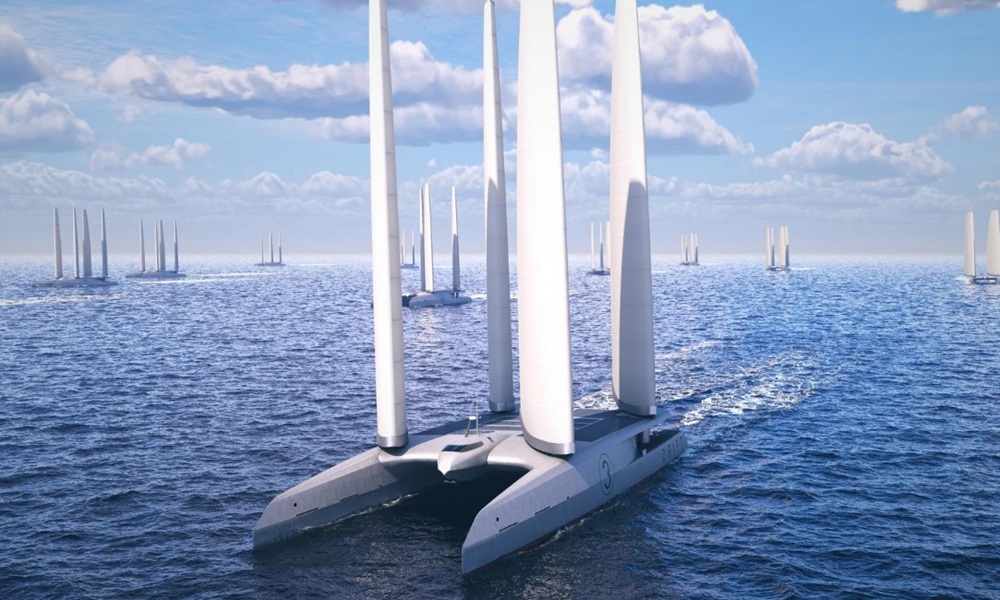
UCL’s work suggests that conventional ships that cannot be converted rank among the riskiest assets, while retrofit readiness, energy efficiency and technologies such as wind-assisted propulsion improve resilience. Under current IMO policy uncertainty, efficient older tonnage and conventional or LNG dual-fuel vessels can, in some cases, represent lower climate-risk investments because they preserve flexibility.
For financiers, the significance is clear. Existing lender frameworks can show where a portfolio stands today, but not how individual ships may cope with future regulation, fuel prices, technology costs or declining demand for fossil cargoes. Michael Parker, former chairman of the Poseidon Principles Association, said banks need tools to identify where transition risk is concentrating across shipping portfolios. Professor Tristan Smith of UCL said the framework is not about predicting winners, but giving shipping “simple, transparent and repeatable” ways to compare risk across assets.
Watch List
The shipping industry will be watching for further adoption of the framework by banks and investors, and for how it influences lending terms and insurance premiums. The upcoming IMO Marine Environment Protection Committee (MEPC) meetings may provide more clarity on the Net Zero Framework and intermediate GHG targets, which will in turn affect the risk profiles of different vessel types. The framework’s results could also drive retrofitting decisions and fleet renewal strategies among shipowners.
Sources: