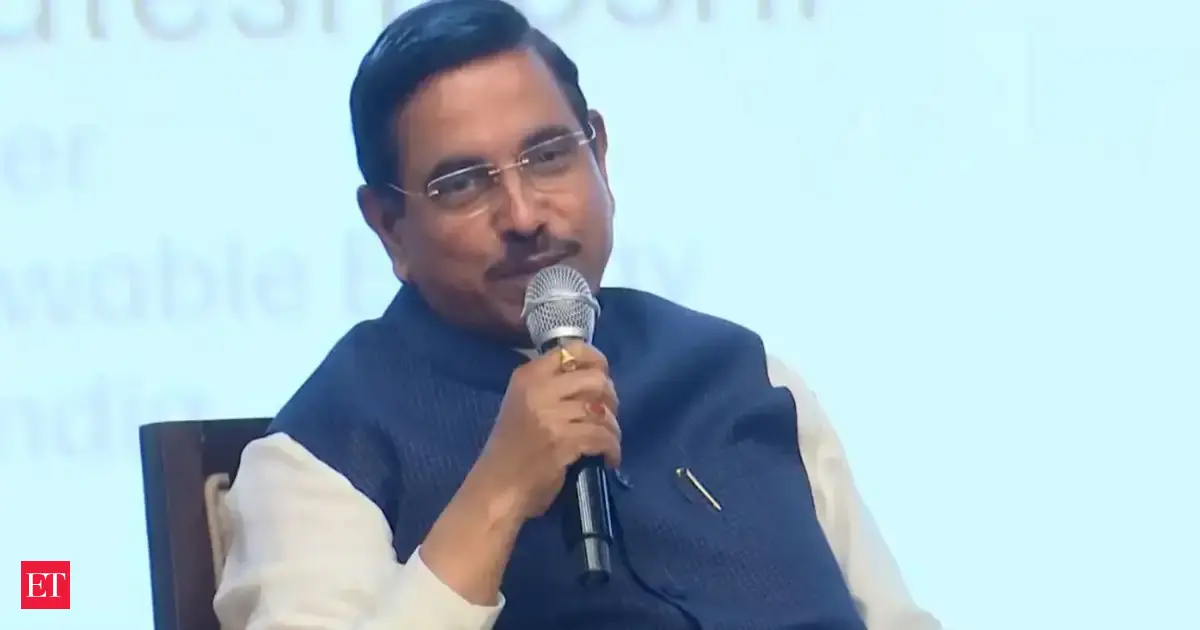
Effective July 2026, the BRICS group of nations will formalise cooperation on standardisation through a Memorandum of Understanding (MoU) that creates a framework for collaboration, according to Union Minister Pralhad Joshi. Speaking at the conclusion of a two-day meeting of BRICS National Standards Bodies (NSBs) in Bengaluru, held under India's 2026 BRICS Chairship, Joshi said the agreement would facilitate joint work on artificial intelligence (AI) standards, trade facilitation, technical cooperation, and capacity building.
What Changed: The BRICS MoU on Standardisation
Joshi stated that one of the most significant outcomes from the meeting is the finalisation and signing of the BRICS MoUs on cooperation in the field of standardisation. "Now we have finalised the MoU with all BRICS countries, and today it will be signed. This is the major achievement in this summit," he told reporters. The cooperation effort began in 2022, with previous NSB meetings held in China, South Africa, Russia, and Brazil before India hosted the fifth edition in Bengaluru.
The MoU will promote information sharing, exchange of best practices, technical collaboration, and capacity building among the NSBs of BRICS countries, Joshi explained. Sanjay Garg, Director General of the Bureau of Indian Standards (BIS), described the MoU as the "first of its kind" involving all 11 BRICS members, noting that India built consensus after several years of negotiations. "It will be a landmark achievement for signing this MoU today in this meeting," he said.
Who Is Affected: Scope of Application
The MoU directly involves the 11 BRICS member countries and their respective national standards bodies. Companies and trade compliance professionals operating within or trading with BRICS nations should note that coordinated efforts could lead to harmonised product standards, affecting export/import certifications, testing protocols, and conformity assessment procedures across sectors including electronics, semiconductors, solar modules, and renewable energy — sectors highlighted by Joshi as areas where India has emerged as a growing manufacturing hub under Prime Minister Narendra Modi's government over the past 12 years.
Consumer Affairs Secretary Nidhi Khare emphasised that standards are essential for building trust and confidence in global trade. "If we have to make quality as our mantra for manufacturing, this is going to help in the trade and commerce between the countries of BRICS," she said.
Compliance Obligations and Deadlines
While the MoU itself sets a framework rather than immediate binding obligations, compliance professionals should monitor the following areas for future implementation:
- Alignment of national standards with BRICS-agreed norms, particularly for AI, electronics, and green technologies.
- Participation in information-sharing platforms and technical collaboration initiatives among NSBs.
- Adoption of best practices in quality assurance and testing, including India's Zero Defect, Zero Effect (ZED) manufacturing approach, which aims at high-quality products with minimal environmental impact.
- Engagement with international standard-setting bodies such as the International Organization for Standardization (ISO) and the International Electrotechnical Commission (IEC), where Garg said coordinated BRICS efforts could help shape international standards.
No specific deadline for implementation was announced beyond the signing of the MoU at the Bengaluru meeting.
Resources and Guidance Sources
| Entity | Role |
|---|---|
| Bureau of Indian Standards (BIS) | India's NSB; lead negotiator and host of the 5th NSB meeting; provides guidance on compliance with Indian standards |
| BRICS NSBs | Each member country's standards body (e.g., China's SAC, Russia's Rosstandart, Brazil's INMETRO, South Africa's SABS) |
| Ministry of Consumer Affairs, Food and Public Distribution | Joshi's ministry oversees BIS and consumer standards in India |
| ISO and IEC | Global forums where BRICS intends to jointly influence international standards |
For trade compliance officers, the MoU signals upcoming efforts to reduce technical barriers to trade among BRICS nations. Companies should review their product certifications for alignment with potential BRICS-harmonised standards and engage with their respective NSBs for updates. The meeting, held under India's 2026 Chairship, also discussed standards for AI, trade facilitation, and capacity building, indicating future regulatory developments in these areas.
Sources: