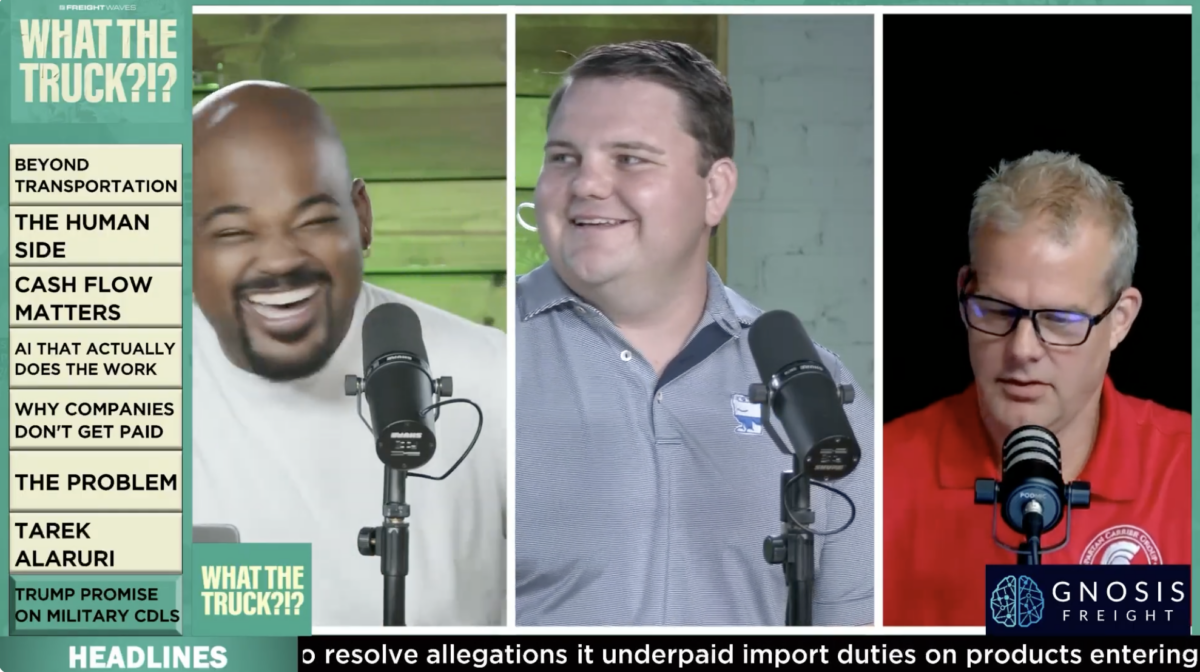
Accounts receivable in freight brokerage remains stubbornly manual, with back-office teams spending nearly half their time chasing invoices. According to FreightWaves, Tarek Alaruri, CEO and cofounder of Stuut, joined the “What the Truck?!?” podcast to explain how his company’s AI-driven platform automates the entire order-to-cash workflow, delivering measurable reductions in overdue payments.
The Problem: Manual Invoice Chasing
Alaruri, who began his career at TQL working alongside CEO Kevin Kaley, estimated that “forty percent of our team’s time was spent chasing down invoices.” He described a process stuck in the analog era: “There were a lot of items you still had to upload into a portal, and then you would have to take a copy, fax it over, and then mark it completed.” Despite industry talk of digitization, the collections side remained fragmented across multiple systems, FreightWaves reported.
Stuut’s AI Platform
Stuut, founded by Alaruri after a previous venture called Fairmarkit (focused on freight quotations and bids), is built to manage the full order-to-cash lifecycle. The platform handles credit risk assessment upfront, proactive customer communication, dispute resolution, and cash application. According to Alaruri, “No one’s really innovated on this process, even up to now.” The key differentiator is AI’s ability to connect siloed datasets. “We know that the way to really unlock this capital is to take these siloed datasets and close that loop,” he told FreightWaves. The platform works across multiple channels to unify conversations and data points.
Business Outcomes
Customers using Stuut see a “forty percent reduction in overdue invoices,” Alaruri said. The following table summarizes the before-and-after impact:
| Metric | Before Stuut | After Stuut |
|---|---|---|
| Back-office time spent chasing invoices | 40% | Significant reduction (automated) |
| Overdue invoices | High | 40% reduction |
| Workflow integration | Manual, siloed | Unified, AI-driven order-to-cash |
The platform also handles dispute triage and collection workflows, freeing staff to focus on higher-value tasks. Alaruri emphasized that collections are just the most painful piece; the entire order-to-cash process is being modernized.
Industry Context
Alaruri’s path—from broker at TQL to founder of two freight tech companies—highlights persistent inefficiencies in transportation finance. FreightWaves noted that while AI hype has settled, logistics firms are seeking concrete returns from automation. Stuut aims to deliver by connecting processes that previously lived in separate silos, such as credit assessment, invoicing, and collections. The platform’s AI automates routine steps, allowing teams to concentrate on exceptions and complex disputes.
For enterprise technology buyers in logistics, the key takeaway is that AI can unlock locked capital by automating accounts receivable. Stuut’s approach—unifying disparate data sets and automating manual workflows—offers a blueprint for similar transformations in trade finance and supply chain payments. The 40% reduction in overdue invoices translates directly to improved cash flow and reduced administrative overhead, making a strong business case for adoption.
Sources: