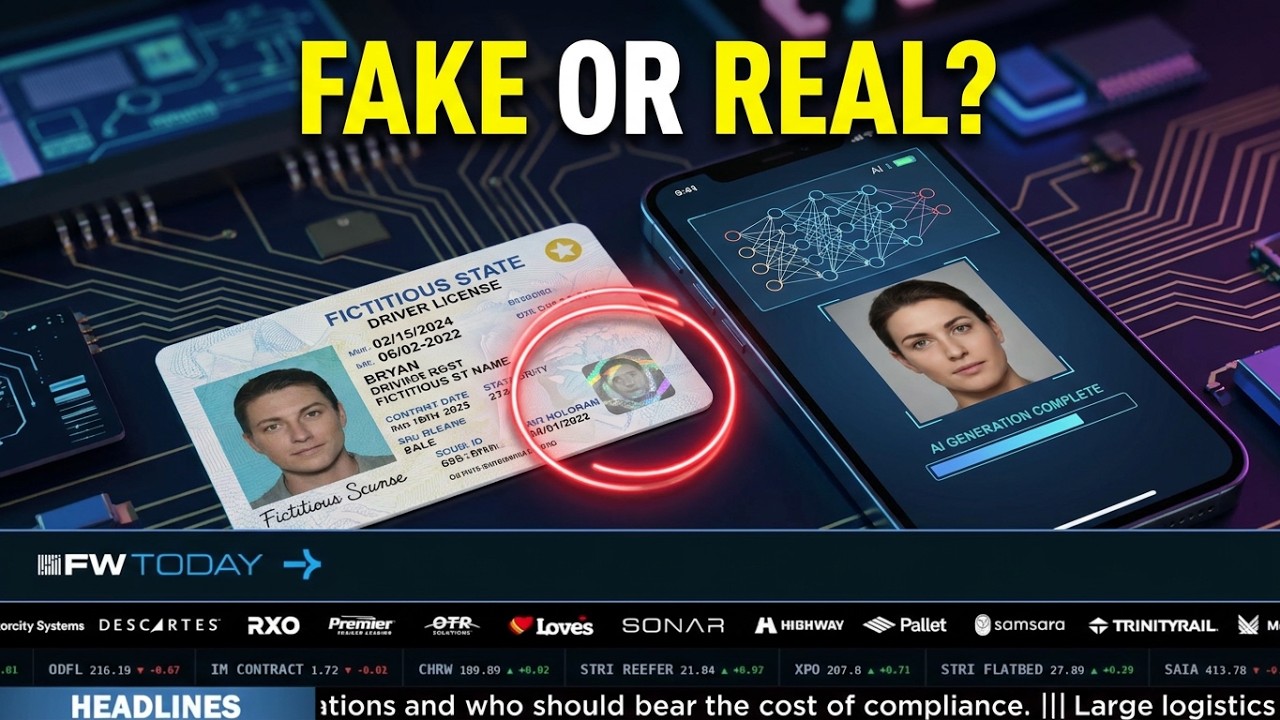
Identity theft has escalated from a personal inconvenience to a massive threat against the logistics and supply chain industries, according to a FreightWaves report. The article features Bryan Lewis, CEO of Intellicheck, who reveals how criminals now use AI to create sophisticated fake IDs with alarming ease, leading to billions of dollars in cargo theft and other financial fraud.
The Growing Threat of Fake IDs in Supply Chain
The FreightWaves article underscores that identity theft isn’t just a personal problem; it directly endangers logistics operations. Fake IDs enable criminals to impersonate legitimate drivers, warehouse staff, or brokers, infiltrating secure supply chain processes. The result is billions in cargo theft and financial fraud, though exact figures are not detailed in the source.
Intellicheck CEO on the Ease of AI-Powered Fraud
Bryan Lewis tells FreightWaves that modern AI tools make it trivially easy for criminals to produce fake IDs that look authentic. The sophistication of these forgeries challenges traditional verification methods, which often rely on visual inspection or outdated databases. Lewis's comments highlight a growing vulnerability in supply chain security: the gap between attacker capabilities and defensive technology.
Verifying Identities in Milliseconds
To counter this threat, Intellicheck offers cutting-edge identity verification technology that can authenticate IDs in milliseconds. The solution is designed to protect businesses from increasingly elaborate scams by quickly validating the legitimacy of identification documents. While the article does not specify the underlying technology stack, the speed and accuracy implied position it as a critical tool for logistics companies handling high volumes of personnel and contractor checks.
Events Addressing These Challenges
The FreightWaves article also promotes two industry events focused on technology and supply chain:
- Supply Chain AI Symposium: Described as moving 'past the hype' to help operators, founders, and enterprise leaders deploy AI in supply chain.
- F3: Future of Freight Festival: Taking place in Chattanooga, Tennessee, at The Signal at Chattanooga Choo Choo. It features industry-defining keynotes, rapid-fire technology demos, and networking, plus the inaugural F3 Awards Dinner revealing FreightTech and Shipper of Choice.
These events indicate the industry's recognition of AI as both a threat enabler and a defensive solution.
For enterprise technology decision-makers, the key takeaway from the Intellicheck CEO's warnings is that AI-powered fraud is not a future risk—it is already here. Logistics technology managers must evaluate identity verification tools not just as compliance checkboxes but as essential cybersecurity controls in their supply chain tech stack. The ability to defeat fake IDs in milliseconds could mean the difference between a secure shipment and a billion-dollar loss.
Sources: