E-commerce has long relied on keyword searches to drive transactions, but a new wave of artificial intelligence is shifting that model toward intent-led commerce, according to top executives at Flipkart Group.
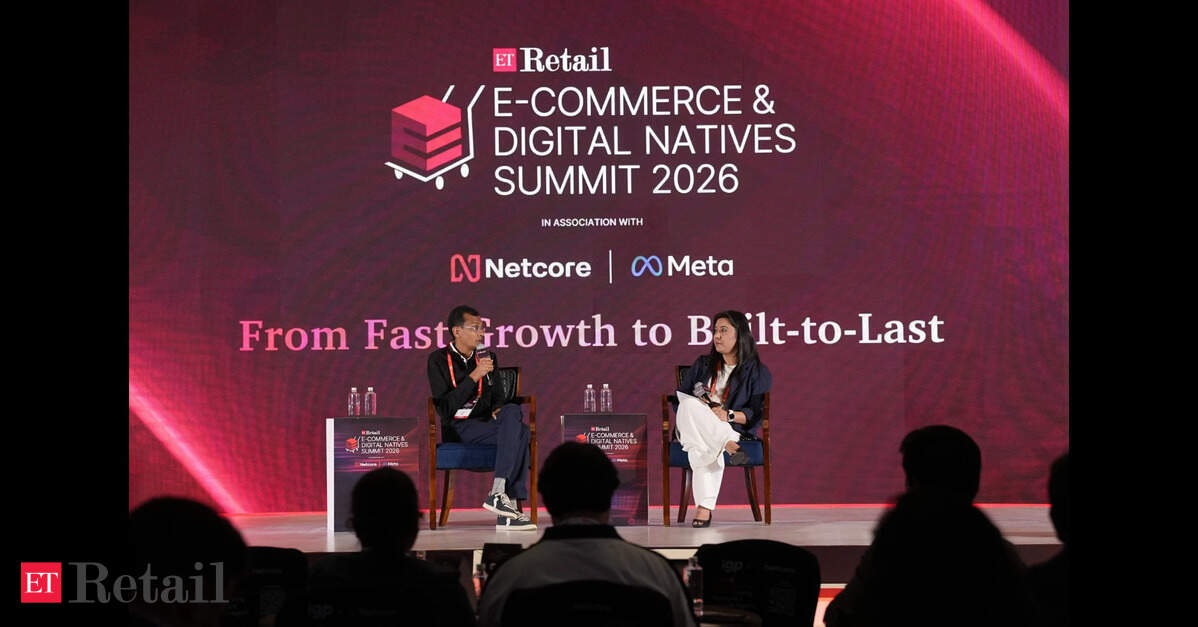
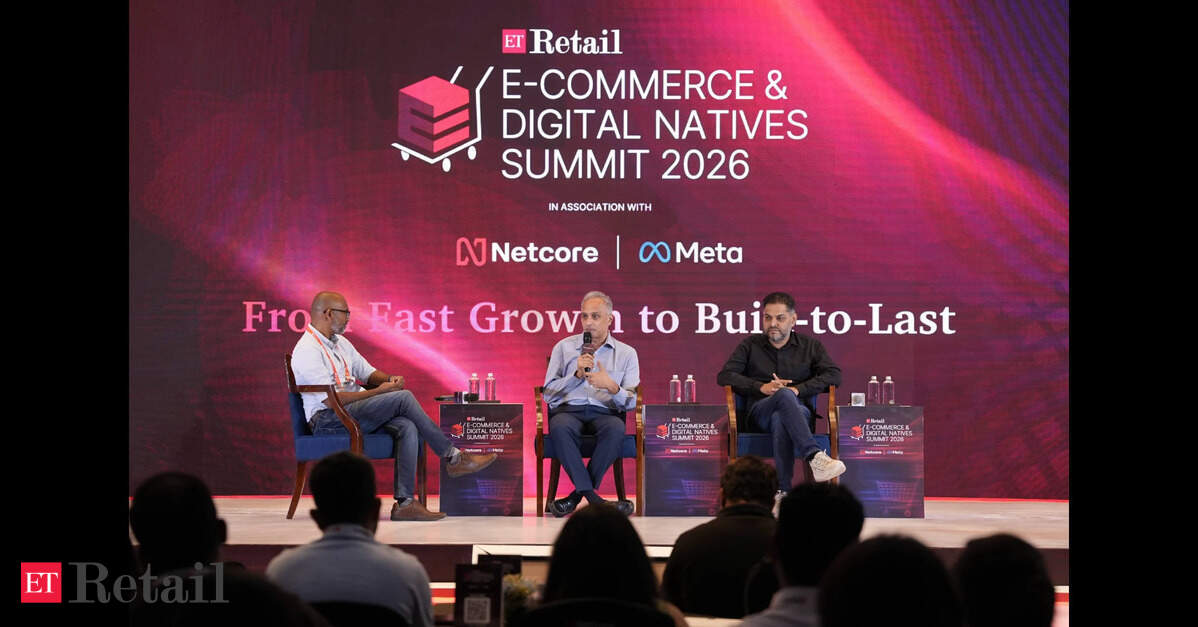
At the 6th edition of the ETRetail E-Commerce and Digital Natives Summit 2026, Balaji Thiagarajan, Chief Product and Technology Officer, Flipkart Group, and Hemant Badri, Senior Vice President and Head of Supply Chain, Customer Experience, and Re-Commerce, Flipkart Group, shared how advances in generative AI and agentic systems are reshaping product discovery, seller enablement, supply chains, and customer engagement. The session was moderated by Manu P Toms, Resident Editor–South, The Economic Times.
From Search to Intent: The Discovery Shift
According to Thiagarajan, the biggest shift has come from the emergence of generative AI and the rapid evolution of AI infrastructure. While data and machine learning have long powered e-commerce, the new wave of AI is changing how consumers discover products. “Discovery of products in retail has gone from search to intent-based. Essentially, that means you're going to a conversational commerce kind of a scenario,” he said. Customers increasingly expect interactions that mirror speaking with a store associate rather than typing keyword-based searches.
Thiagarajan revealed that Flipkart is rolling out an AI-powered interface where traditional search functions are being replaced by conversational experiences capable of understanding broader customer intent. The shift is also expanding the data foundation of commerce platforms beyond transaction histories and catalog information to include contextual knowledge, local insights, and multimodal interactions.
Agentic Commerce Across the Value Chain
A key theme was the rise of agentic commerce, where AI agents perform specialised tasks and collaborate across the e-commerce value chain. Thiagarajan said platforms are evolving from traditional microservices-based architectures toward ecosystems built around intelligent agents. “We have search agents, product Q&A agents, payment agents, agents that understand how to take care of customer queries, and agents that can act as a personal concierge,” he said. These systems are being deployed across customer journeys, seller workflows, warehouse operations, and forecasting functions.
Badri believes agent-based systems will become pervasive over the next two years, with virtually every major commerce workflow supported by dedicated AI agents. However, he stressed that businesses must evaluate these deployments against clear performance metrics and governance frameworks rather than viewing AI adoption as an end in itself.
AI as a Business Transformation Tool
“AI is not a productivity tool anymore, it's a business transformation tool,” Badri said. He added that AI is increasingly automating decision-making processes across functions, from customer engagement and merchandising to logistics and fulfillment. The executives highlighted how AI is creating new opportunities for sellers by lowering barriers to participation in digital commerce. Badri pointed to tools that allow merchants to receive real-time business insights, understand emerging demand trends, and generate digital assets such as images and videos at a fraction of previous costs. Such capabilities can help democratise access to sophisticated commerce tools for millions of businesses.
Future Vectors: Content-Led and Voice-Led Commerce
The conversation also explored how AI is influencing the future competitive landscape of Indian e-commerce. Thiagarajan identified content-led and voice-led commerce as two major growth vectors, particularly as platforms seek to improve engagement among diverse consumer segments. He noted that AI-powered content generation is enabling sellers to create rich product experiences more easily, though specific metrics were not detailed in the source.
The shift from search-driven transactions to intent-led commerce represents a fundamental change in e-commerce architecture, with Flipkart at the forefront of deploying generative AI and agentic systems across the entire value chain—from customer discovery to seller tools to supply chain operations.
Sources: