
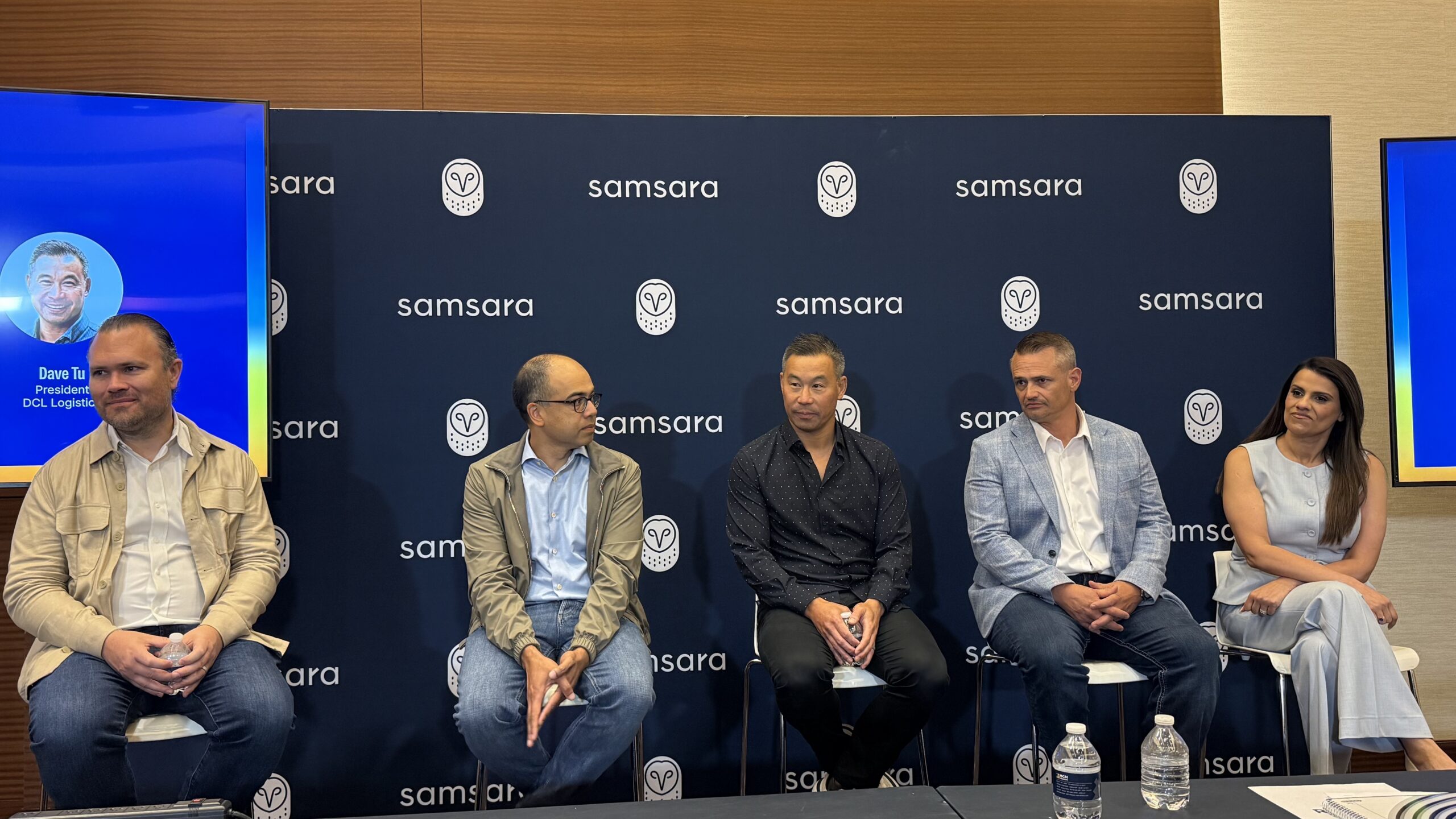
Fleet safety cameras have traditionally focused on catching drivers' worst behavior, but Samsara's new Ride Along feature aims to change that by using AI to monitor continuous driving sessions, capturing a full behavioral picture instead of rare incident flags. Unveiled at the Beyond 2026 customer conference in Las Vegas, the feature represents a shift from negative event detection to holistic driver assessment, according to a FreightWaves report.
How Ride Along Works
Chief Product Officer Johan Land explained the distinction between traditional safety monitoring and Ride Along. Standard camera systems flag discrete events such as phone use, close following distance, and harsh braking. 'They're typically fairly rare events. It's a few events a week, of that order of magnitude,' Land said, according to FreightWaves.
Ride Along instead runs for a continuous window of 10 to 30 minutes and evaluates the full session. 'The difference with Ride Along is that it's a time period, and then you get the full picture during that, which means that, as I said on stage, most of our pickup is positive,' Land said. 'It's a representative view of the driving, and therefore gives a wholly different view into it.'
Fleet managers can schedule sessions manually, trigger them automatically based on risk profile, or use them as structured onboarding. 'What we see is that many customers get them at 30, 60 and 90 days after hire, as an example,' Land noted. The output is not a raw clip; managers see a summarized view with video access, and the AI assigns training when warranted. The system uses Samsara's proprietary 22-factor Safety Assessment Standard.
| Feature | Traditional Systems | Samsara Ride Along |
|---|---|---|
| Monitoring method | Discrete event flags | Continuous 10-30 min sessions |
| Event frequency | Few per week | Full session coverage |
| Focus | Negative incidents | Positive and representative behavior |
| Trigger | Manual or automatic flags | Scheduled, risk-based, or onboarding |
| Output | Raw clips | Summarized view with training recommendations |
Customer Feedback and Change Management
UNFI was among the early beta testers of Ride Along. Tehzin Chadwick, UNFI's chief safety officer, said her team worked with Samsara through the beta alongside operations staff. The deliberate sequencing of test, flag, verify, deploy was key to ensuring driver confidence.
'We aren't adding technology to make your lives more difficult or more complex. It's completely the opposite,' Chadwick said, according to FreightWaves. 'It's there to continue to keep you safe but also to take away any of that background noise.'
On gamification, Chadwick noted a one-size-fits-all approach doesn't work. 'We specifically try to use that for training. That works with a certain segment of our drivers who really enjoy that. And then there are some other ones that don't enjoy that, and that's not how they want to learn,' she said. UNFI now offers drivers a menu of training formats and lets them indicate their preference.
The Power of Positive Feedback
Sanjit Biswas, Samsara's CEO and co-founder, said driver buy-in shows up in the data. On leaderboards, competition becomes self-reinforcing. 'A lot of drivers take their safety score super seriously because they're competing,' Biswas said, according to FreightWaves. 'I sometimes do ride-alongs with drivers, and they're like, “Why'd I get a 98?” And that's the kind of thing we love to see because it's a positive feedback loop, and the majority of drivers do a great job every day.'
The old framing got the incentive structure wrong, he added. 'These historical systems had shown that they would call you out on events when you did something bad.'
Expanding the Safety Ecosystem
Ride Along runs on recorded video. A separate product announced at the conference operates in real time: an in-cab driver companion agent, a conversational AI that handles questions drivers would otherwise radio to dispatch. For fleets already navigating change management challenges with new AI tools, the message from Samsara's customer panel was that rollout strategy matters as much as the technology.
Sources:
