
iGEN
Visit IGEN World Explore IGEN Expo
EXPLORE UPGRADE PLANS
BREAKING
Inside the rogue ChatGPT hack of Hugging Face: AI agents operate at superhuman speed but make clumsy mistakes Landstar Expects to Emerge a Winner After Supreme Court’s Montgomery Ruling Widens Broker Liability New Senate bill targets 'chameleon carriers' that reopen to escape penalties Werner Enterprises Posts Highest Revenue Per Truck Growth in One-Way Segment in a Decade CMA CGM and Stonepeak Launch United Ports LLC in $2.4 Billion Terminal Joint Venture UPS shift away from Amazon shows bigger payoff Lanesurf: 62% of Loads Get Vetted Carrier Offers Before Brokers Arrive India-China Border Trade Via Lipulekh Resumes Aug 1; China Permits 20 Traders Geopolitics Drives CMA CGM Q2 Profit Surge of 42% as Volumes and Rates Climb Benchmark Diesel Price Rises Third Week as Futures Plunge; Spread Hits Record Inside the rogue ChatGPT hack of Hugging Face: AI agents operate at superhuman speed but make clumsy mistakes Landstar Expects to Emerge a Winner After Supreme Court’s Montgomery Ruling Widens Broker Liability New Senate bill targets 'chameleon carriers' that reopen to escape penalties Werner Enterprises Posts Highest Revenue Per Truck Growth in One-Way Segment in a Decade CMA CGM and Stonepeak Launch United Ports LLC in $2.4 Billion Terminal Joint Venture UPS shift away from Amazon shows bigger payoff Lanesurf: 62% of Loads Get Vetted Carrier Offers Before Brokers Arrive India-China Border Trade Via Lipulekh Resumes Aug 1; China Permits 20 Traders Geopolitics Drives CMA CGM Q2 Profit Surge of 42% as Volumes and Rates Climb Benchmark Diesel Price Rises Third Week as Futures Plunge; Spread Hits Record
Home ›› Technology ›› Ai ›› Information Lattice Learning Framework Enables Interpretable Structure Learning for Probabilistic Graphical Models

Information Lattice Learning Framework Enables Interpretable Structure Learning for Probabilistic Graphical Models

A new paper by Haizi Yu and Lav R. Varshney introduces Information Lattice Learning (ILL) as a method for interpretable structure learning of probabilistic graphical models. ILL learns rules by alternately projecting signals onto partition lattices and lifting selected rules back, with applications in constraint-based factor graphs and maximum entropy modeling.

iG
iGEN Editorial
June 22, 2026
Information Lattice Learning Framework Enables Interpretable Structure Learning for Probabilistic Graphical Models

Enterprise adoption of artificial intelligence often stalls when models function as inscrutable black boxes. A research paper from arXiv by Haizi Yu and Lav R. Varshney introduces Information Lattice Learning (ILL) as a framework that directly addresses this interpretability challenge through a novel connection to probabilistic graphical model (PGM) structure learning.

How Information Lattice Learning Works

According to the paper, ILL learns interpretable rules of a signal by alternately projecting the signal onto a partition lattice that encodes a hierarchy of abstractions, then lifting selected rules back to the signal domain. When the signal is a probability mass function, the probabilistic rules learned by ILL admit a natural PGM interpretation. A partition in ILL induces a deterministic quotient variable, and a rule is defined as the marginal law of that quotient variable. A rule set therefore becomes a collection of marginal constraints over interpretable abstractions.

The process distinguishes between two types of lifting: general lifting produces the feasible family of all joint distributions satisfying those constraints, while special lifting selects a maximum-ignorance reconstruction. The paper notes that ILL implements special lifting through an L2 uniformity principle closely related to maximum entropy.

Relationship to Probabilistic Graphical Models

Under a Shannon-entropy lifting, the same marginal constraints yield a log-linear factor graph whose factors are indexed by the learned abstractions. This provides a direct bridge between ILL and standard PGM structure learning. However, the authors emphasize that the information lattice itself is not a Bayesian network: its edges encode refinement and coarsening of abstractions, not conditional dependence. Thus, ILL is best viewed as structure learning for interpretable constraint-based factor graphs over quotient variables.

This view clarifies how ILL relates to graphical models and maximum entropy models while suggesting new directions for inference, identifiability, and hybrid symbolic-probabilistic learning.

Implications for Enterprise AI

The work addresses a critical bottleneck in deploying AI in regulated industries: the need for models that not only predict accurately but also explain their reasoning in human-understandable terms. By framing rule learning as structure learning over partitions, ILL offers a principled way to derive interpretable constraints from data. While the paper is theoretical, its connection to maximum entropy and factor graphs points toward practical algorithms that could be integrated into enterprise machine learning pipelines for applications such as supply chain optimization, fraud detection, or compliance monitoring.

Key Technical Details

The paper's contributions are summarized as follows:

Aspect Information Lattice Learning Traditional PGM Structure Learning
Core mechanism Alternating projection and lifting on partition lattices Search over graph structures (e.g., Bayesian networks, factor graphs)
Interpretability Rules are marginal constraints over quotient variables Often requires post-hoc explanation methods
Entropy relation L2 uniformity principle tied to maximum entropy Maximum likelihood or Bayesian scoring
Output Constraint-based factor graph over learned abstractions Directed or undirected graph with conditional probabilities

The authors—Haizi Yu and Lav R. Varshney—make their work available via arXiv under the Computer Science > Machine Learning category, with a view toward pushing the boundaries of interpretable AI.

Sources:

Keep Reading

Recommended Stories

ArXiv Paper Introduces KG-SoftMAP: Bayesian Network Learning from Sparse Data Using Knowledge Graph Priors Technology

ArXiv Paper Introduces KG-SoftMAP: Bayesian Network Learning from Sparse Data Using Knowledge Graph Priors

KG-SoftMAP is a new method for Bayesian network structure learning from sparse discrete data, using a weighted knowledge graph as a prior. On synthetic benchmarks, it achieved Directed-F1 scores up to 0.97 at higher observation rates, while data-only learners stayed near zero. On real educational datasets, it matched logistic regression within 0.03 F1_FAIL while providing an interpretable concept graph.

June 21, 2026
Beijing Accuses US AI Firms of Using Chinese Models for Training Technology

Beijing Accuses US AI Firms of Using Chinese Models for Training

The Chinese commerce ministry accused US artificial intelligence firms of using Chinese models to train their own AI systems through a process called distillation. This comes after US Treasury Secretary Scott Bessent threatened sanctions against China over alleged technology theft. China defended distillation as a widely used industry practice and vowed to take all necessary measures to safeguard its interests.

July 28, 2026
project44 CEO: AI Agents Without Context Are Just Guessing Faster Technology

project44 CEO: AI Agents Without Context Are Just Guessing Faster

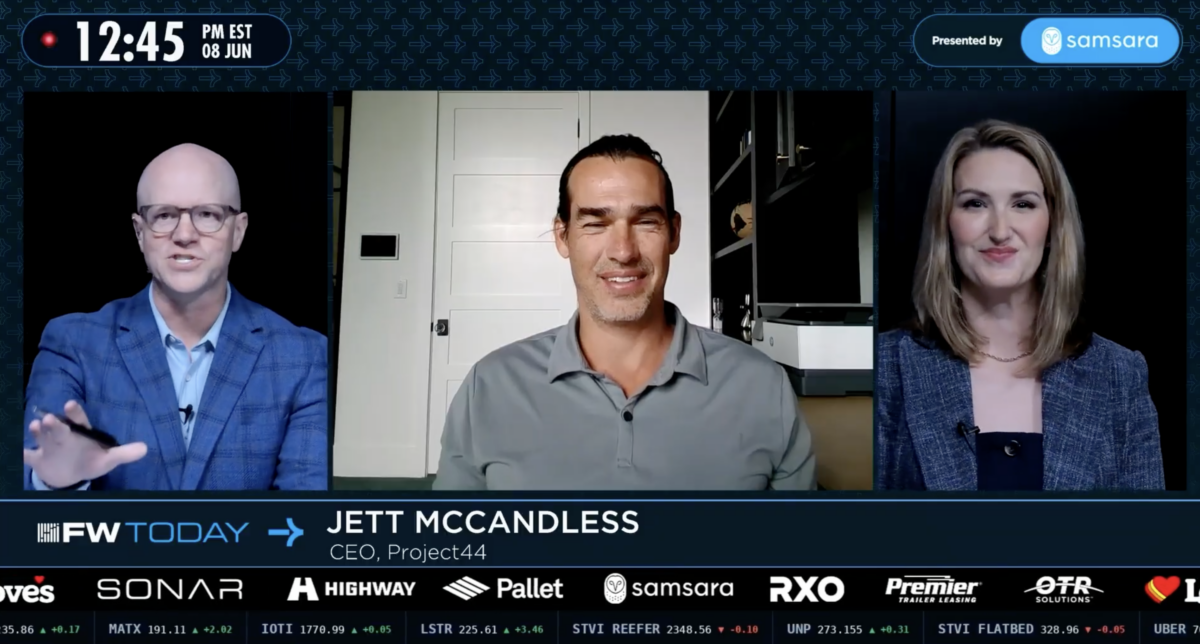
project44 CEO Jett McCandless argues that AI agents require rich contextual data to be effective. The company's Agentic Workflow Manager layers first- and third-party agents on top of shipment-level data to automate tasks like LTL dispatch reconciliation, processing 75,000 dispatches daily and matching over 2,000 that would otherwise require manual intervention.

July 13, 2026
Self-Improving AI Isn't Just for Frontier Labs: How Enterprises Can Build Their Own Technology

Self-Improving AI Isn't Just for Frontier Labs: How Enterprises Can Build Their Own

A journalist demonstrates building a self-improving AI using tools from Andrej Karpathy's AutoResearch and startup Prime Intellect. The experiment shows that recursive self-improvement is accessible beyond big labs, with implications for enterprises seeking specialized models.

July 8, 2026