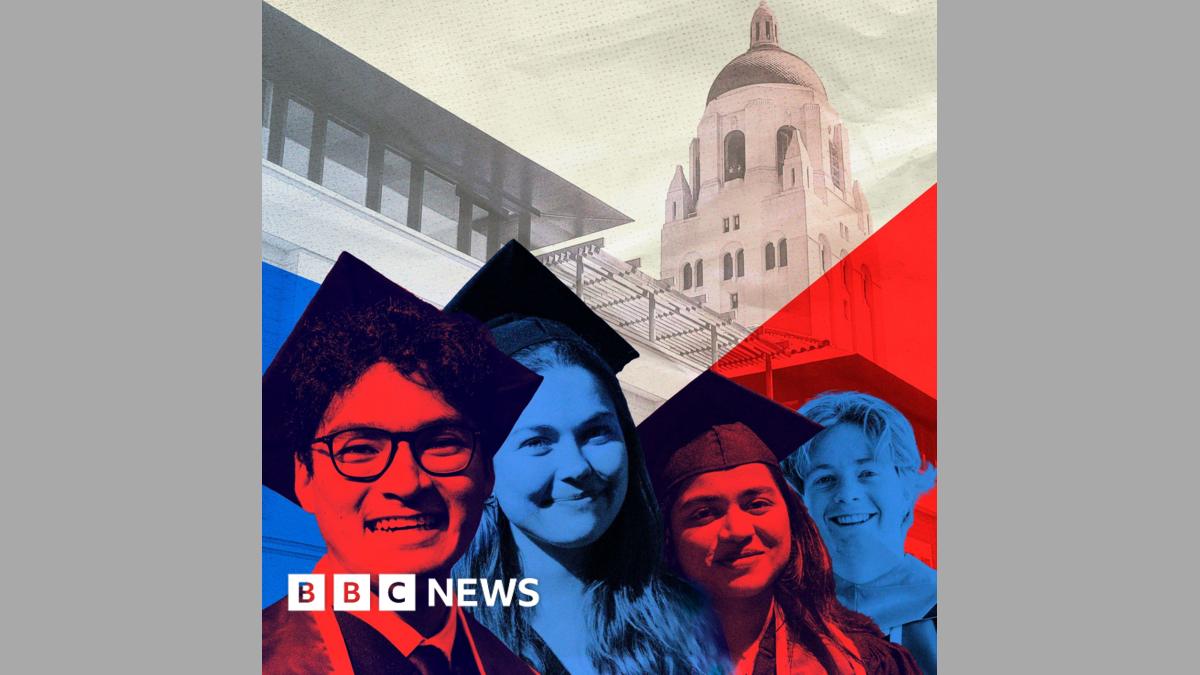
American college graduates have sent a clear message to this year's commencement speakers: avoid the topic of artificial intelligence. According to the BBC, some of the biggest names in tech, including former Google boss Eric Schmidt, have been booed when they mention the technology. At Stanford University, in the heart of Silicon Valley, Google CEO Sundar Pichai joked about having been told to avoid the topic, but a group of graduates nevertheless walked out during his remarks, carrying signs that read 'ICE spies with Google AI' and waving Palestinian flags.
Split Views on AI
The BBC spoke to Stanford graduates shortly after Pichai's address, capturing a wide range of views on AI. Some are scared, some are excited, but nearly everyone agrees that AI is already changing the world around them.
Ifdita Hasan, a graduating computer science and AI major, expressed optimism. 'I feel optimistic about AI,' she said. 'I think AI gives us the opportunity to learn more about the universe. It's a tool that people should try to use and try to adapt to.' She added that she's not surprised by the backlash, noting early pessimism is common with emerging technologies. 'This is what happens. It happened with the internet,' she said. 'But I would encourage people to be optimistic about AI – to try to learn and explore more.'
Other graduates are less sanguine. Atash Heil, a major in Earth Systems (environmental science and policy), expressed fear about what an AI-dominated future might look like. He described visiting an exhibit featuring AI-generated art as 'jarring' and said, 'I thought it was scary, especially on my graduation day, to see that. The future is… that? I want art to be made by humans. That's what makes it art, right?'
'It has to be done ethically, and it's not being done ethically these days.' — Atash Heil, Stanford graduate
Job Market Concerns
AI is also threatening some students' future prospects. The Federal Reserve Bank of New York recently found that recent college graduates are struggling to find work. Additionally, a Stanford study published in November found that employment for early-career workers in the US has substantially fallen in fields considered most exposed to AI, including software development. Unsubstantiated rumours have swirled on social media claiming that students in Stanford's coveted computer science programme have had trouble finding jobs.
| Perspective | Key Points |
|---|---|
| Optimistic (Ifdita Hasan) | AI is a tool for learning; early backlash is normal (like the internet); encourages exploration |
| Pessimistic (Atash Heil) | AI art is scary; ethics are lacking; uncertainty about future; speed of transformation is alarming |
For enterprise technology leaders, the backlash at a premier AI feeder institution signals growing distrust in how AI is being developed and deployed. The concerns about ethics and job displacement among top graduates may affect the talent pipeline for companies building or adopting AI systems.
Sources: