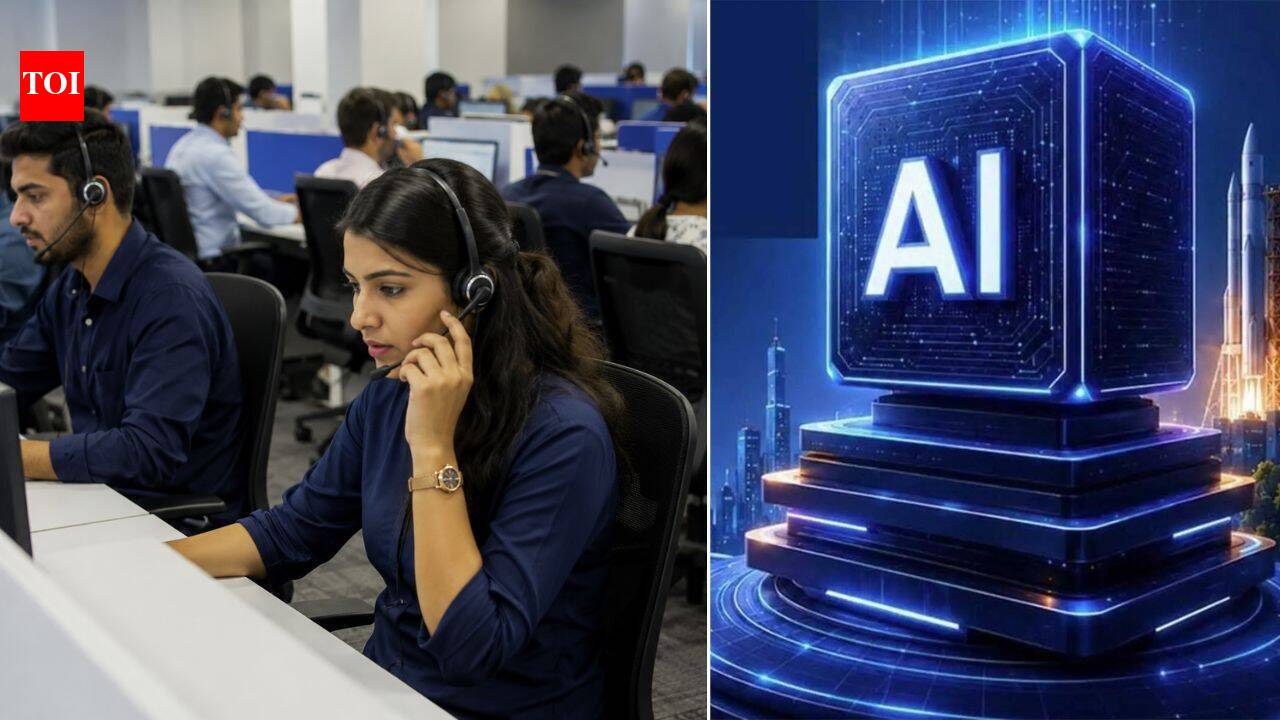
For years, calling customer care meant enduring long hold times to speak to a human agent. Today, that experience is rapidly changing, especially in India's business process outsourcing (BPO) industry. Whether tracking a delayed parcel or reporting a failed payment, the first point of contact is often a chatbot or AI-powered voice assistant. Many routine issues are now resolved without a human ever joining the conversation. For customers, this means quicker responses and round-the-clock support; for businesses, it promises lower costs and faster service. But the shift raises critical questions about jobs, skills, and data privacy.
The Shift to AI-Powered Customer Service
The transition to AI-driven support is already underway across industries. According to research firm Gartner, 85% of customer service leaders are either exploring, piloting, or deploying AI chatbots, and 71% of customer relationship management leaders plan to increase investments in AI. Gartner also estimates that by 2029, AI could autonomously resolve nearly 80% of common customer service issues. These capabilities include directing customers to the right department, creating support tickets, summarising previous interactions, translating conversations across multiple languages, and completing post-call documentation—automating many repetitive tasks that once required human agents.
| Metric | Value |
|---|---|
| Customer service leaders exploring/piloting/deploying AI chatbots (Gartner) | 85% |
| CRM leaders planning to increase AI investments (Gartner) | 71% |
| Estimated autonomously resolved common issues by 2029 (Gartner) | 80% |
How AI Decides to Hand Off to Humans
Data scientist Vishnu Prasad Sharma explains that AI's decision to continue a conversation or involve a human depends on two factors: "whether the LLM [large language model] is confident enough in its answer given the data it has retrieved, and whether the conversation itself is of a nature that warrants a human." Chatbots use intent recognition and retrieve relevant company documents or past interactions before generating a response. This technology allows AI to handle many routine queries, but it has limits, especially when conversations become complex or nuanced.
The Changing Nature of Customer Calls
Automation has not eliminated the need for human agents. Instead, it has shifted them toward more complex work. Tasks that once dominated a representative's day—answering FAQs, processing refunds, tracking orders, resetting passwords—are increasingly handled by AI. What reaches a human today often involves frustrated customers, complex problem-solving, or emotional situations.
Delhi-based public relations professional Mohit Kumar experienced the limits of AI firsthand. While trying to book a stay in Varanasi, he was connected to an automated voice assistant that repeatedly failed to understand his questions about room availability and check-in timings. Frustrated, he eventually chose another accommodation. "AI works well for simple queries, but when a conversation becomes more detailed, talking to a person still makes all the difference," Mohit told TOI. This anecdote underscores the ongoing need for human empathy and judgment in customer service.
Implications for Supply Chain Technology Leaders
For enterprise technology decision-makers in supply chain and logistics, the rise of AI in customer care offers clear benefits: faster responses for parcel tracking, payment issues, and order status updates, along with reduced operational costs. However, the reliance on AI also introduces new considerations—data privacy, the need for robust intent recognition models trained on industry-specific data, and the importance of seamless escalation pathways to human agents. As AI handles more routine interactions, supply chain leaders must invest in systems that can integrate with existing logistics platforms (TMS, WMS) and ensure that complex, emotional customer interactions are properly triaged. The balance between automation and human touch will define the next phase of customer service in global trade and logistics.
Sources: