
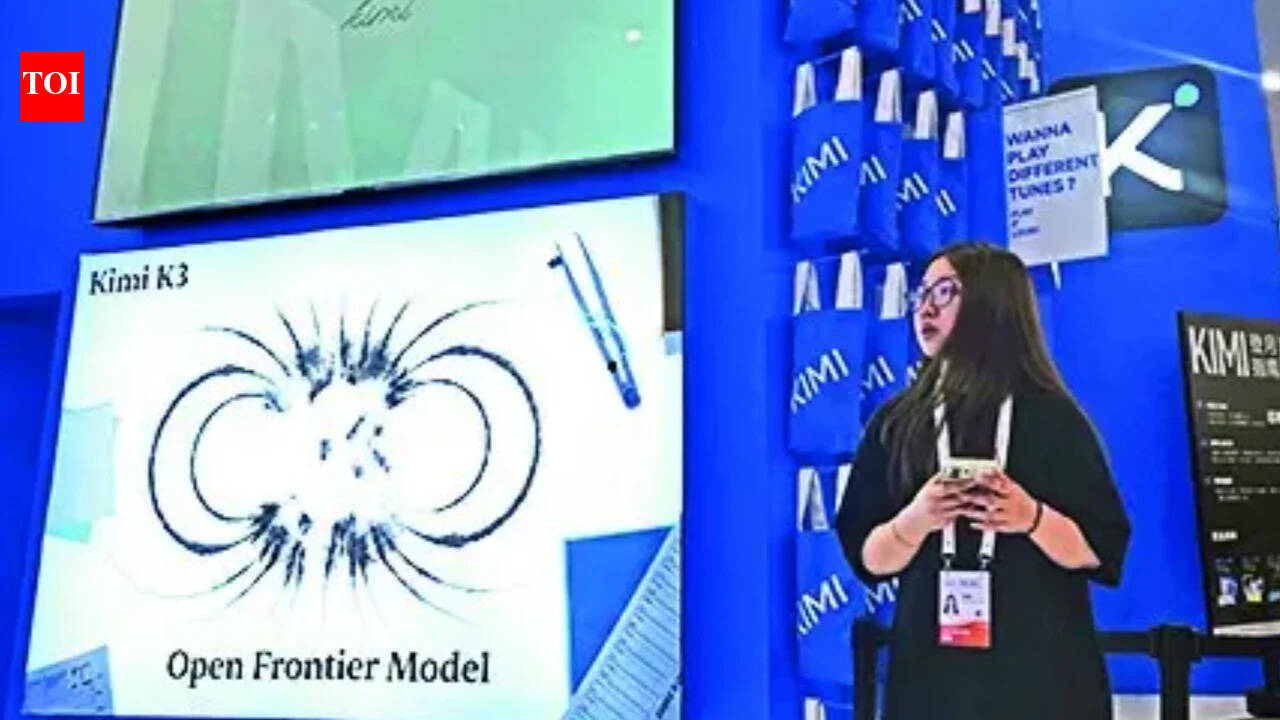
Chinese artificial intelligence models are making headway in the US market, winning over users at companies like Mozilla and Coinbase with lower costs and competitive performance, according to a report by the Associated Press.
Cost-Driven Enterprise Adoption
Raffi Krikorian, the chief technology officer at Mozilla, which runs the Firefox browser, switched to Chinese AI startup Moonshot's Kimi K3 for many day-to-day activities within days of the model's launch more than a week ago. He described K3 as "snappier" compared to the acclaimed and more expensive Claude Fable chatbot from San Francisco company Anthropic. Earlier, he had been using another Chinese model, Z.ai's GLM-5.2, for routine tasks such as managing his calendar, documents and email.
US companies like cryptocurrency exchange Coinbase said they are switching to Chinese AI models to help trim costs, according to the AP report.
The Expanding Chinese AI Portfolio
The rapid rise of cutting-edge Chinese AI models this year shows the China-US AI race has evolved significantly since early 2025, when DeepSeek first shook the US technology industry with a high-performing but cheap model. The latest models from startups Z.ai (also known as Zhipu) in June and Moonshot in July are nearly as intelligent as frontier models from OpenAI and Anthropic, experts say. In July, Alibaba previewed its Qwen3.8 Max AI model. In April, DeepSeek rolled out previews of its latest V4 model, challenging OpenAI's GPT and Google's Gemini.
| Model | Company | Launch Date | Context |
|---|---|---|---|
| GLM-5.2 | Z.ai (Zhipu) | June 2026 | Used by Mozilla CTO before K3 |
| Kimi K3 | Moonshot | July 2026 | Caused subscription suspension due to demand |
| Qwen3.8 Max | Alibaba | July 2026 | Previewed |
| DeepSeek V4 | DeepSeek | April 2026 (preview) | Challenges GPT and Gemini |
Popularity and Market Data
Based on data over the past month, the top five most popular models on OpenRouter, a platform that tracks AI models, were Chinese. Estimates from Sensor Tower, a market intelligence firm, showed that China's Kimi had more than 930,000 downloads during the week after K3's July release, an increase of 200% from the week before. In the US, it was downloaded around 86,000 times, a 387% jump. K3 proved so popular that Moonshot had to suspend new subscriptions as demand pushed its capacity close to its limits.
Geopolitical Friction and Claims of Distillation
The popularity of Chinese AI models has frustrated some US tech giants. The Trump administration on Wednesday accused Moonshot of using "covert" but not necessarily illegal methods to build K3 off the back of Anthropic's Fable. Some US politicians and AI companies including Anthropic have accused Chinese startups of illicit "distillation" of their models to extract technologies, a claim that Beijing rejects as "groundless."
American-led restrictions block China from accessing some of the world's most advanced technologies including cutting-edge AI chips, and US Treasury Secretary Scott Bessent has warned more sanctions could be coming to protect American intellectual property.
Implications for Enterprise Technology Decision-Makers
For CTOs and technology procurement leaders, the affordability and performance of Chinese AI models present a clear cost-reduction opportunity. Raffi Krikorian's adoption of both Z.ai and Moonshot models highlights a growing comfort with these tools for core productivity tasks. However, the geopolitical tensions and accusations of distillation introduce risk around supply chain continuity and data security. The rapid iteration cycle — from DeepSeek in early 2025 to multiple new models in mid-2026 — suggests that Chinese AI companies are competing aggressively on both price and capability, potentially pressuring Western AI vendors to lower costs and accelerate innovation. Short of an outright ban, these models are likely to continue appealing to independent software developers and cost-conscious enterprises in the US and elsewhere.
Sources:

