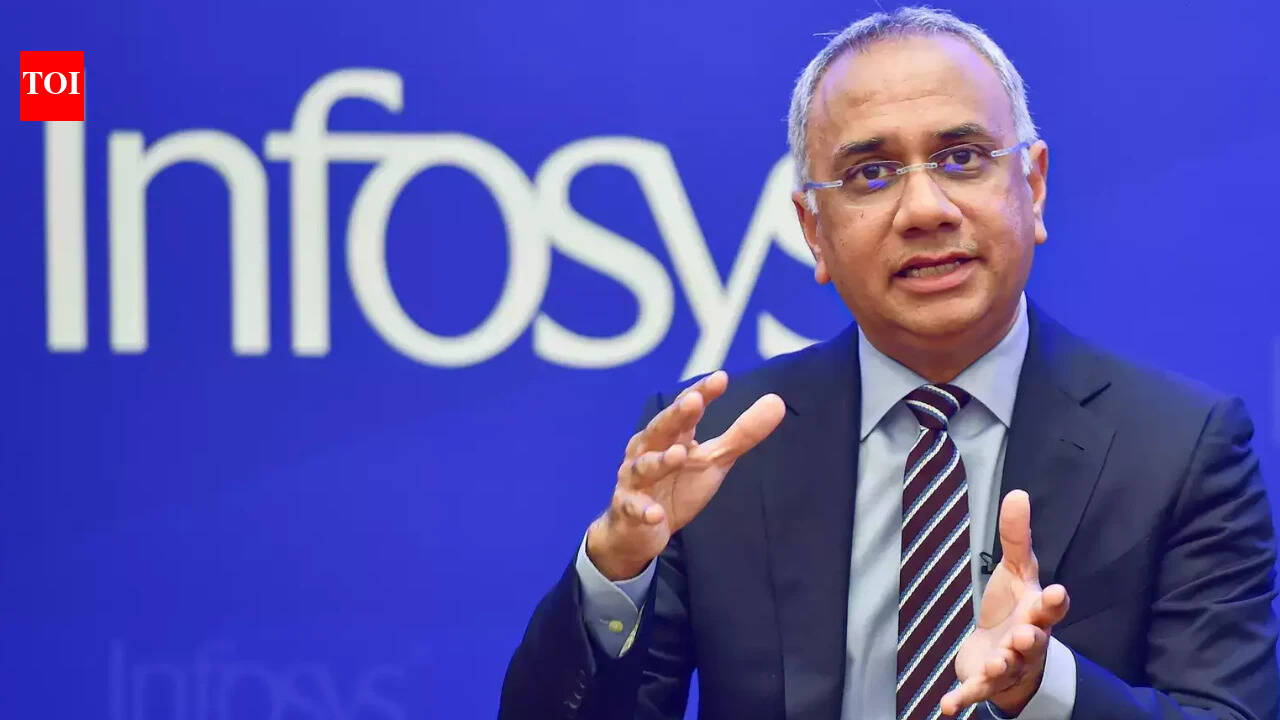
When enterprise technology leaders ask whether AI will make IT services firms obsolete, Infosys CEO Salil Parekh points to the AI labs themselves. In an interview with The Times of India (TOI) published by Business-Today, Parekh said that OpenAI, Anthropic and other foundation-model labs "want strong partnerships with Infosys" — a signal that even the creators of the technology consider human-led deployment services essential.
From $10 billion to $20 billion: Infosys's AI-era track record
Parekh took over as Infosys CEO in 2018, when the company was grappling with boardroom turmoil that had shaken investor confidence, according to Business-Today. Over nine years, he helped double revenue from $10 billion to $20 billion, secure over $100 billion in large deals, and lay the foundation for the company's AI strategy, including partnerships with OpenAI, Anthropic and Cognition.
| Metric | Figure |
|---|---|
| Revenue growth under Parekh | $10B to $20B |
| Large deals secured | ~$100B |
| Workforce | 300,000 |
| Enterprise clients | 1,800 |
| Digital transformation share of business | 20% to 60% |
| AI services share of revenue | 8% |
The digital transformation shift from 20% to 60% of the business was, Parekh said, a deliberate move taken "based on what will genuinely help our clients, not just what looks exciting." He said Infosys remains "one of the fastest growing firms on an organic basis over the last eight years" because of these initiatives, while staying disciplined on margin, free cash flow and execution.
Why the labs need a 'deploy co'
Asked whether Anthropic, OpenAI and Microsoft's enterprise deployment arms pose a threat to IT services firms, Parekh said the technology companies' own approach validates the sector's relevance. "If the labs themselves say the foundation model alone won't do everything, and a 'deploy co' is needed, that's a huge validation for companies like us," he said in the interview.
Infosys brings 300,000 people and 1,800 clients, many with relationships spanning 10 to 20 years, giving it "deep context on those clients' technology landscapes." That, Parekh argued, is "a natural advantage over newer entrants with far smaller headcounts."
A $300 billion AI services market
Speaking to investors who believe AI will fundamentally reshape IT services, Parekh framed AI services as a $300 billion opportunity. "With 8% of our revenue already there, that's a solid long-term growth prospect," he said. He compared the shift to cloud and digital transformations, where businesses "move from a low percentage to a high percentage over time, and the whole business benefits."
Leadership transition and a 'boring' culture
Parekh, who retires in March next year, reinforced chairman Nandan Nilekani's approach of making Infosys "boring" in the best sense — predictable, consistent and dependable. He credited the company's "stable, cohesive team" and the "One Infosys" culture for much of the progress. His successor, Ashiss Kumar Dash, was chosen from inside the company; Dash has been at Infosys for more than 30 years and, in Parekh's words, has "built a nicely balanced portfolio across growth, margin, and industries."
For CTOs and digital leaders evaluating AI partners, the Infosys figures offer a concrete benchmark: an established services firm that has already converted 8% of revenue to AI services, while holding long-term client relationships and a large-deals pipeline that reached $100 billion under Parekh's tenure.
Sources: