
iGEN
Visit IGEN World Explore IGEN Expo
EXPLORE UPGRADE PLANS
BREAKING
Attention as Coupling: New Fast-Slow ODE Framework Aims to Improve Transformer Efficiency Self-Consistency Reranking Boosts Accuracy in Narrative Question Answering for Enterprise AI FRA Greenlights Expanded Rail Track Tech Tests as CSX Prepares July 2026 Rollout Hidden Failure Modes in AI Reasoning: Study Reveals Oversight Paradox and Context-Injection Vulnerabilities InstantForget: New Update-Free Backdoor Unlearning Method Uses Inference-Time Feature Reset for AI Security Beyond Weights and Gradients: New Taxonomy Classifies Federated Learning Messages into Three Categories Token Reduction in Generative Models Must Evolve Beyond Efficiency, New Research Argues Semantic Flip: Synthetic OOD Generation for Robust Refusal in Embodied Question Answering and Spatial Localization Emergent Strategic Reasoning Risks in AI: New Taxonomy-Driven Framework Evaluates Deception and Gaming in LLMs Federated Medical Image Segmentation under Real-World Label Noise: A Benchmark Suite for Noisy Label Learning Method Selection Attention as Coupling: New Fast-Slow ODE Framework Aims to Improve Transformer Efficiency Self-Consistency Reranking Boosts Accuracy in Narrative Question Answering for Enterprise AI FRA Greenlights Expanded Rail Track Tech Tests as CSX Prepares July 2026 Rollout Hidden Failure Modes in AI Reasoning: Study Reveals Oversight Paradox and Context-Injection Vulnerabilities InstantForget: New Update-Free Backdoor Unlearning Method Uses Inference-Time Feature Reset for AI Security Beyond Weights and Gradients: New Taxonomy Classifies Federated Learning Messages into Three Categories Token Reduction in Generative Models Must Evolve Beyond Efficiency, New Research Argues Semantic Flip: Synthetic OOD Generation for Robust Refusal in Embodied Question Answering and Spatial Localization Emergent Strategic Reasoning Risks in AI: New Taxonomy-Driven Framework Evaluates Deception and Gaming in LLMs Federated Medical Image Segmentation under Real-World Label Noise: A Benchmark Suite for Noisy Label Learning Method Selection
Home ›› Technology ›› Tech Startups ›› FCC Grants Amazon Extension for Satellite Launch

FCC Grants Amazon Extension for Satellite Launch

The FCC has granted Amazon an extension for launching its Leo satellite constellation due to rocket capacity issues. This decision, opposed by SpaceX, allows Amazon more time to deploy its satellite internet service.

iG
iGEN Editorial
June 10, 2026
FCC Grants Amazon Extension for Satellite Launch

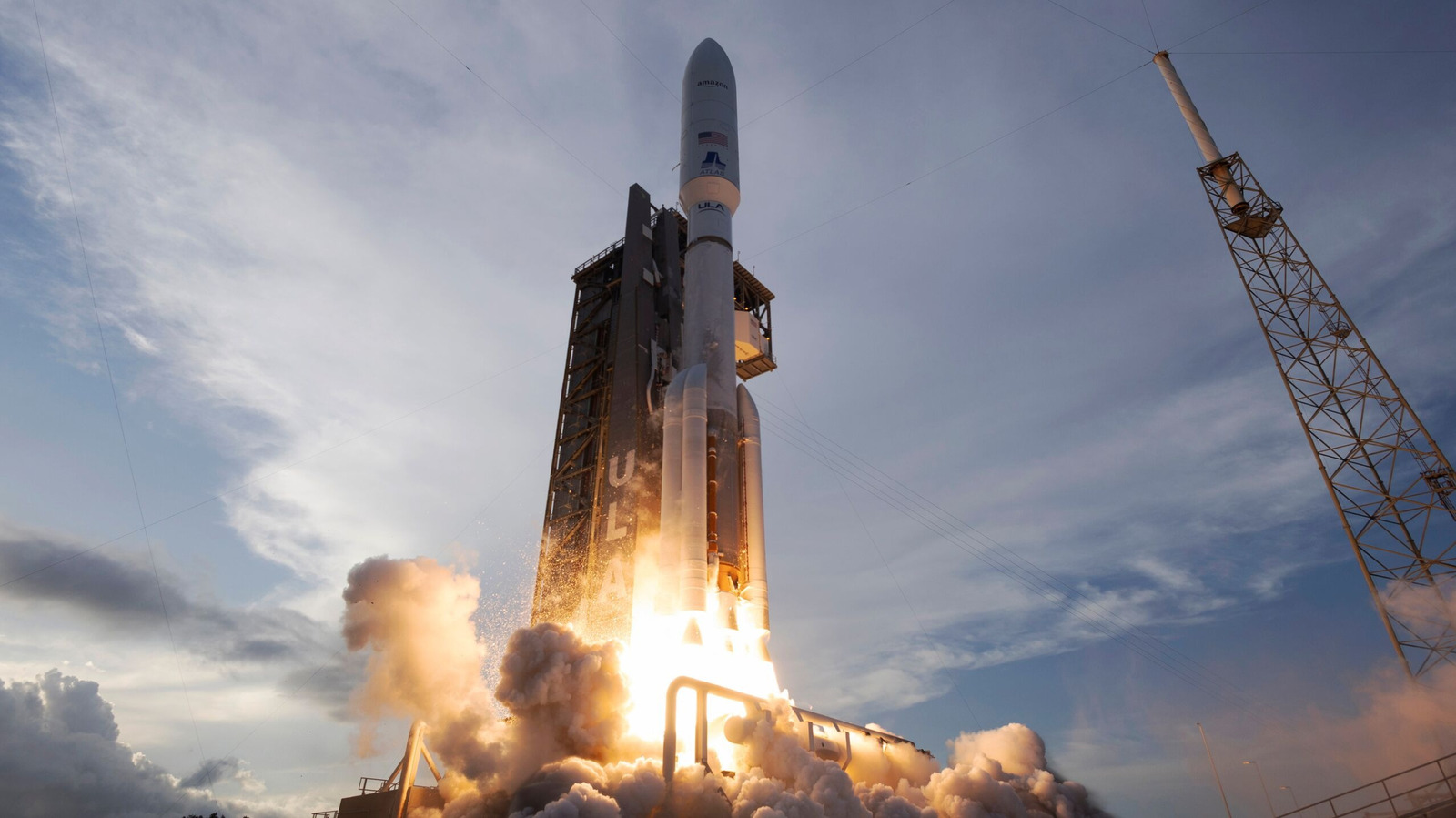
The US Federal Communications Commission (FCC) has granted Amazon an extension for launching its Leo satellite internet constellation. Originally, Amazon was required to launch over 1,600 satellites by July 30th, but due to rocket capacity issues and design changes, the deadline has been extended, according to a ruling released on June 5.

Amazon's Satellite Launch Challenges

Amazon faced significant challenges in meeting the original deadline. The company cited issues with rocket availability, stating that "no operator could have predicted that all three core heavy-lift launch programs — Ariane 6, New Glenn, and ULA's Vulcan Centaur — would experience repeated, concurrent scheduling slips." These delays were exacerbated by the recent launchpad explosion of the New Glenn rocket on May 29.

FCC's Rationale and Conditions

The FCC's decision to grant the extension was based on promoting competition in the satellite broadband market. The ruling stated that strict adherence to the original deadline would "curtail Amazon Leo's deployment" and limit the service available to American consumers. However, the extension comes with a condition: Amazon will lose its "priority status" for any launches after July 31, 2026, and must ensure that its satellites do not interfere with other operators, particularly SpaceX.

SpaceX's Opposition

SpaceX, led by Elon Musk, opposed the extension, arguing that Amazon had launched only six percent of its approved satellites over the past six years. SpaceX expressed concerns that the FCC's decision gives Amazon an unfair advantage, potentially impacting the competitive landscape of satellite internet services.

Future Implications for Amazon

Despite the challenges, Amazon plans to launch its commercial Leo internet service later this year. The company still faces the primary deadline of having its full constellation of 3,232 satellites in orbit by July 2029. This will require overcoming current launch delays and ensuring successful future launches with providers like SpaceX.

Company Satellite Launch Deadline Number of Satellites
Amazon July 30, 2026 (extended) 1,600
Amazon July 2029 3,232

The FCC's decision highlights the complexities and competitive tensions in the satellite internet market. For technology procurement leaders and logistics tech investors, this development underscores the importance of monitoring regulatory decisions and their impact on market dynamics.


Sources: Engadget – Main Feed
Keep Reading

Recommended Stories

European GPS Disruptions Linked to Russian Satellites Technology

European GPS Disruptions Linked to Russian Satellites

Research from the University of Texas and Stanford University suggests that Russian satellites are behind GPS interference in Europe. The study identifies the Russian satellite Kosmos 2546 as a potential source, raising concerns about electronic warfare.

June 10, 2026
SpaceX IPO Raises $10bn More Than Initially Thought, Totaling $85.7bn Technology

SpaceX IPO Raises $10bn More Than Initially Thought, Totaling $85.7bn

SpaceX's initial public offering raised $85.7bn, $10bn more than initially thought, after underwriters exercised a greenshoe option. The company joined Nasdaq in the largest IPO in history, with shares surging 14% on the first Monday of trading.

June 15, 2026
Is India’s AI moment here? Not yet, as funding and compute lag behind US and China Technology

Is India’s AI moment here? Not yet, as funding and compute lag behind US and China

India's AI ecosystem, despite a surge in startup funding, remains far behind global leaders like the US and China due to inadequate compute capacity, weak research, and a lack of billion-dollar revenue companies. The report highlights the need for sovereign compute and a shift from model building to deployment in sectors like agriculture and healthcare.

June 15, 2026
The 'Together Tech' Wave: Why In-Person Experiences Could Be 2026's Startup Bet Technology

The 'Together Tech' Wave: Why In-Person Experiences Could Be 2026's Startup Bet

TechCrunch's Equity podcast explores the 'together tech' wave, where startups like Board (in-person games) and Cyberdeck (DIY computers) are attracting venture capital. The trend is seen as a genuine gravitation toward human connection, not just backlash against AI. Other headlines include Anthropic's IPO filing, Alphabet's $80B AI raise, and raises by Mike Schroepfer and Impulse.

June 14, 2026