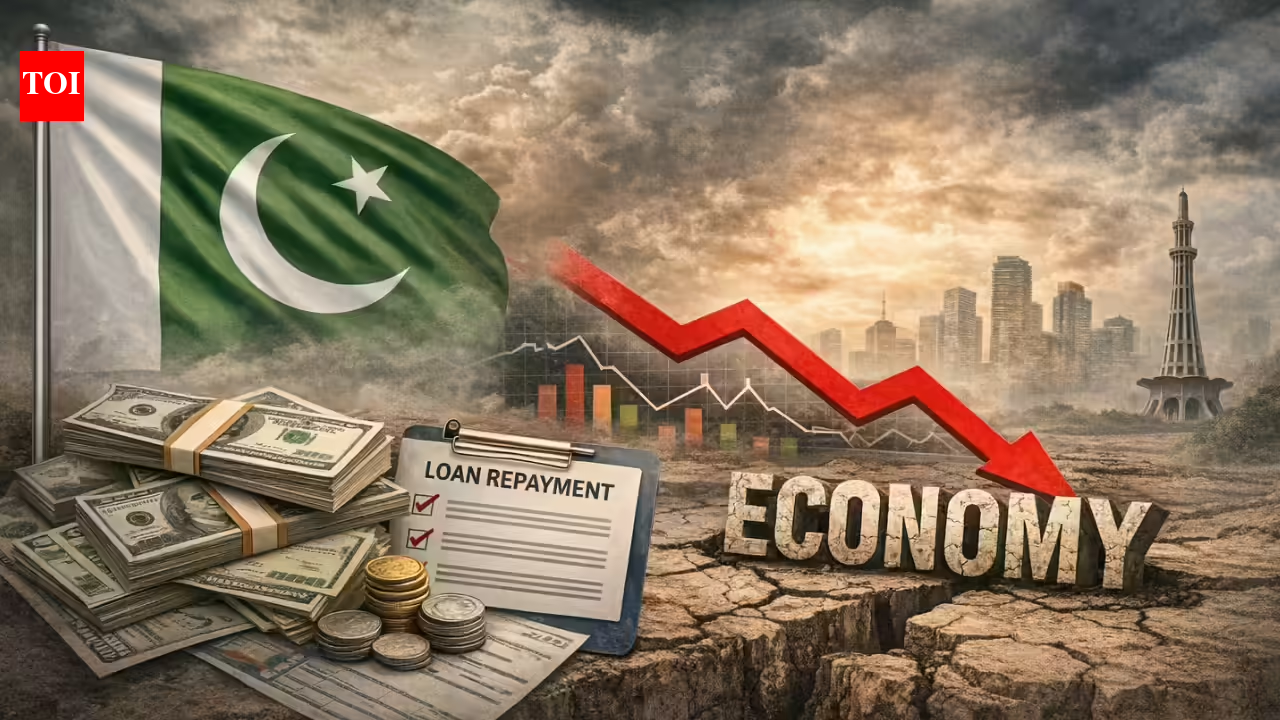
Pakistan's trade deficit has soared to $35 billion for the first 11 months of FY26, alarming economic managers and putting pressure on the Pakistani Rupee (PKR). Despite an increase in foreign exchange reserves to $17.2 billion, the country's economic stability remains at risk due to mounting external payment obligations and a depreciating currency.
Forex Reserves and External Debt
The State Bank of Pakistan (SBP) reported a $43 million increase in reserves, nearing the government's $18 billion target for FY26. However, foreign debt repayments due in June and a managed exchange rate policy are causing concern. Atif Ahmed, a currency expert, noted that the PKR could face further depreciation after large payments are made by June 30.
"The managed exchange rate may burst after June, after large payments are made," said Ahmed.
Trade Deficit and Import Surge
Economists highlight the trade deficit as a significant threat to Pakistan's economic outlook. The import bill reached $62.66 billion, driven by luxury goods and foodgrains. This surge is expected to reverse the current account surplus of $1.8 billion recorded in FY25.
| Fiscal Year | Trade Deficit | Import Bill |
|---|---|---|
| FY25 | Surplus $1.8B | N/A |
| FY26 (11M) | Deficit $35B | $62.66B |
Remittance Concerns
Remittance inflows, crucial for Pakistan's economy, are under pressure. The FY26 target of $41 billion may be challenging to achieve, with over 50% of remittances coming from West Asia. Economic managers face a tough FY27 if the trade deficit remains high and the current account moves back into deficit.
Economic Outlook
The combination of a widening trade deficit, external debt obligations, and remittance challenges paints a concerning picture for Pakistan's economic future. The SBP's efforts to stabilize the PKR through dollar purchases have limited impact, as the exchange rate is centrally determined.
Pakistan's economic managers must address these vulnerabilities to prevent further depreciation of the PKR and ensure economic stability.