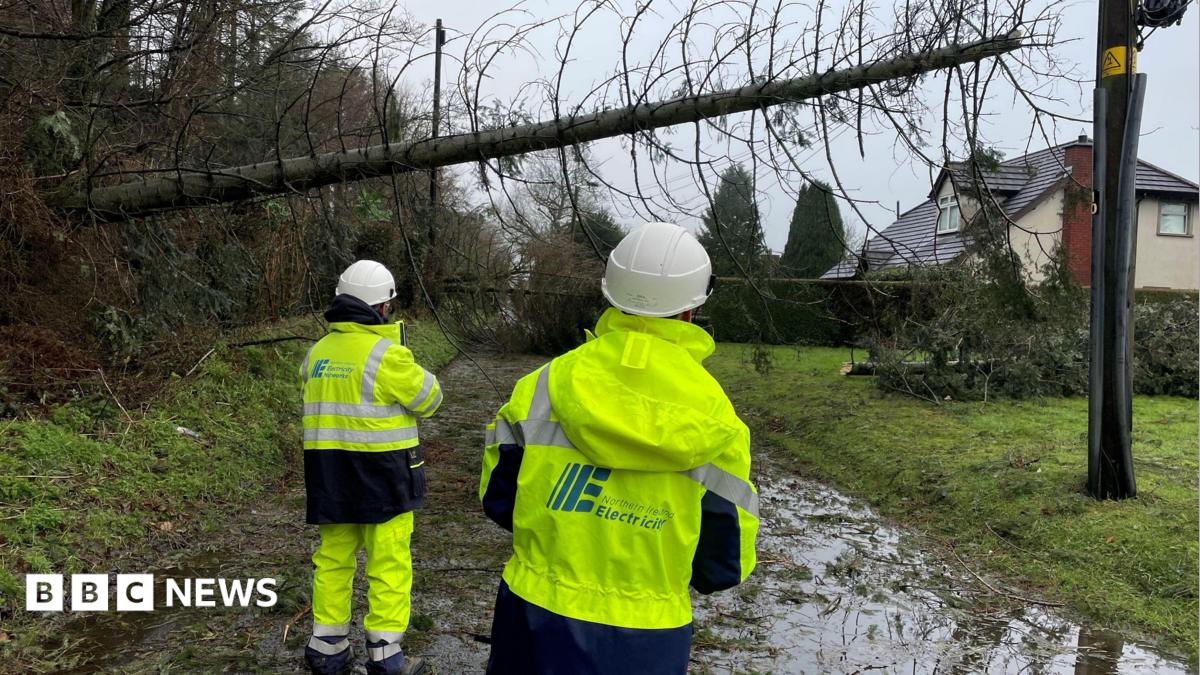
Stormont's economy minister is pressing ahead with plans to make compensation a legal right for households that lose electricity supplies during extreme weather, overruling the independent Utility Regulator's advice that now is not the right time for such a move.
Current Exemption and Unique Position
Northern Ireland is currently the only part of the UK that does not have a compensation scheme for storm-related power cuts. The grid owner, NIE Networks, is exempted from meeting usual supply standards during periods of severe weather. That exemption led to humiliation for Executive ministers in the wake of Storm Éowyn last year, according to the BBC. The first and deputy first ministers had called for NIE Networks to make voluntary compensation payments, but it declined to do so.
Regulator's Warning
The Utility Regulator has cautioned against the move, stating that money could be better spent making the electricity network more resilient to severe weather. It also raised concerns that compensation costs could be passed through to all consumers via higher electricity bills. The regulator's position is that the current time is not appropriate for introducing such a scheme, the BBC reported.
Minister's Stance
Caomihe Archibald, the economy minister, said:
Storm Éowyn highlighted the need for stronger protections for customers affected by prolonged power outages. I have therefore instructed my officials to bring forward policy proposals to remove the severe weather exemption, while minimising costs for all consumers. She added that "detailed proposals" will be brought forward before next year's Assembly election.
Funding Uncertainty
The source article notes that at this stage it is not clear how much compensation would be on offer, nor to what extent it would be funded by NIE Networks shareholders or socialised across all customers' bills. "Policy costs" have become an increasingly large element of electricity bills – parts of the bill that do not reflect electricity usage but instead fund policies such as renewable electricity subsidies.
Key Stakeholder Positions
| Stakeholder | Position |
|---|---|
| Economy Minister Caomihe Archibald | Wants to remove severe weather exemption and introduce compensation; aims to minimise consumer costs |
| Utility Regulator | Opposes the timing; argues money should go to network resilience; warns costs may be passed to consumers |
| NIE Networks | Declined voluntary compensation after Storm Éowyn; currently exempt during severe weather |
Business Implications
For investors and analysts tracking NIE Networks and the broader Northern Ireland energy market, the proposed law introduces potential regulatory cost exposure. If compensation obligations are imposed without clear funding mechanisms, the grid owner may face increased operating expenses or be required to seek tariff adjustments. The Utility Regulator's warning underscores the risk that any compensation costs could ultimately be borne by all electricity customers, raising the policy cost component of bills. The minister's timeline – proposals before the next Assembly election – suggests a legislative push within 12 to 18 months.
Next Milestone
The next milestone is the publication of detailed policy proposals, which the minister has committed to delivering before the 2027 Assembly election. Until then, the funding formula and shareholder versus consumer cost split remain undefined.
Sources: