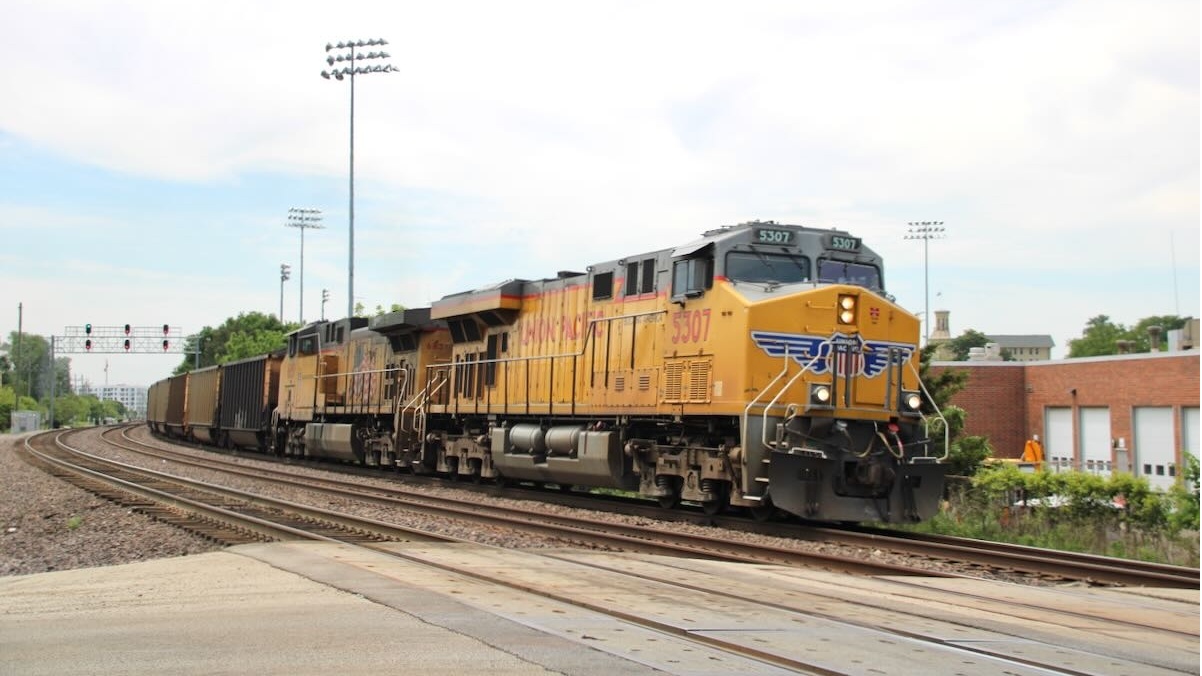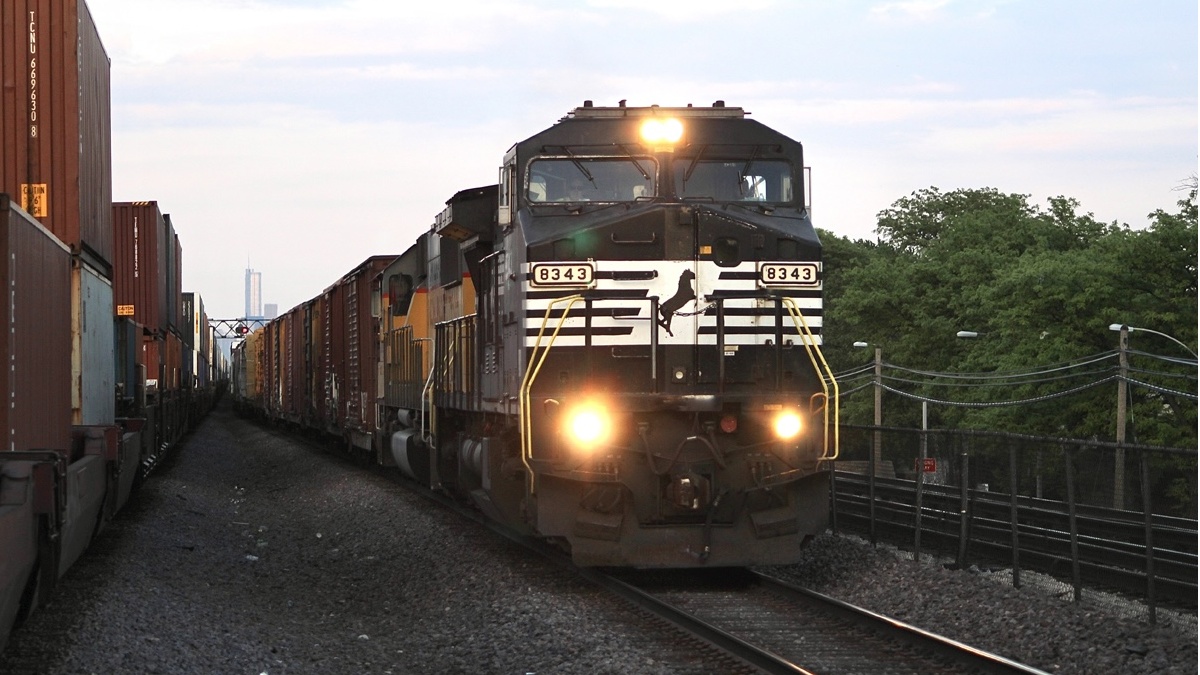
Union Pacific and Norfolk Southern have assembled a team of four former government antitrust experts to refute the latest opposition filing by seven Republican state attorneys general urging regulators to reject their proposed merger, according to FreightWaves. The transaction, if approved, would create the first U.S. transcontinental freight railroad.
The Rebuttal Filing
In a nine-page filing submitted Wednesday to the Surface Transportation Board (STB), the experts cautioned that merger complaints stand as conjecture – not proof, FreightWaves reported. The filing, which the news outlet said read like a legal brief complete with citations, offered case histories and academic research supporting previous corporate tie-ups that were also contested on antitrust grounds. It also examined how opponents use the courts to hinder mergers.
The Attorneys General's Opposition
Earlier this week, the top law enforcement officials from seven Republican states filed a brief saying that the merger of Union Pacific (NYSE: UNP) and Norfolk Southern (NYSE: NSC) will not enhance competition as required by STB rules and will raise costs for shippers and consumers, according to FreightWaves.
The Dream Team
The railroads reached into academia to gather the four experts. Alden Abbott served as general counsel of the Federal Trade Commission from 2018 to 2021 and is now at George Mason University. Tad Lipsky Jr. was deputy assistant attorney general in the Department of Justice Antitrust Division from 1981 to 1983 and chief antitrust lawyer at Coca-Cola from 1992 to 2002; he is also at George Mason. Gregory Werden, a former DOJ Antitrust Division economist and lawyer, likewise is at George Mason. Mark Whitener, former global executive counsel for competition law and policy for General Electric and deputy director of the Federal Trade Commission's Bureau of Competition from 1993 to 1997, is now affiliated with Georgetown University.
| Expert | Previous Government / Corporate Role | Current Affiliation |
|---|---|---|
| Alden Abbott | General counsel, Federal Trade Commission (2018–2021) | George Mason University |
| Tad Lipsky Jr. | Deputy assistant attorney general, DOJ Antitrust Division (1981–1983); chief antitrust lawyer, Coca-Cola (1992–2002) | George Mason University |
| Gregory Werden | Economist and lawyer, DOJ Antitrust Division | George Mason University |
| Mark Whitener | Deputy director, FTC Bureau of Competition (1993–1997); global executive counsel, General Electric | Georgetown University |
STB Review Process
FreightWaves reported that the hundreds of filings for and against the merger carry no legal weight. STB Chairman Patrick Fuchs has made it clear that the deal will stand on its own merits as evaluated by his agency. Fuchs earlier assembled his own team of data scientists from MIT to break down the numbers, and has fiercely defended the STB's independence and decision-making process.
Expert Analysis of Competitor Opposition
In their filing, the experts cited case history showing that opponents of mergers are inherently incentivized to protect their own interests, not necessarily those of consumers.
"Railroad competitors are not disinterested observers of this transaction; they are commercial rivals that presumably stand to lose traffic if the merged UP–NS offers a superior service product," they wrote. "Their opposition should be understood as advocacy by market participants to protect their bottom line – not as objective evidence of likely harm to shippers or the competitive process."
Writing on behalf of UP and NS, the experts added that "[S]ingle-line integration can create a lower-cost, more efficient service that intensifies overall modal rivalry," according to FreightWaves.
The filings frame the decision before the STB: whether the UP-NS combination enhances competition as required by STB rules, as the railroads and their expert witnesses argue, or raises costs for shippers and consumers, as the seven Republican state attorneys general contend. Fuchs has said the deal will be evaluated on its own merits.
Sources: