
iGEN
Visit IGEN World Explore IGEN Expo
EXPLORE UPGRADE PLANS
BREAKING
India seeks to cut reliance on imported strawberry varieties with indigenous breeding Burnham Confirms Pragmatic North Sea Oil Stance in Trump Call, Fueling Drilling Debate Leaked Memo Links Iranian Hackers to Minnesota Water Utility Cyberattacks Everyone Is Freaking Out About OpenAI and Anthropic’s Race for Dominance Govt Debunks AI-Generated Fake Video of Finance Minister Nirmala Sitharaman Promoting Investment Scheme UPS Unveils Digital Tools to Attract Small Businesses Amid Strategic Shift from Low-Margin E-Commerce CPKC sets second-quarter revenue record as operating income rises 10% Your Freight Funnel Is Leaking Margin: What Your Reports Won't Show Transponders Off: Saudi Crude Tankers for India Exit Red Sea 'Dark' to Avoid Houthi Blockade Nvidia’s Open Source Alliance Snubs OpenAI and Anthropic, Deepening AI Rift India seeks to cut reliance on imported strawberry varieties with indigenous breeding Burnham Confirms Pragmatic North Sea Oil Stance in Trump Call, Fueling Drilling Debate Leaked Memo Links Iranian Hackers to Minnesota Water Utility Cyberattacks Everyone Is Freaking Out About OpenAI and Anthropic’s Race for Dominance Govt Debunks AI-Generated Fake Video of Finance Minister Nirmala Sitharaman Promoting Investment Scheme UPS Unveils Digital Tools to Attract Small Businesses Amid Strategic Shift from Low-Margin E-Commerce CPKC sets second-quarter revenue record as operating income rises 10% Your Freight Funnel Is Leaking Margin: What Your Reports Won't Show Transponders Off: Saudi Crude Tankers for India Exit Red Sea 'Dark' to Avoid Houthi Blockade Nvidia’s Open Source Alliance Snubs OpenAI and Anthropic, Deepening AI Rift
Home ›› Commodities ›› Commodities Agri ›› India seeks to cut reliance on imported strawberry varieties with indigenous breeding

India seeks to cut reliance on imported strawberry varieties with indigenous breeding

India's strawberry industry, concentrated in Mahabaleshwar, depends entirely on imported varieties from the US and Europe. Farmers face high costs and climate risks. Mahatma Phule Krishi Vidyapeeth (MPKV) and Bhabha Atomic Research Centre (BARC) are using gamma irradiation to fast-track development of India's first indigenous strawberry cultivar, aiming for climate resilience within 10-15 years.

iG
iGEN Editorial
July 30, 2026
India seeks to cut reliance on imported strawberry varieties with indigenous breeding

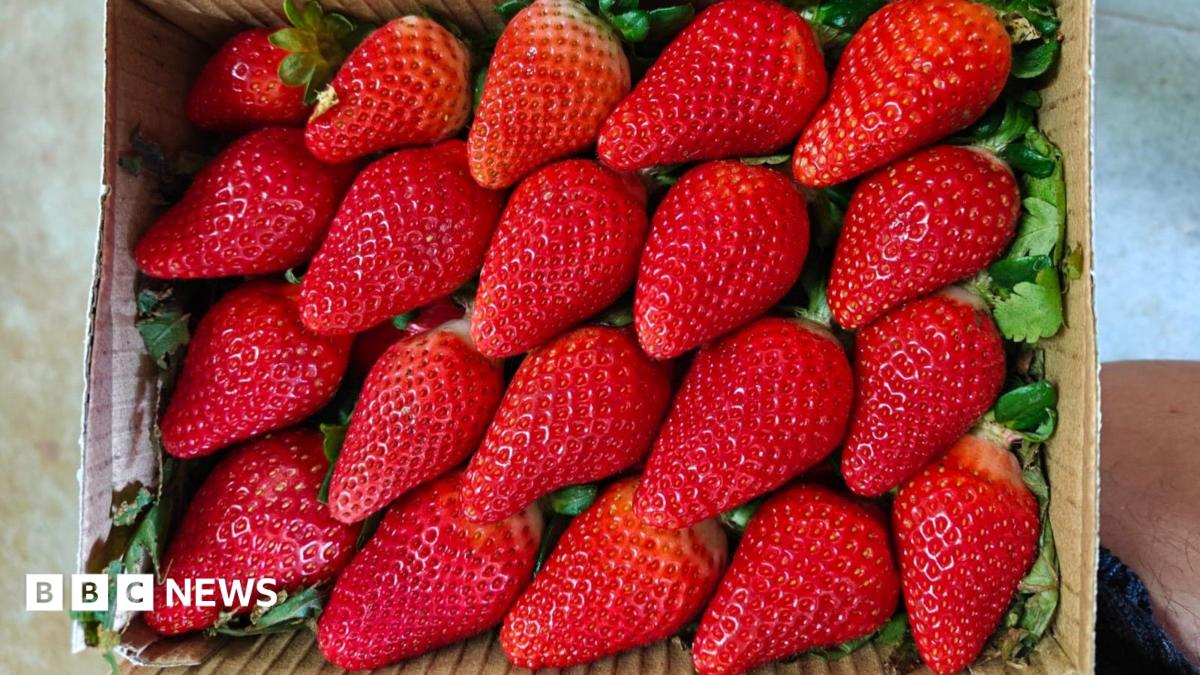
India's strawberry industry, heavily concentrated in the mountainous Mahabaleshwar region of Maharashtra, remains almost entirely dependent on imported plant varieties from the United States and Europe, according to a report by Priti Gupta for BBC Business. This reliance on foreign cultivars exposes farmers to high costs and climate risks, prompting a state-backed research initiative to develop India's first indigenous strawberry variety.

The farming challenge in Mahabaleshwar

Around 85% of India's strawberry cultivation takes place in the Mahabaleshwar region, where an altitude of more than 1,000m (3,280ft) provides a long, cool growing season from November to March, and light, well-drained soil is ideal for strawberries. Despite these advantages, farmers face significant challenges. Sheetal Danavle, who grows strawberries on half of her three-acre farm with her husband, told BBC: "If you have a field full of strawberries and sudden heavy rains hit, the entire crop is ruined and we have to bear massive losses."

Strawberry plants must be replaced every season, and farmers buy young plants from suppliers rather than growing from seed. For Danavle, that annual outlay is $2,500 (£1,900). She described it as a gamble: "If the season goes well, you can earn double your investment. But the climate makes it a huge gamble."

The propagation process: relying on foreign mother plants

India currently has no domestically developed strawberry variety. According to Nelson Sequeira, founder and director of Tara Farms Fresh, a licensed strawberry propagator, "We import the certified mother plant from the breeder abroad." These mother plants come from California, Florida, Italy, and Spain, where breeders spend 10 to 15 years developing top-quality fruit and patent their varieties.

Once imported, the plants undergo government quarantine before being planted in a nursery where each mother plant produces daughter plants. "One single imported mother plant becomes an engine. That single mother plant will shoot out runners to yield an average of 20 daughter plants – with some advanced growers pushing that up to 30 or 40," Sequeira explained. The operation is high-tech: plants are grown in split industrial pipes lined with coco-peat substrate derived from coconut husk, with precise drip-irrigation and fogging systems to control micro-climates.

Indigenous breeding effort: gamma irradiation at MPKV

Researchers at Mahatma Phule Krishi Vidyapeeth (MPKV), an agricultural university in Maharashtra, have partnered with the Bhabha Atomic Research Centre (BARC) on a breeding experiment using controlled, low-dose gamma irradiation on plant tissues to induce stable genetic mutations. Dr Darshan Shashank Kadam, assistant professor of Horticulture at MPKV, said the goal is "to fast-track the development of India's first indigenous, climate-resilient strawberry cultivar that matches the large fruit size and firm texture of foreign varieties while natively tolerating Indian heatwaves."

Kadam acknowledged the process could take 10 or 15 years before tangible results emerge. In the near term, MPKV is working to help farmers with other improvements.

Implications for the industry

For commodity analysts and agribusiness executives tracking horticultural supply chains, India's dependence on imported strawberry varieties represents an ongoing cost and vulnerability. The $2,500 annual outlay per small farm for plants, plus the risk of climate-related loss, underscores the fragile economics of strawberry production. Any disruption to the supply of imported mother plants—whether from trade restrictions, plant disease, or patent disputes—could directly affect yield volumes. While the MPKV-BARC research is promising, its long timeline means that Indian strawberry production will remain tied to foreign breeders for at least another decade. Farmers, propagators like Tara Farms Fresh, and end buyers will continue to rely on varieties developed in California, Florida, Italy, and Spain, with all the associated import and licensing costs.


Sources: BBC-Business

Keep Reading

Recommended Stories

Beyond traditional crops: Why high-value nut farming could be the next growth opportunity for hill States Commodities

Beyond traditional crops: Why high-value nut farming could be the next growth opportunity for hill States

Indian hill states like Himachal Pradesh, Uttarakhand, and Jammu and Kashmir are poised to expand high-value nut farming, leveraging climate advantages and policy support. With domestic demand for nuts rising and a significant share met by imports, locally grown almonds and walnuts could capture market share. Recent budget announcements and sapling imports signal a shift toward scalable production, though infrastructure gaps remain.

July 25, 2026
Expert panel suggests rejuvenating old Totapuri mango orchards in Andhra Pradesh after price crash Commodities

Expert panel suggests rejuvenating old Totapuri mango orchards in Andhra Pradesh after price crash

A high-level expert panel has recommended rejuvenation of old Totapuri mango orchards in Andhra Pradesh, following a price decline to ₹4–6 per kg from ₹18–20 per kg. The government approved ₹1,747 per quintal assistance under a market intervention scheme. Separately, Alphonso exports face heatwave damage and logistical disruptions due to West Asia tensions.

July 21, 2026
Himachal Apple Output Plunges 40% Amid Climate Stress, Threatening Rs 5,000 Crore Economy Commodities

Himachal Apple Output Plunges 40% Amid Climate Stress, Threatening Rs 5,000 Crore Economy

Himachal Pradesh's apple production is forecast to fall by nearly 40% year-on-year to 4.36 lakh metric tonnes in 2026, driven by unseasonal rains, hailstorms, and insufficient winter chill. The drop threatens the state's Rs 5,000 crore apple economy and affects 2.5 lakh farming families. Growers are calling for better irrigation and awareness of crop insurance.

July 6, 2026
High-density exotic cherry varieties transform Kashmir orchards, fetch premium prices Commodities

High-density exotic cherry varieties transform Kashmir orchards, fetch premium prices

Kashmir's cherry growers in Srinagar, Ganderbal, and Shopian are shifting to high-density exotic varieties such as Regina and Kordia, fetching ₹400-500 per kg—a premium over traditional varieties. Government initiatives like the Holistic Agriculture Development Programme and the Cherry Cluster Development Project support this transition, aiming to add 4,000 metric tonnes to annual production and benefit 4,000 growers.

June 18, 2026