
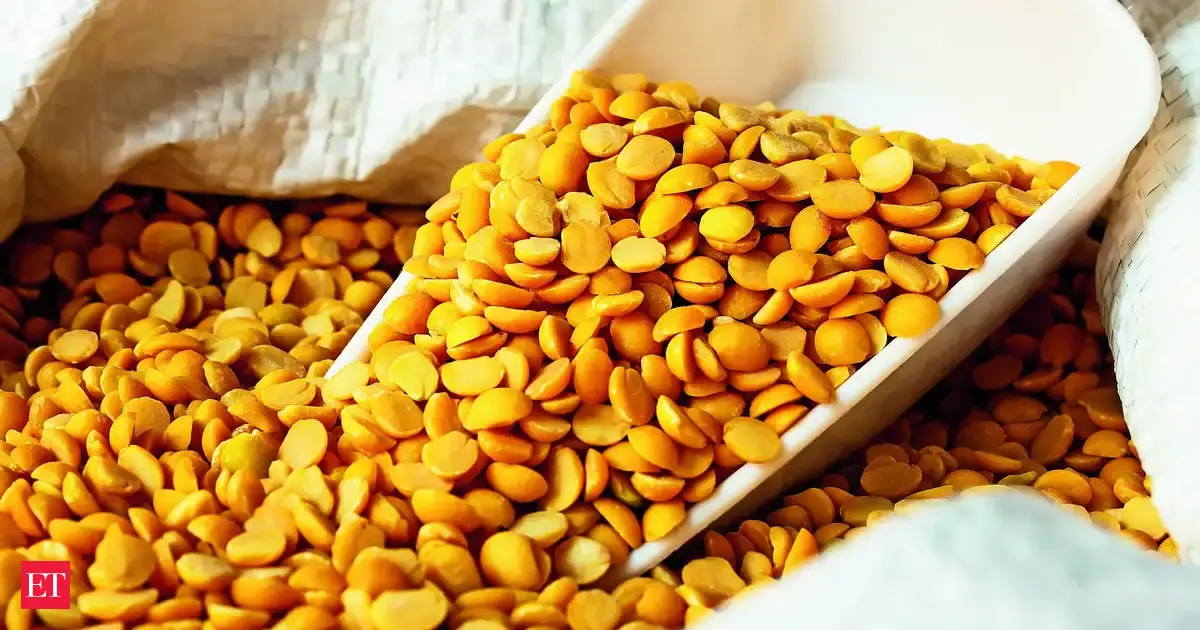
India's tur importers are urging the government to approve Brazil as a new sourcing destination for quality tur dal, as the trade body Indian Pulses and Grains Association (IPGA) works to diversify supply away from a handful of traditional origins. According to the Economic Times, the initiative comes amid ongoing efforts to expand tur cultivation to Australia, though new producer countries demand guaranteed buyback assurances given that India is the world's sole large-scale consumer of tur.
Current Sourcing Constraints
India has historically relied on a limited number of countries for tur imports, leaving the market vulnerable to supply shocks. After back-to-back droughts in 2015 and 2016 drove tur dal prices to ₹200/kg, the government has sought to reduce import concentration by encouraging new regions to grow pulses. Over the past two years, Brazil has also begun cultivating urad for India, a market that previously depended solely on Myanmar as an external source.
According to Satish Upadhyay, honorary secretary of the IPGA, the challenge for new producers is stark: "As India is the only country in the world which consumes tur dal on such a large scale, any country, which will grow tur for us, will like to get policy certainty as they cannot sell it to any other country."
Brazil Emerges as Key Partner
Through a trade-to-trade initiative, Brazil has been piloting tur cultivation specifically for the Indian market, with a small harvest expected this year. However, initiating commercial imports requires plant phytosanitary clearance and other government approvals. The IPGA now wants the government to formally add Brazil as a permitted source for quality tur dal.
The association highlights Brazil's distinct advantages over other origins, including many African countries that grow tur for India. Bimal Kothari, IPGA chairman, stated: "The quality of Brazilian tur is better than any other origin due to the large farms and advanced farming techniques used by Brazilian farmers. We will get better quality tur at comparatively lower than the domestic prices."
Quality and Policy Advantages
Brazilian tur is reportedly superior in quality because of large-scale farming operations and advanced agronomic practices. The combination of better quality and potentially lower prices could benefit Indian buyers, but policy certainty is critical for Brazilian farmers to commit acreage. The IPGA's efforts mirror broader government strategy to insulate India's pulse supply from geopolitical and weather risks.
Outlook for Tur Imports
| Aspect | Current Status | Potential Future |
|---|---|---|
| Primary origins for tur | Limited (African countries) | Add Brazil, explore Australia |
| Quality on offer | Variable | Brazilian tur touted as best |
| Policy requirement | Phytosanitary clearance needed | Government nod to source from Brazil |
| Producer buyback | Not required for existing suppliers | Guaranteed buyback necessary for new origins |
The trade sector is also attempting to expand tur cultivation to Australia, but without India's sole consumer status, Australian growers insist on assurance of purchase. The IPGA’s push for Brazil represents a concrete step toward supply chain diversification, potentially lowering import costs while securing more consistent quality. For commodity traders and procurement teams, the addition of a high-volume, high-quality origin like Brazil could reshape India's tur import dynamics, reducing price volatility and dependency on a narrow supplier base.
Sources:


