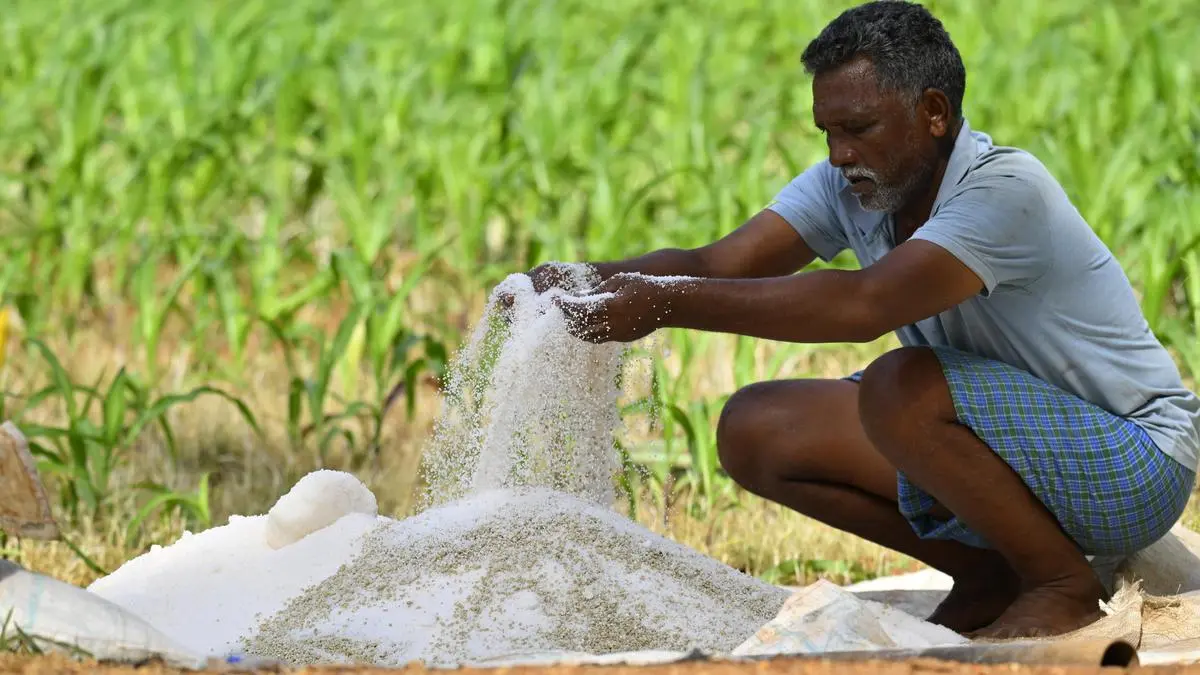
India’s fertiliser industry, which produced nearly 52 million metric tonne in 2025–26, is increasingly making sustainability the cornerstone of its growth strategy, according to a report by The Hindu Business Line. This shift comes as the sector faces mounting environmental expectations and resource constraints, even as it remains vital to the country’s food security.
Historical Growth and Import Dependency
The industry’s journey began in 1906 with India’s first Single Super Phosphate (SSP) plant at Ranipet. Production of major fertilisers such as urea, DAP (diammonium phosphate), and complex fertilisers started in 1959, 1967, and 1968, respectively. From just 0.2 million tonne during the First Five-Year Plan (1951–52), production surged to nearly 52 million metric tonne by 2025–26. However, the sector remains heavily dependent on imported raw materials: nearly 78% of natural gas, 90% of rock phosphate, 70% of ammonia used in complex fertiliser production, and 50% of sulphur are imported, the report states.
Energy Efficiency Gains
Energy efficiency is a major focus, particularly in urea production, one of the most energy-intensive industrial processes. Fertiliser manufacturers have invested in advanced process technologies, waste heat recovery systems, energy-efficient equipment, and improved catalysts. Many plants have shifted from naphtha, fuel oil, and coal to natural gas, significantly reducing emissions while improving efficiency. As a result, the energy consumption of ammonia-urea plants has improved by over 36% over the past three and a half decades, while carbon dioxide emissions have declined by nearly 47%, according to the report. The industry is also exploring Artificial Intelligence (AI) and Machine Learning (ML) for predictive maintenance and process optimisation.
Water Conservation and Circular Economy
Water conservation has emerged as a key priority. Fertiliser companies have reduced weighted average water consumption by more than 60% across urea and complex fertiliser plants through initiatives such as process water recycling, rainwater harvesting, reverse osmosis systems, and membrane bioreactor (MBR) technology. Treated water is increasingly reused for cooling and manufacturing, supporting SDG 6 (Clean Water and Sanitation).
Circular economy practices are also strengthening. Resources are recovered from spent catalysts, waste oil, and chemical sludge, while plastic packaging is recycled in line with regulations. Phosphogypsum, a by-product of phosphoric acid production, is increasingly utilised in cement manufacturing, agriculture, road construction, and building materials. Wider policy support for its use could further enhance resource efficiency and reduce legacy waste, the report notes.
The table below summarises key sustainability improvements:
| Metric | Improvement | Timeframe |
|---|---|---|
| Energy consumption (ammonia-urea plants) | >36% reduction | Over 35 years |
| CO2 emissions | ~47% reduction | Over 35 years |
| Water consumption (weighted average) | >60% reduction | Not specified |
Environmental Compliance and Future Outlook
Continuous emission monitoring systems linked to pollution control authorities, cleaner production technologies, and upgraded emission control systems have helped reduce emissions of ammonia, NOx, SOx, and particulate matter, contributing to better air quality while supporting SDG 3 (Good Health and Well-being) and SDG 13 (Climate Action). The industry is also contributing to environmental conservation through afforestation and community development projects.
By aligning with the United Nations Sustainable Development Goals (SDGs), India's fertiliser sector is positioning sustainability as a growth driver rather than a compliance burden. The shift from fossil fuels to natural gas, the adoption of digital tools, and the recovery of by-products signal a strategic transformation that could serve as a model for other emerging-market fertiliser industries. According to The Hindu Business Line, these efforts are central to the sector’s long-term growth and resilience.
Sources: