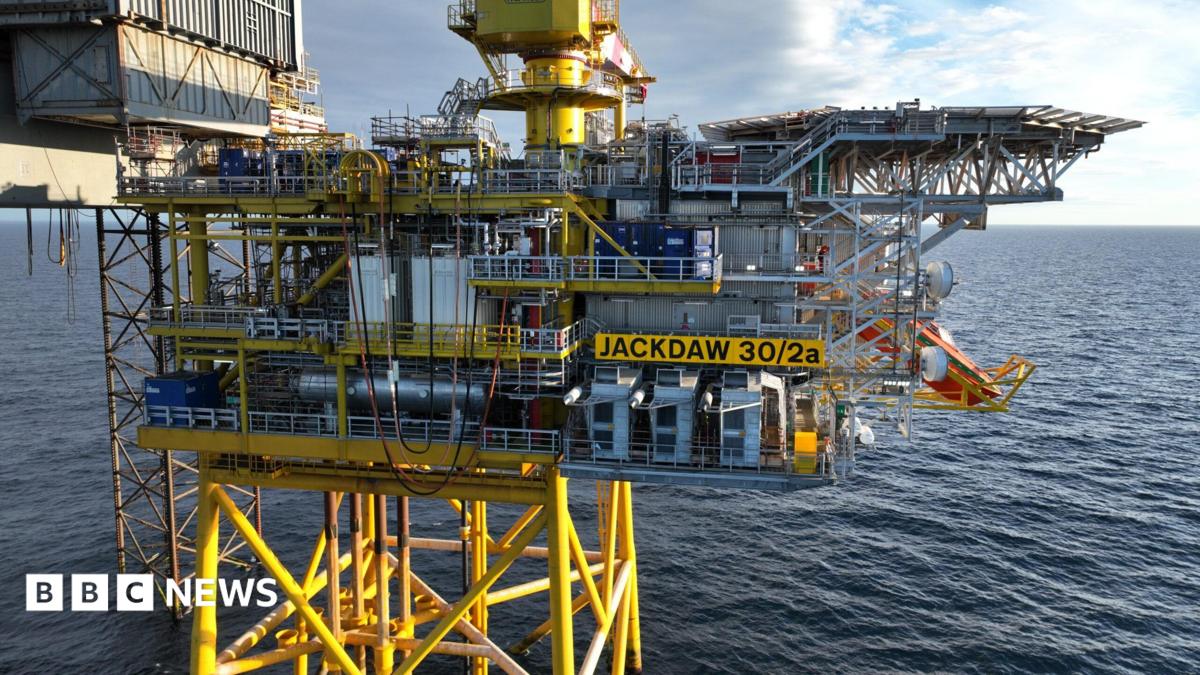
The Jackdaw gas field in the North Sea will produce emissions equivalent to less than 0.02% of annual global greenhouse gases, according to a new Environmental Impact Assessment (EIA) from its owner Adura, a joint venture between Shell and Equinor. The report was required after a court ruling that ministerial consent was unlawful.
Regulatory Background
Last year, the Court of Session in Edinburgh ruled that both the Jackdaw field and the Rosebank oil field had been unlawfully approved because the UK government failed to take into account the climate impact of burning extracted oil and gas. The legal challenge was brought by environmental groups Uplift and Greenpeace. In his judgement, Lord Ericht required a more detailed climate assessment and fresh approval from the UK government before production could begin.
Environmental Impact Assessment
Adura's updated EIA was requested by the Offshore Petroleum Regulator for Environment and Decommissioning (Opred) after the regulator found several areas had not been adequately addressed in a previous submission. The previous revised EIA, submitted in November, stated that the Jackdaw field could produce up to 35.8 million tonnes of carbon dioxide equivalent during its lifetime — around 90% of Scotland's total annual emissions. The new 159-page submission provides additional context on how these emissions affect global climate goals.
The Jackdaw field will account for less than 0.02% of annual global greenhouse gases during its lifetime.
Emissions Comparison and Displacement
The report argues that displacing imported liquefied natural gas (LNG) from the United States with domestically produced gas from Jackdaw would save the equivalent of four million tonnes of CO2 equivalent. It says that could result in around 20% more emissions from imports compared with domestic production, mainly by avoiding the need to liquefy, transport and regasify LNG. The company maintains the climate effects are "minor" because the UK has "a well-regulated industry, with targets and commitments that are aligned with the expectations of the Paris Agreement".
Implications for North Sea Gas Development
Campaigners had called on the UK government to reject both the Jackdaw and Rosebank developments. The updated EIA is now under consideration by Opred, and fresh government approval is needed before production can start. The outcome could set a precedent for future North Sea projects as scrutiny of upstream emissions intensifies. According to the BBC, the Jackdaw field is owned by Adura, a joint venture between UK energy giant Shell and Norwegian firm Equinor. No timeline for the new approval has been disclosed.
Sources: