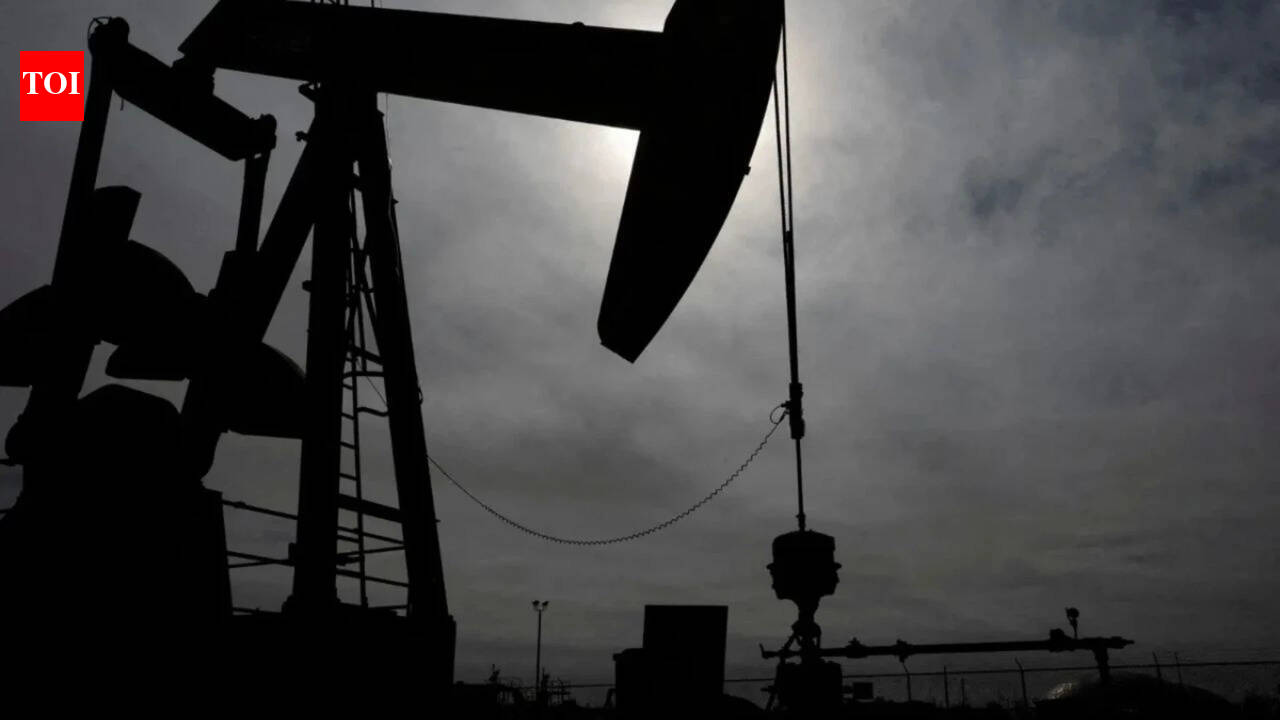
Oil prices tumbled sharply on Monday after the United States and Iran held back from launching fresh strikes over the weekend, raising hopes that diplomacy could ease tensions in the Middle East and gradually restore shipping through the Strait of Hormuz. Brent crude futures were down $4.37, or 4.52%, at $92.41 a barrel after slipping 5.05% earlier, according to Business Today. US West Texas Intermediate (WTI) crude was also 5.23% down before trading $4.30, or 4.81%, lower at $85.01 a barrel around 7:15 am. Both benchmark contracts traded at their lowest levels in nearly a week, retreating after three consecutive weeks of gains.
Diplomatic Pause Drives Price Retreat
The decline came after the US and Iran refrained from carrying out military strikes in the Persian Gulf for a second straight day. The pause in hostilities followed two weeks of attacks and fuelled hopes that a diplomatic solution could help de-escalate the conflict. US Ambassador to the United Nations Mike Waltz told Fox News Sunday and other US media that Donald Trump had decided to pause US attacks to allow more time for diplomacy, as reported by Business Today.
"Hopes are rising that a genuine diplomatic path may be opening," IG Markets analyst Tony Sycamore said in a note, adding that "a return to the 14-point MOU with a little more clarity around control of the Strait of Hormuz would be a solid starting point."
In early trading on Sunday, Brent crude for September delivery fell 4.9% to $92.02 a barrel after reopening, extending a 3.9% decline recorded on Friday. Benchmark US crude for September delivery dropped 5.6% to $84.34 after falling 3.1% in the previous session. Meanwhile, Brent crude for October delivery, now the most actively traded contract, declined 4.6% to $87.48.
Supply-Side: Strait of Hormuz Shipping Disruptions
Despite the pause in attacks, shipping through key trade routes remained subdued. Shipping data from Kpler showed that fewer than 10 commodity vessels passed through the Strait of Hormuz each day over the weekend. Traffic through the Bab el-Mandeb Strait also declined on Sunday after Yemeni Houthis attacked Saudi oil installations along the Red Sea coast, although a third Chinese supertanker managed to exit through the waterway.
The Strait of Hormuz has remained the focal point for oil markets since the US and Israel attacked Iran in late February. Around a fifth of the world's oil typically passes through the narrow waterway, but the conflict has largely halted shipping traffic. Oil producers have sought alternative routes, though those have also come under pressure following attacks on Saudi oil tankers using the Red Sea.
Market Context: Retreat from Recent Highs
Brent crude had climbed as high as $100 a barrel during the recent escalation, while it briefly touched $102 last week, its highest level since May and around $30 above the most actively traded Brent contract earlier in the month. The surge was driven by intensified fighting in the Middle East and concerns that a wider conflict would further disrupt global crude supplies. Although prices have retreated from last week's highs, uncertainty continues to linger over the conflict and its impact on energy markets. However, even with this steep rise, prices continue to be lower than the $126 per barrel mark reached earlier during the conflict.
| Contract | Price | Change | Percent Change |
|---|---|---|---|
| Brent Sep (intraday low) | $92.02 | -4.9% | -4.9% |
| Brent Sep (close) | $92.41 | -$4.37 | -4.52% |
| Brent Oct | $87.48 | -4.6% | -4.6% |
| WTI Sep (intraday low) | $84.34 | -5.6% | -5.6% |
| WTI Sep (close) | $85.01 | -$4.30 | -4.81% |
Table: Price movements on Monday, July 27, 2026, based on data from Business Today.
For commodity traders and procurement teams, the immediate risk premium has eased, but the underlying disruption to tanker flows through the Strait of Hormuz remains a critical factor. With fewer than 10 vessels transiting daily and continued Houthi threats in the Red Sea, supply chain security for crude shipments is far from restored. The market will closely watch for further diplomatic signals or any resumption of hostilities that could quickly reverse the current price decline.
Sources: