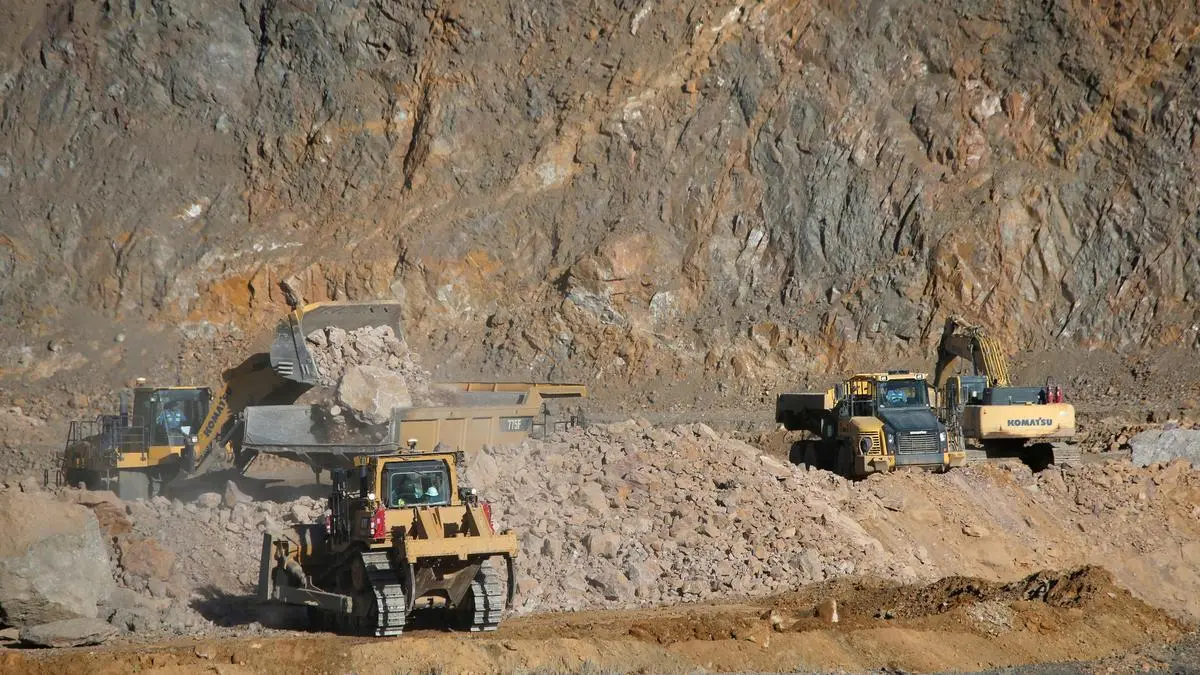
The global race to secure critical minerals is reshaping trade flows, industrial policy and supply chains, creating new opportunities and challenges for the shipping industry, according to a new report from UN Trade and Development (UNCTAD). In its latest Global Trade Update, UNCTAD said demand for minerals essential to the energy transition and advanced technologies is transforming global commerce as countries seek to secure supplies of lithium, cobalt, nickel, copper and rare earth elements.
Supply-chain concentration and geopolitical risks
UNCTAD highlighted a growing shift away from traditional commodity trade patterns as governments and manufacturers increasingly focus on supply-chain resilience and reducing dependence on a small number of suppliers. China remains dominant across many critical mineral value chains, particularly in processing and refining, while countries including Australia, Indonesia, Chile and several African nations are seeking to expand their role in supplying raw materials and higher-value products.
The organisation warned that supply-chain concentration and geopolitical tensions could create vulnerabilities for global trade, particularly as countries introduce export controls, subsidies and other measures designed to secure access to strategic resources. Geopolitical considerations are playing an increasingly important role in trade and investment decisions, with critical minerals becoming central to industrial strategies in North America, Europe and Asia.
Geneva Dry panel: copper demand and supply gaps
Critical minerals were in the spotlight at this year’s Geneva Dry, the world’s premier commodities shipping conference, held at the end of April. The minor bulks panel discussed how trades are becoming increasingly tied to energy transition commodities, including copper, aluminium inputs, nickel feedstocks and fertiliser products, while trade routes are simultaneously being reshaped by Middle East disruption, changing Chinese demand patterns and supply security concerns.
Robert Haggquist from South32 said many governments were now building strategic inventories of key minor bulk commodities as a hedge against future disruption. Several panellists pointed to copper as one of the clearest long-term demand stories for geared bulkers.
Karim Coumine, head of commercial shipping – minor bulk at Anglo American, said demand growth tied to electrification, EVs and industrial development continued to underpin copper concentrate flows from South America into Asia. He added:
“There just isn’t that great investment or amount of new investment in copper supply at the moment. It takes a lot of money to invest in a copper mine. It takes a lot of time to bring it online.”
Eduardo Luz from Vale Base Metals said the industry still faced a substantial future supply gap despite strong growth plans.
“We see a need of 10m tonnes of refined copper in the market. Projects take a lot of time to come online.”
Vale expects its Brazilian copper shipments to double to 2m tonnes by 2035 as new projects ramp up.
| Company | Key figure |
|---|---|
| Vale Base Metals | Brazilian copper shipments to double to 2m tonnes by 2035 |
| Industry need | 10m tonnes of refined copper |
Fleet composition and port constraints
One of the central debates during the session focused on fleet composition and whether geared bulkers remain adequately supplied for increasingly fragmented trade patterns. Olivia Lennox-King, chief of operations at Cetus Maritime, argued that flexibility was becoming more important than scale alone.
“What you want in a geared vessel is extreme versatility. You can pivot when the market changes.”
She said larger geared designs had steadily gained market share over the past decade, with ultramaxes increasingly viewed as the “ultimate workhorse” of the geared sector, but stressed there were still hard limits imposed by ports and cargo characteristics.
The session also explored whether transhipment and alternative logistics corridors could ease port bottlenecks and draft restrictions that continue to limit vessel upsizing in several trades. Both Vale and Anglo American executives said transhipment was already part of daily operations for copper concentrate trades into northern Europe, although higher cargo values and operational complexity limited how far the model could expand.
Port constraints were repeatedly cited as one of the main barriers preventing further migration towards larger geared vessels.
“The ports aren’t getting that developed actually. There will be a natural limit,” Coumine said.
Outlook
For shipping, the trend is expected to generate new trade corridors and increase demand for bulk commodity transportation, particularly as investment accelerates in mining projects and downstream processing facilities. The full agenda for next year’s Geneva Dry – scheduled for April 27 and 28 – will be unveiled next week. Traders and analysts should monitor developments in critical mineral supply chains, as geopolitical shifts and port infrastructure constraints will directly impact freight rates and vessel employment opportunities in the geared bulker segment.
Sources: