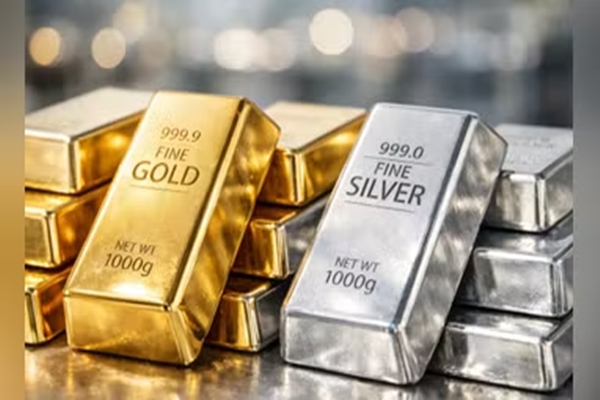
Gold and silver prices continued to face sustained pressure this week, driven by expectations of prolonged higher interest rates, developments in West Asia, and a strengthening US dollar, according to News on AIR.
Price Performance Overview
On the Multi Commodity Exchange (MCX), gold futures for the August contract shed 2.2 percent during the week to settle at 1,47,203 rupees per 10 grams. Silver futures for the July contract dropped 5.3 percent to close at 2,33,185 rupees per kilogram.
On the Commodity Exchange (COMEX), gold futures for the August contract slipped more than one and a half percent to settle at around 4,173 dollars per troy ounce. Silver futures for the July contract lost 4.5 percent over the week to end at 64.91 dollars per troy ounce.
| Contract | Exchange | Week Change | Settle Price |
|---|---|---|---|
| Gold Aug | MCX | -2.2% | ₹1,47,203/10g |
| Silver Jul | MCX | -5.3% | ₹2,33,185/kg |
| Gold Aug | COMEX | -1.5%+ | $4,173/oz |
| Silver Jul | COMEX | -4.5% | $64.91/oz |
Fundamental Drivers: Strong Dollar and Hawkish Fed
The Federal Reserve kept its key policy rate unchanged on Wednesday. However, nearly half the central bank’s policymakers indicated that they could support a rate hike later this year, according to the source. The notably hawkish Summary of Economic Projections strengthened the US dollar, pushing the Dollar Index to 101 and US treasury yields higher during the week. This, in turn, weighed on bullion prices by reducing the appeal of non-yielding assets such as gold and silver.
Global Benchmark and Market Context
The price pressure on gold and silver was also influenced by developments in West Asia, though specific details were not provided in the source. The combination of a strong dollar and higher yields creates a challenging environment for precious metals, which offer no yield themselves. Traders are now closely watching for any further signals from the Fed regarding the pace of monetary tightening.
As of the weekly close, both MCX and COMEX contracts reflected broad-based declines, with silver exhibiting more volatility than gold. The movements align with the sustained pressure noted in the bullion market, as market participants recalibrate expectations for interest rate trajectories.
Sources: