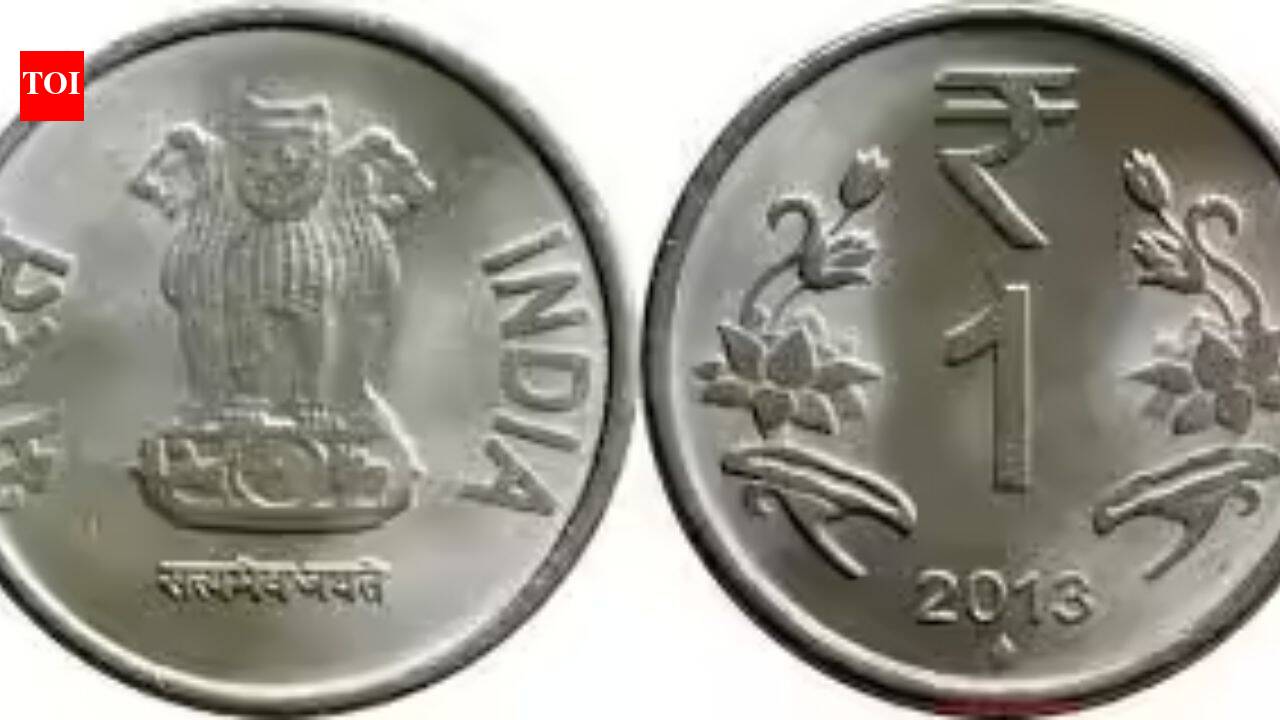
As of March 2026, there were nearly 5,499 crore Re 1 coins in circulation in India, representing 38.4% of the total number of coins, according to the Reserve Bank of India (RBI) Annual Report 2025-26. This makes the Re 1 coin the most widely circulated denomination in the country despite the surge in digital payments via UPI and other platforms.
Circulation by Volume
The Re 1 coin's dominance by volume is longstanding. RBI data show that at the end of FY14, FY15, and FY16, the denomination accounted for about 42% of all coins in circulation. In FY16, around 4,500 crore Re 1 coins were in circulation. The share has since edged lower: it stood at 39.3% in March 2025 and 38.4% in March 2026. Bankers cited by the report said Re 1 coins are rarely withdrawn from circulation, which explains their continued dominance by volume.
| Period | Re 1 Coin Share (by number) | Notes |
|---|---|---|
| FY14–FY16 | ~42% | Historical high |
| March 2025 | 39.3% | |
| March 2026 | 38.4% | 5,499 crore coins |
Value vs. Volume Shift
While the Re 1 coin leads in count, higher-denomination coins account for a greater share of total value. According to the RBI, as of June 19, 2026, Rs 5 and Rs 10 coins together represented only 23.5% of the total number of coins in circulation but made up 53.5% of the total value, amounting to Rs 22,209 crore. A bank official quoted in the report noted: "If one looks at the value of coins in circulation over time, the share of Re 1 has declined. Rs 5 and Rs 10 coins now account for a larger share." This shift reflects the rising cost of cash management and the need for higher-value coinage for transactions.
Expert Insights
David Devasahayam, chairman and managing director of Radiant Cash Management Services, said the Re 1 coin continues to be widely used in temples and for small-value transactions. "The coin is also used for commuting and remains prevalent, particularly in rural parts of India," he added.
Karthick Jonagadla, smallcase manager and MD & CEO of Quantace Research, noted that UPI has significantly reduced the need for cash in many parts of India, especially in cities and for routine payments, but it has not eliminated the need for coins. "The Re 1 coin survives because it solves a very basic problem: how to settle the last rupee in small cash transactions. In kirana stores, buses, roadside vendors, rural markets and informal services, cash is still common and exact change still matters," he said.
Business Implications
For finance executives and treasury professionals, the persistent demand for Re 1 coins underscores the ongoing importance of cash logistics in India. Companies like Radiant Cash Management Services, which handle cash for banks and retailers, continue to manage a large volume of low-value coins. The prevalence of odd-number pricing (e.g., Rs 19, Rs 49) further sustains demand for exact change, keeping the Re 1 coin relevant. Meanwhile, the rising share of Rs 5 and Rs 10 coins by value suggests a gradual shift in coin composition, which could affect the cost structure of cash handling and minting operations.
The RBI's continued minting of Re 1 coins—implied by the rising stock from 4,500 crore in FY16 to 5,499 crore in FY26—means that the coin remains a critical component of the currency system, even as digital transactions grow. For investors and analysts tracking payment systems, this trend highlights that cash, especially coinage, retains a functional niche in India's diverse economy.
Sources: