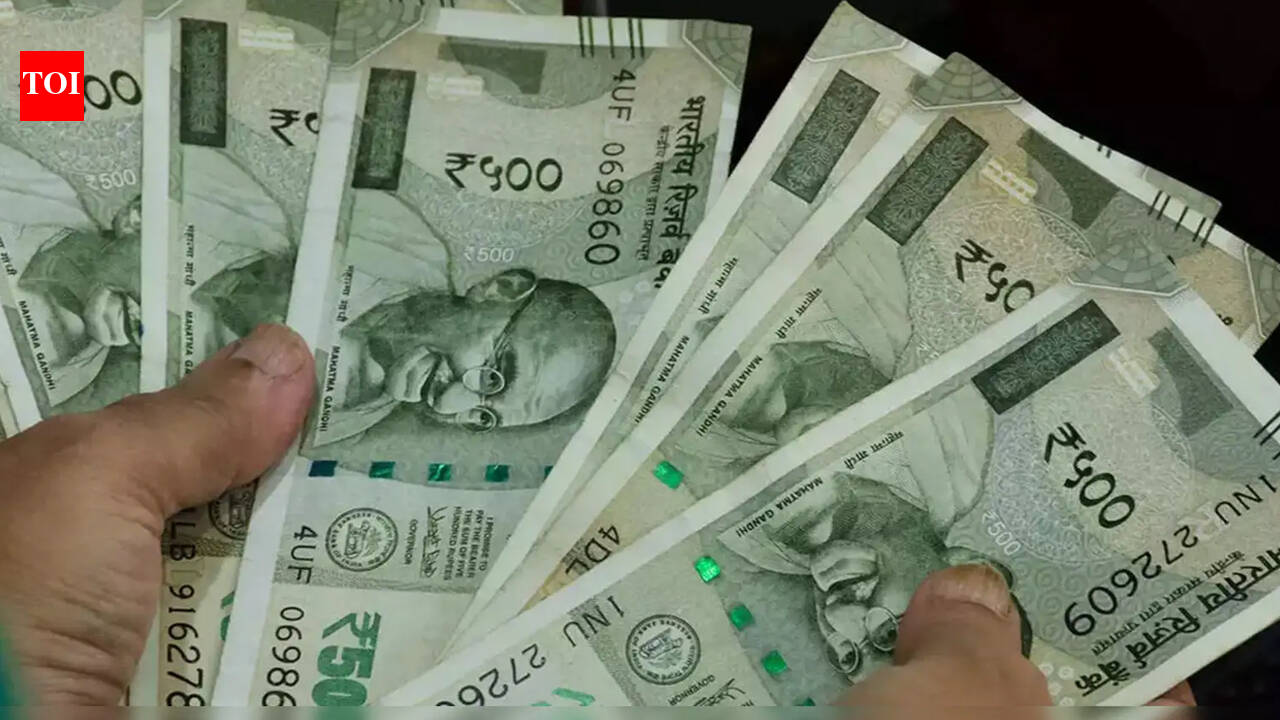
The Indian rupee staged a 22-paise recovery against the US dollar on Friday, reaching 96.5, after likely intervention by the Reserve Bank of India (RBI) helped steady the domestic currency even as Brent crude oil prices topped the $100-a-barrel mark, according to a report by Business Today.
Market Snapshot
The rupee opened at 96.81 in the interbank foreign exchange market, weaker than the previous close of 96.73, before strengthening to 96.51, the report said. Key data points from the session:
| Metric | Value | Change |
|---|---|---|
| USD/INR (close) | 96.51 | +22 paise vs prior close |
| USD/INR (open) | 96.81 | – |
| Brent crude futures | $100.8/barrel | +0.12% |
| Dollar index | 101.43 | -0.01% |
| Sensex | 75,869.38 | -512.07 points |
| Nifty | 23,713.60 | -153 points |
| FII net equity sales (Thu) | Rs 2,999.23 crore | – |
Central Bank Intervention and Currency Dynamics
According to the Business Today report, traders said a softer US dollar lent some support, though foreign institutional investor (FII) outflows and continued weakness in domestic equities capped gains. The rupee remained under pressure as Brent crude crossed the $100 mark amid escalating tensions in the Middle East. The US military announced a 13th consecutive night of strikes against Iran on Thursday as clashes over shipping routes intensified. The attacks followed claims by Yemen's Houthi that two Saudi oil tankers had been targeted in the Red Sea, pushing international oil prices above $100 per barrel.
Anil Kumar Bhansali, Head of Treasury and Executive Director at Finrex Treasury Advisors LLP, explained the factors behind the currency's movement: "The key factors for the weak opening of the rupee were — Brent crude oil remained elevated, increasing dollar demand from Indian oil marketing companies while importer dollar buying remained strong through the session. RBI intervention via state-owned banks prevented a much larger depreciation, while softer dollar index provided only limited support."
Impact on Trade Finance and Importers
For trade finance professionals and corporate treasurers, the rupee's 22-paise gain provides only temporary relief. The intervention by the RBI, executed through state-owned banks, signals the central bank's willingness to curb excessive volatility but does not reverse the underlying pressures. Indian oil marketing companies, which are large dollar buyers, face increased hedging costs as Brent crude remains above $100. The dollar demand from these importers, coupled with sustained FII outflows—net equity sales of Rs 2,999.23 crore on Thursday alone—keeps the rupee vulnerable. Treasury directors should monitor the RBI's intervention pattern and consider forward cover to manage FX exposure, as the cost of capital for import financing may rise if the rupee weakens further.
Broader Market Pressure
Domestic equities added to the strain, with the Sensex falling 512.07 points to 75,869.38 in early trade, marking its fifth straight session of losses, according to the report. The Nifty declined 153 points to 23,713.60. Foreign Institutional Investors continued to pare their holdings, adding to the rupee's headwinds. The combination of elevated crude prices, geopolitical risk, and capital outflows suggests that the RBI's intervention may need to be sustained to prevent a sharper depreciation, which would directly impact trade finance costs for import-dependent sectors.
Sources: