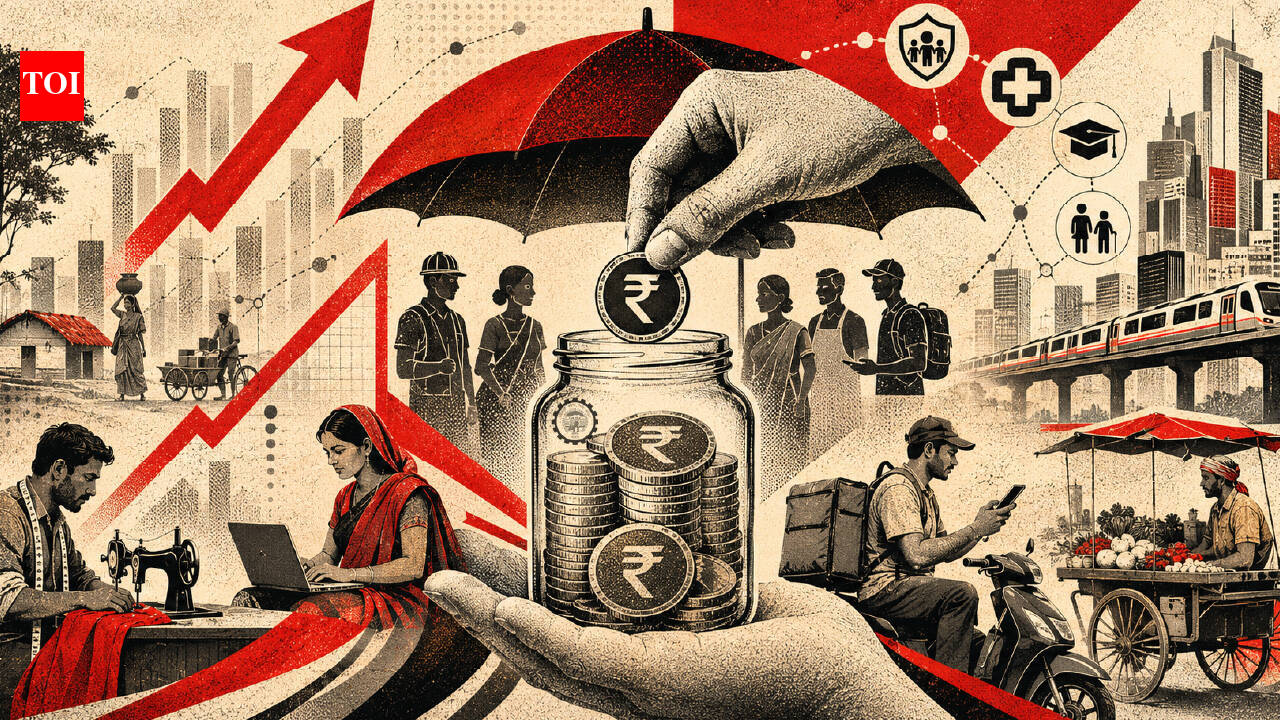
A universal provident fund scheme covering workers in the unorganised sector, gig workers, and the self-employed is under development by the Employees' Provident Fund Organisation (EPFO) , according to a report by Business-Today. The proposal aims to extend social security and retirement benefits to millions currently outside EPFO coverage.
Proposed Framework
The scheme would allow workers to set aside a portion of their income for deposits earning an annual interest rate from EPFO, on par with the existing scheme, per Business-Today. The contribution mechanism mirrors the current EPFO system, with flexibility to contribute daily to annually. Tax benefits are envisaged to be similar to EPFO: contributions up to Rs 2.5 lakh annually are tax-exempt, with other EEE (Exempt, Exempt, Exempt) benefits remaining unchanged. An official told The Times of India that EPFO has examined international models, including Singapore's, while developing the framework.
| Feature | Existing EPFO | Proposed Universal PF |
|---|---|---|
| Contribution flexibility | Fixed monthly (employer+employee) | Daily to annual, worker-choice |
| Withdrawal | Lump sum on retirement/exit | Systematic withdrawal plan retained after retirement |
| Tax benefit | EEE up to Rs 2.5 lakh | EEE up to Rs 2.5 lakh (envisaged) |
| Interest rate | EPFO annual rate | EPFO annual rate |
Key Features
The proposal introduces a new withdrawal mechanism: subscribers may retain the corpus with EPFO even after retirement and opt for a systematic withdrawal plan, with flexibility on higher initial or later payouts. This facility could extend to existing EPFO subscribers as well. The scheme would be financed entirely by subscribers, with no employer or government contribution. EPFO has already floated a tender for IT architecture to support the system, though it has not been officially assigned responsibility, according to Business-Today.
Benefits and Challenges
Kuldip Kumar, Partner at Mainstay Tax Advisors LLP, noted that the Code on Social Security, 2020 provides for social security benefits — life and disability insurance, health and maternity, old-age protection, and accident insurance — for gig and platform workers through dedicated schemes. The universal PF would complement these. Business-Today reported that the government has already mandated platforms like taxi aggregators and food delivery apps to register workers on a dedicated portal. Experts cited by the report say the move could be one of the most significant expansions of India's social security framework in recent decades.
Implications for Treasury and Finance Professionals
For CFOs and finance executives tracking Indian economic policy, the proposal signals a structural shift in how the government addresses retirement savings for the informal workforce. The dedicated IT architecture and registration mandates imply increased compliance costs for platform companies, potentially affecting their cost structures. The tax-exempt contribution limit of Rs 2.5 lakh also influences personal savings behaviour among self-employed professionals. While the scheme is subscriber-financed, its implementation could affect aggregate domestic savings flows and long-term demand for government securities if EPFO investment patterns remain unchanged.
Sources: