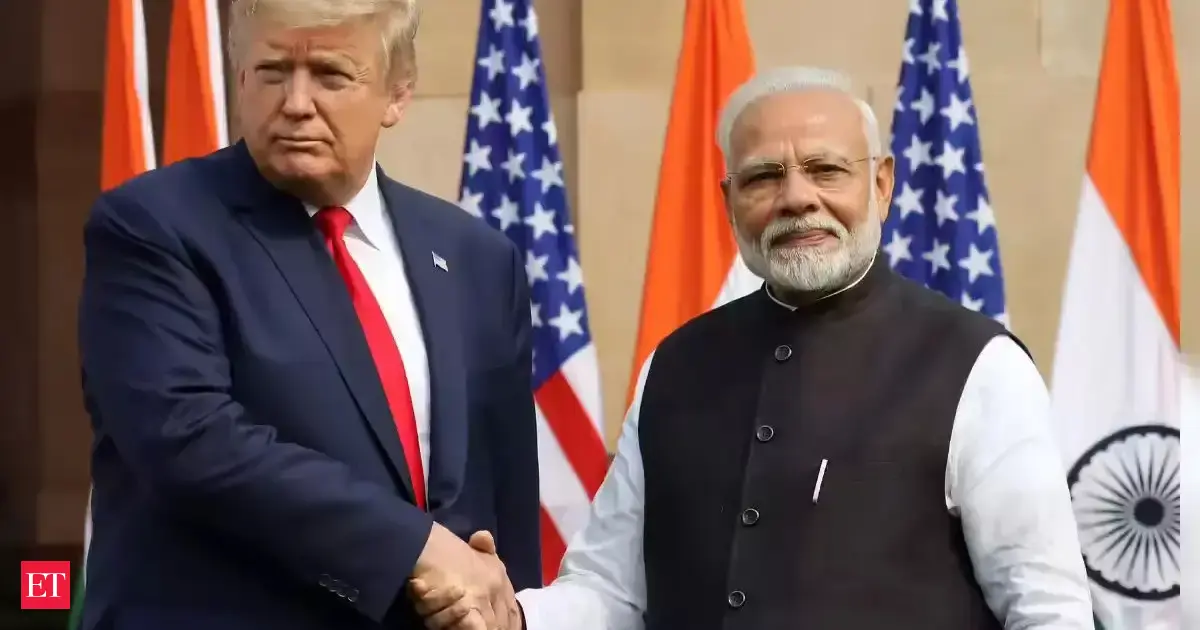
A senior US official said on condition of anonymity that the bilateral trade deal between the United States and India could be signed within three to four months, according to a report by the Economic Times. Speaking on the sidelines of the ASEAN Foreign Ministers' meeting in Manila, the official declared:
"The deal... is there. We literally have the paper."
Trade deal progress and last hurdle
The official indicated that the only remaining obstacle is Washington's completion of its Section 301 trade investigations. The Section 301 statute covers unfair trade practices and empowers the US to impose tariffs or other retaliatory measures. Washington and New Delhi have been negotiating a bilateral trade agreement to expand market access and lower trade barriers as part of efforts to deepen economic ties, the report noted.
New tariff proposals on India
Separately, the US has already proposed new tariffs of up to 12.5% on dozens of nations, including India, over allegations they failed to curb trade in goods made with forced labour. While the trade deal may address some tariff issues, the Section 301 investigations could still lead to additional duties.
Impact on India's pharmaceutical sector
US President Donald Trump announced on Tuesday that generic drugs imported into the US would remain tariff-free for two years from August 1, before facing tariffs of 100% for a year and 200% thereafter. This phased tariff schedule could significantly affect India's pharmaceutical industry, the world's largest exporter of generic drugs.
| Indicator | Value |
|---|---|
| India's total pharmaceutical exports (2025) | $25.8 billion |
| Exports to the United States | $9.7 billion (38%) |
| Tariff-free period (starting August 1) | 2 years |
| Tariff after 2 years | 100% for 1 year |
| Tariff after 3 years | 200% thereafter |
India is the most exposed among generic drug exporters, with the United States accounting for $9.7 billion, or nearly 38%, of its $25.8 billion pharmaceutical exports in 2025. The tariff timeline gives Indian exporters a two-year window but then imposes steep duties.
Outlook for bilateral trade
The simultaneous pursuit of a trade deal and tariff actions reflects the complex state of US-India trade relations. Importers and exporters should monitor the completion of the Section 301 reviews as a key milestone. If the deal is signed within the 3-4 month timeframe, it could reduce uncertainty, but the pharmaceutical sector faces concrete tariff risks from August 1. The ASEAN Foreign Ministers' meeting provided the backdrop for this latest update, underscoring the multilateral context of bilateral negotiations.
Sources: