iGEN
Visit IGEN World Explore IGEN Expo
EXPLORE UPGRADE PLANS
BREAKING
CMA CGM and Stonepeak Launch United Ports LLC in $2.4 Billion Terminal Joint Venture UPS shift away from Amazon shows bigger payoff Lanesurf: 62% of Loads Get Vetted Carrier Offers Before Brokers Arrive India-China Border Trade Via Lipulekh Resumes Aug 1; China Permits 20 Traders Geopolitics Drives CMA CGM Q2 Profit Surge of 42% as Volumes and Rates Climb Benchmark Diesel Price Rises Third Week as Futures Plunge; Spread Hits Record Indian Government Limits Sugar Dealers to 400 Tonnes Stock Until November to Curb Hoarding Tenants signing longer leases for larger warehouses as 3PLs lock in capacity US stock market flat as S&P 500 and Dow barely move, Nasdaq slides over 1% on chip rout TruAlt Bioenergy Q1 Net Zooms to ₹59.27 Crore on Higher Revenues, Capacity Expansion CMA CGM and Stonepeak Launch United Ports LLC in $2.4 Billion Terminal Joint Venture UPS shift away from Amazon shows bigger payoff Lanesurf: 62% of Loads Get Vetted Carrier Offers Before Brokers Arrive India-China Border Trade Via Lipulekh Resumes Aug 1; China Permits 20 Traders Geopolitics Drives CMA CGM Q2 Profit Surge of 42% as Volumes and Rates Climb Benchmark Diesel Price Rises Third Week as Futures Plunge; Spread Hits Record Indian Government Limits Sugar Dealers to 400 Tonnes Stock Until November to Curb Hoarding Tenants signing longer leases for larger warehouses as 3PLs lock in capacity US stock market flat as S&P 500 and Dow barely move, Nasdaq slides over 1% on chip rout TruAlt Bioenergy Q1 Net Zooms to ₹59.27 Crore on Higher Revenues, Capacity Expansion
Home ›› Intl Trade ›› Import Export ›› Incoterms ›› PM Modi pushes to cut import dependence, boost domestic manufacturing to shield India from global shocks

PM Modi pushes to cut import dependence, boost domestic manufacturing to shield India from global shocks

Prime Minister Narendra Modi has ordered a push to replace high-import goods with local products. The Ministry of Commerce is preparing a list of over 100 products, while the cabinet approved a $19.7 billion incentive boost for chip and smartphone production. Economists say self-reliance is born of necessity.

iG
iGEN Editorial
July 16, 2026
PM Modi pushes to cut import dependence, boost domestic manufacturing to shield India from global shocks

Prime Minister Narendra Modi has ordered key ministries to identify categories of goods in which import dependence is high and can be replaced by locally made products, according to officials familiar with the matter. The government is considering subsidies and other incentives to boost domestic production, they said, asking not to be identified because the discussions are private.

Import Substitution Strategy

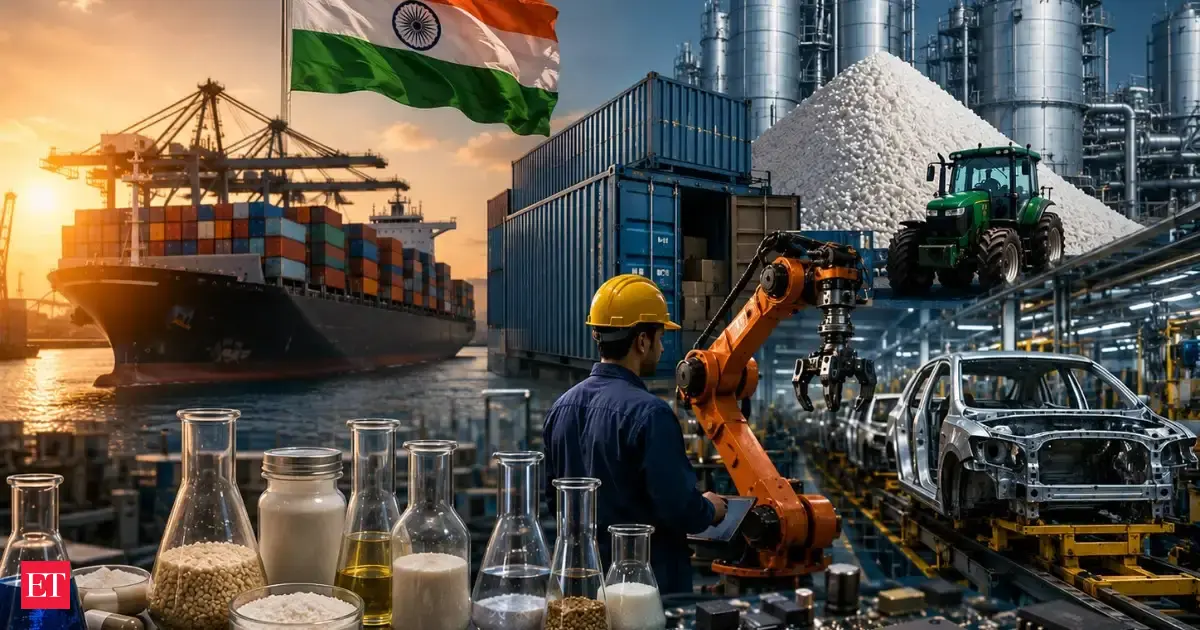
The Ministry of Commerce and Industry is preparing a list of more than 100 products, including electronics, chemicals, key drugs, fertilizers, semiconductors, automobiles and machinery, which could be scaled up, the people said. The discussions are taking place across several ministries and a decision has not been finalized yet.

Shaktikanta Das, a former central bank governor and now principal secretary in Modi's office, is spearheading a taskforce that is drawing up an import substitution blueprint for the economy, officials said. Members of the Prime Minister’s Economic Advisory Council are also involved in the project.

Commerce Minister Piyush Goyal this month urged states and industry to identify products that can be manufactured competitively in the country. He added that the efforts would help in cutting import dependence, saving foreign exchange while strengthening domestic supply chain to reduce vulnerabilities arising from excessive dependence on foreign suppliers.

Incentives and Policy Moves

Building domestic capacity is now a key pillar of Modi’s economic agenda, with an objective to narrow the trade deficit, preserve foreign exchange and position India as an alternative manufacturing hub to China. India’s free trade agreements with partners such as the European Union are also expected to attract fresh investment and deepen the country’s manufacturing base, economists said.

The latest move came on Wednesday, with Modi’s cabinet approving a plan to increase financial support for chip and smartphone production by another 1.9 trillion rupees ($19.7 billion). It also approved a policy to raise local fertilizer production following shortages linked to the closure of the Strait of Hormuz.

The government may consider extending manufacturing incentives to private and foreign investors to set up factories in the country or ask state-owned firms to scale up their own capacity through joint ventures, the officials said.

Product Categories Targeted

Category Examples Import Dependence Rationale
Electronics Semiconductors, smartphones High dependency on foreign chip supplies
Chemicals Key industrial chemicals Critical for manufacturing
Pharmaceuticals Key drugs Essential for health security
Fertilizers Urea, phosphates Supply chain vulnerability via Strait of Hormuz
Automobiles Components and complete vehicles Growing domestic demand
Machinery Industrial equipment Support for other sectors

"Export controls are being used to deny critical components — from rare earths to semiconductors — to countries that need them. If this is the world we have to live in, where industrial policies are weaponized, self-reliance is the need of the hour," said Gaurav Kapur, economist with IndusInd Bank.

Expert Views

Economists noted that the self-reliance push comes amid global supply chain risks and rising protectionism. Modi's office and the Ministry of Commerce and Industry did not reply to a request for further information. Dhiraj Nim, economist with ANZ Banking Group, said: "Such self-reliance is born out of necessity, not necessarily a search of economic efficiency. Bringing up domestic industries will have a positive impact on manufacturing metrics and jobs, undoubtedly. But much depends upon scale."


Sources: Economic Times – Foreign Trade
Keep Reading

Recommended Stories

India identifies $51 billion in critical imports for domestic manufacturing push Trade

India identifies $51 billion in critical imports for domestic manufacturing push

India's internal government analysis has identified $51 billion in critical imports that could be replaced by domestic manufacturing, part of a $398 billion import substitution potential. The move aims to mitigate supply-chain risks and reduce reliance on China.

July 16, 2026
India’s edible oil industry flags 17-fold surge in Nepal imports, seeks policy review Trade

India’s edible oil industry flags 17-fold surge in Nepal imports, seeks policy review

India’s edible oil imports from Nepal have surged more than 17-fold in two years, from 47,295 tonnes in 2023 to over 804,000 tonnes in 2025, according to the Indian Vegetable Oil Producers' Association (IVPA). The industry body is urging a comprehensive policy review under SAFTA, citing duty-free imports that are shifting refining activity outside India and causing an estimated customs revenue loss of ₹2,000–2,500 crore. IVPA President Sudhakar Desai called for stronger verification of Rules of Origin and a review of tariff structures to safeguard domestic value addition.

July 20, 2026
India Silver Imports Plunge 82% in May After Duty Hike to 15% Trade

India Silver Imports Plunge 82% in May After Duty Hike to 15%

India's silver imports plunged 82% to US$76 million in May from US$411 million in April, following a government duty hike from 6% to 15% and reclassification to 'restricted' category. The measures came after silver imports surged 149.6% to a record US$12.05 billion in FY2025-26. A GTRI report warns the duty hike widened the tariff advantage for imports routed through the UAE under the India-UAE free trade agreement, creating an 8 percentage-point differential.

June 17, 2026
India Protecting Industry from Unfair Trade Practices of Certain Countries: Piyu Trade

India Protecting Industry from Unfair Trade Practices of Certain Countries: Piyu

Commerce and Industry Minister Piyush Goyal stated that India is protecting its domestic industry from unfair trade practices of certain countries, including overcapacity and dumping. He noted that the EU, US, and UK are also safeguarding their steel industries. Goyal added that the WTO is currently not very effective, necessitating bilateral actions, and highlighted India's recent FTAs and investment commitments.

June 12, 2026