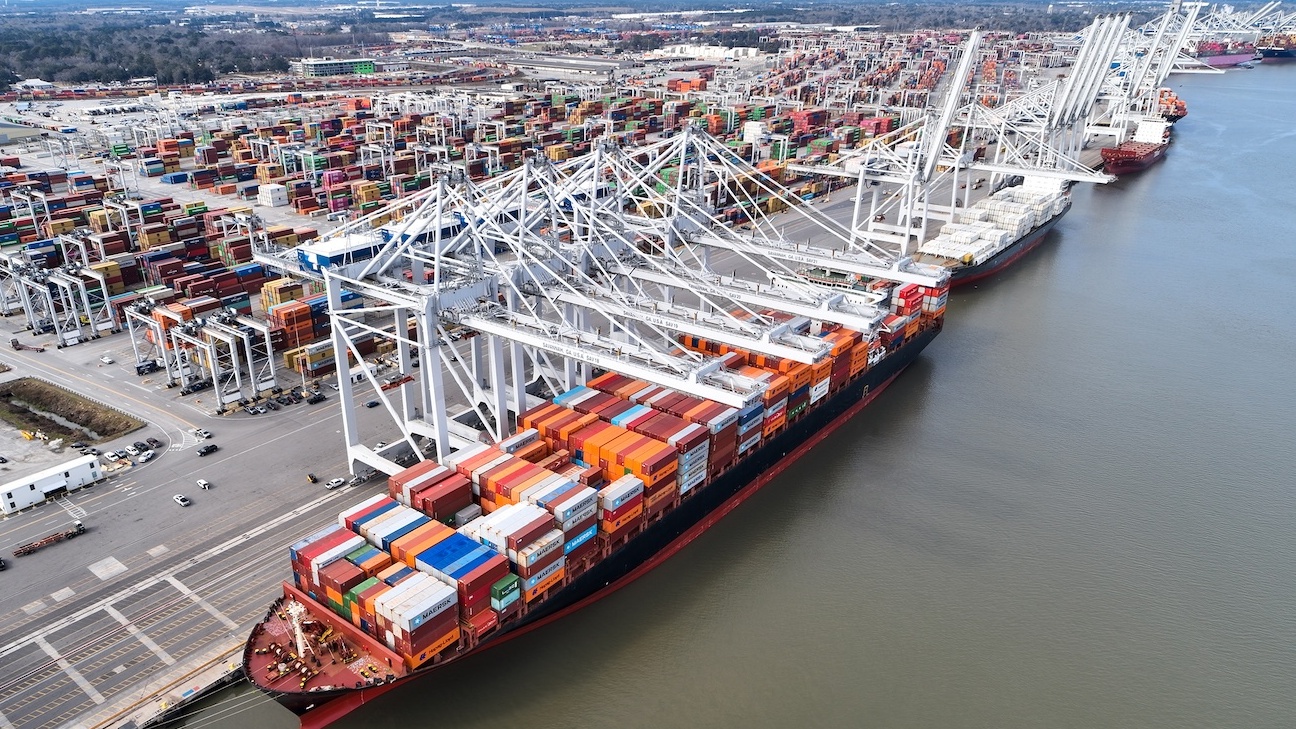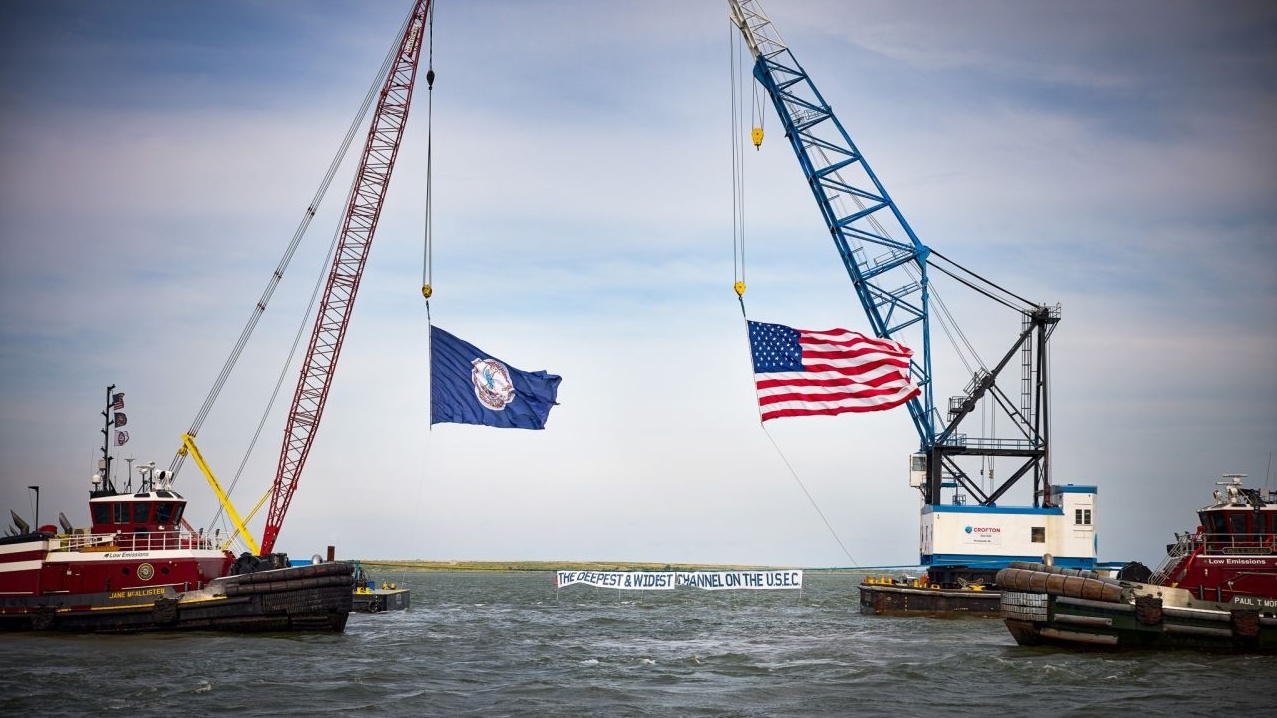
The Port of Virginia has set a new standard for East Coast container gateways, completing a $450 million deepening project that makes Norfolk Harbor the deepest commercial channel on the seaboard, according to FreightWaves.
Governor Abigail Spanberger inaugurated the milestone before more than 200 attendees at Norfolk International Terminals. The project reached substantial completion on February 28, allowing the largest cargo ships in the Atlantic trade to transit Norfolk Harbor with full loads, Spanberger said. She emphasized that the increased depth drives down shipping costs and supports higher export volumes for Virginia’s agriculture and forestry sectors, including soybeans, wood pulp, and lumber.
Gateway Investment Program
The dredging is a core component of the Gateway Investment Program, a comprehensive capital campaign that began in 2023. The program includes several high-impact upgrades:
| Component | Cost | Status | Details |
|---|---|---|---|
| Harbor deepening and widening | $450 million | Complete (Feb 28) | Allows two-way traffic for ultra-large container vessels (ULCVs) of 14,500-24,000 TEU capacity |
| Rail expansion | $83 million | Fully operational | Boosted annual rail capacity to 2 million TEUs |
| Portsmouth Marine Terminal conversion | $220 million | Completed | Converted into a deepwater heavy-lift facility |
| North Berth renovation at Norfolk International Terminals | $650 million | Past halfway; completion mid-2027 | Installing four new low-profile ship-to-shore cranes and expanded technology backbone |
Once the North Berth work finishes, the port’s annual throughput capacity will reach 5.8 million TEUs, and it will gain a fifth ULCV berth. The port also benefits from Norfolk Harbor being federally authorized by Congress to be dredged to 55 feet — the only East Coast channel with that depth.
Operational Impact and Shipper Implications
For shippers and ocean carriers, the deeper channel means ultra-large container vessels can now call with full loads, reducing the need for load-centering or transshipment via other ports. The two-way traffic capability also reduces waiting times and improves vessel scheduling reliability.
Sarah J. McCoy, Virginia Port Authority Chief Executive and Executive Director, stated that these projects ensure the port can support long-term growth without capacity constraints. She said that with these foundational elements, users can expand operations and cargo volumes without concern for outgrowing the facility’s capabilities for decades.
Senators Mark R. Warner and Tim Kaine praised the use of funding from the Bipartisan Infrastructure Law. Warner cited the project’s role in creating economic opportunities for the Hampton Roads region, while Kaine said it reinforces the port’s status as a critical pillar of the Commonwealth’s economic success.
Watch List
- Completion of the North Berth renovation at Norfolk International Terminals, projected for mid-2027, which will add a fifth ULCV berth and boost throughput to 5.8 million TEUs.
- Continued collaboration with the U.S. Army Corps of Engineers and federal partners to maintain the 55-foot depth and potential further infrastructure investments under the Gateway Investment Program.
Sources: