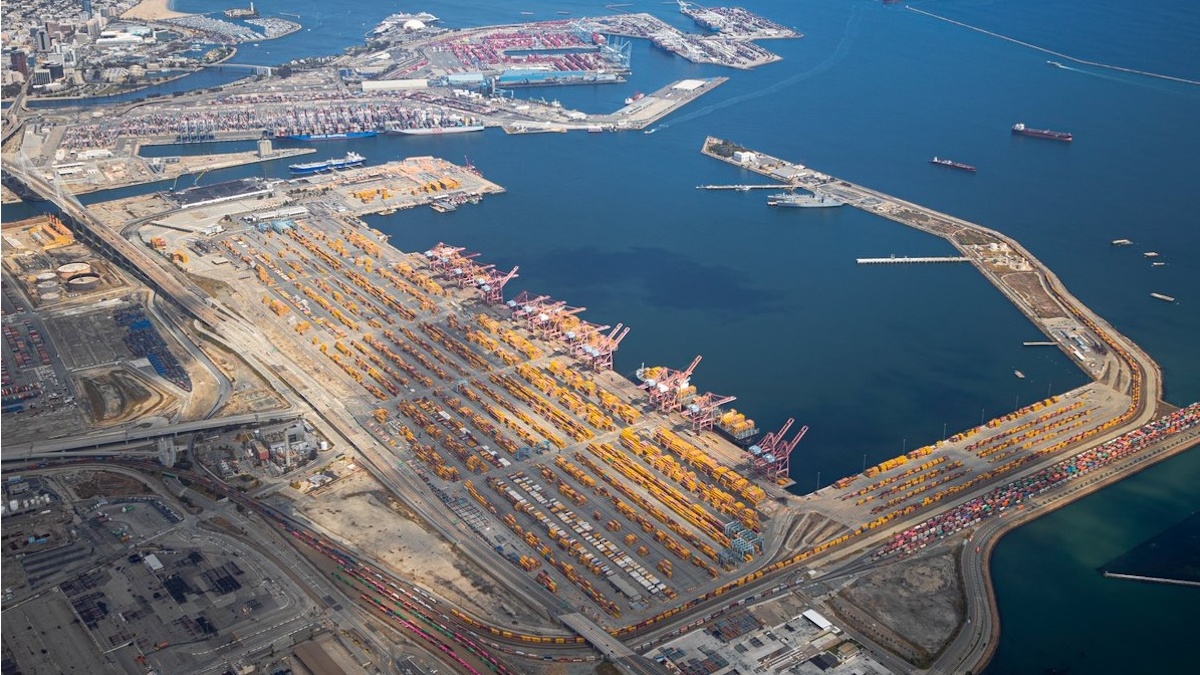
Imports at the Port of Long Beach soared 40% in May 2026, pushing total container volumes to 842,030 TEUs — a 31.7% increase year-over-year and the third-busiest May on record, according to FreightWaves.
Record May Volumes
FreightWaves reported that Long Beach processed 418,851 TEUs of imports in May, up 40% from May 2025. Exports rose 32.9% to 109,168 TEUs. Empty containers, an indicator of future inbound traffic, increased 21.8% to 314,012 TEUs. Through the first five months of 2026, the port handled 4,050,247 TEUs, up 0.2% year-over-year — closely tracking the record pace set in 2025.
| Metric | May 2026 | May 2025 | Change |
|---|---|---|---|
| Total TEUs | 842,030 | 639,200 (est.) | +31.7% |
| Import TEUs | 418,851 | 299,179 (est.) | +40.0% |
| Export TEUs | 109,168 | 82,147 (est.) | +32.9% |
| Empty TEUs | 314,012 | 257,874 (est.) | +21.8% |
| Jan-May 2026 total | 4,050,247 | 4,042,000 (est.) | +0.2% |
Note: 2025 values are derived from reported change percentages.
Drivers of the Surge
FreightWaves quoted Port of Long Beach CEO Noel Hacegaba saying, “These numbers reflect the strength and adaptability of the supply chain. Shippers are responding to the higher cost of doing business by moving cargo earlier.” Hacegaba attributed the early surge to rising fuel costs, tariff uncertainty, and geopolitical concerns, all contributing to expectations for an earlier peak shipping season. He said higher-than-normal cargo volumes are anticipated in July and August.
Retailers and other shippers are frontloading to stay ahead of manufacturers’ cost increases set to take effect in July. Carriers have been adjusting capacity, pushing trans-Pacific rates significantly higher over the past several weeks while making booking space more scarce, according to FreightWaves.
Hacegaba also noted that the potential long-term effects of tariffs, energy availability, and a peace agreement between the United States and Iran that led to the reopening of the Strait of Hormuz shadow business plans.
“While these issues may seem very different – security, energy markets and trade policy – they all point to the same challenge: uncertainty. Supply chains perform best when businesses can plan with confidence. Whether we’re talking about fuel costs, geopolitical risks, or tariff policy, predictability remains one of the most important drivers of supply chain efficiency and economic growth.” — Noel Hacegaba, CEO, Port of Long Beach
Implications for Shippers and Carriers
For freight forwarders and logistics managers, the data signals that peak season is already underway on the Trans-Pacific eastbound lane. The 40% import surge means terminal capacity at the Port of Long Beach and the adjacent Port of Los Angeles – together the busiest U.S. container gateway – will be stretched. Berth capacity and dwell times are likely to increase, and operators should secure bookings early as carriers restrict space and raise spot rates.
According to FreightWaves, carriers have been pushing trans-Pacific rates significantly higher and making available booking space more scarce for shippers. This is consistent with the frontloading trend: shippers are moving cargo now to avoid both higher manufacturing costs in July and potential tariff hikes.
Watch List
- July and August cargo volumes: Hacegaba anticipates higher-than-normal volumes, which could strain port and inland logistics infrastructure.
- Manufacturers’ cost increases set for July: May accelerate further frontloading.
- Tariff policy developments: Any changes could alter the timing and volume of imports.
- Strait of Hormuz reopening: The U.S.-Iran peace agreement may affect energy costs and global supply chain patterns.
- Fuel costs: Rising fuel prices continue to push up total landed costs and may influence carrier capacity decisions.
FreightWaves reported that Long Beach has processed 4,050,247 TEUs through the first five months of 2026, up fractionally year-over-year, indicating that the pace of 2025 record volumes is being maintained. Operators should monitor these indicators closely for further shifts in capacity and pricing.
Sources: