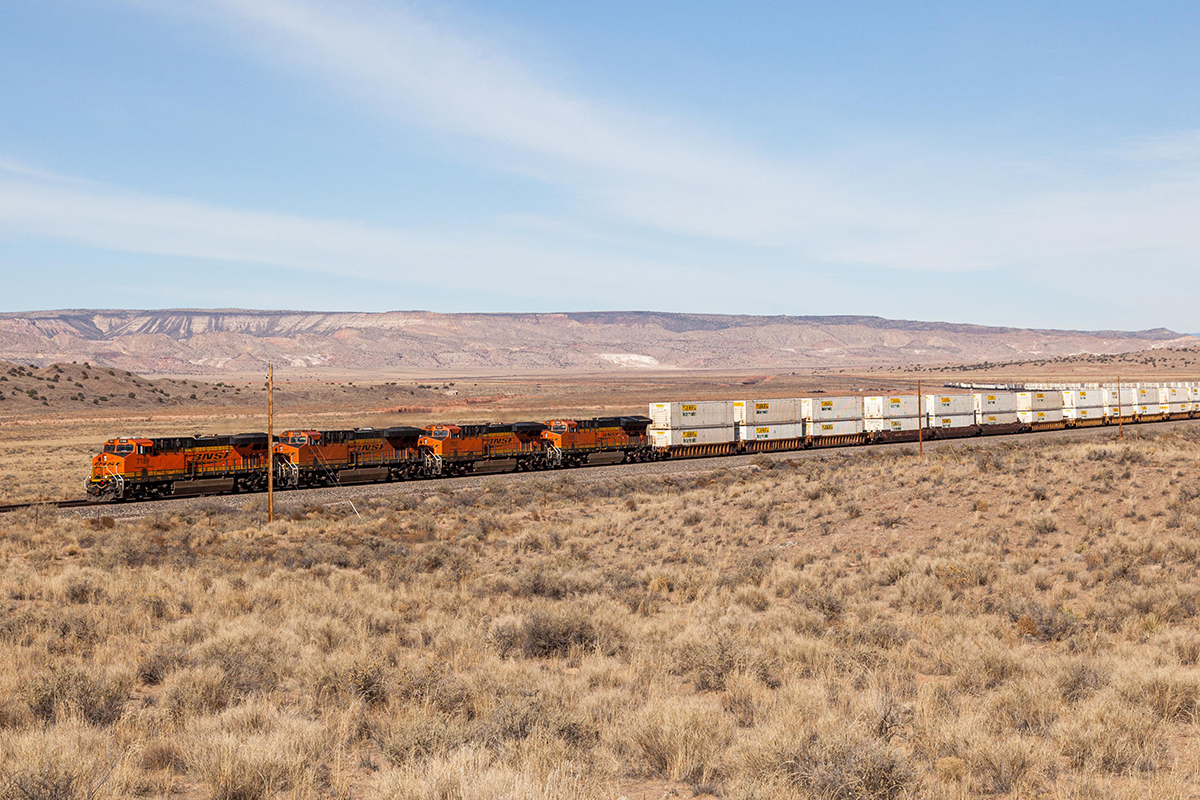
The Barstow City Council has approved BNSF Railway's proposed $4 billion Barstow International Gateway (BIG) intermodal hub, according to FreightWaves. The project is a key component for freight moving into and out of the Southern California port complex, the nation's busiest. BIG will cover 4,500 acres and create capacity for 60 trains in the high desert east of Los Angeles, serving as the gateway to the southern transcontinental rail route handling container traffic from San Pedro Bay.
Project Overview
The Fort Worth-based BNSF (NYSE: BRK-B) frames the project as a private investment ranging from $1.5 billion to $4 billion. The company argues it would reduce truck traffic in the Los Angeles Basin and Inland Empire, improve port-to-rail fluidity from Los Angeles-Long Beach, and create about 20,000 direct and indirect jobs. The project turned into a clash between economic-development claims and concerns about environmental, traffic, and community impacts, with a newer wrinkle around California air rules and permitting delays, according to FreightWaves.
| Metric | Detail |
|---|---|
| Investment | $1.5B–$4B |
| Acreage | 4,500 acres |
| Train capacity | 60 trains |
| Job creation | ~20,000 direct and indirect |
Economic and Environmental Debate
Supporters say BIG will shift cargo off highways, create jobs, and improve supply-chain efficiency. Critics argue it could increase local pollution, strain infrastructure, and face operational or regulatory limits, according to FreightWaves. The strongest objections center on environmental review and land-use concerns, especially the project's scale, its potential local impacts, and whether promised emissions benefits outweigh added rail activity. Opponents have also raised health-and-safety worries, infrastructure bottlenecks, and whether the area can support the operation at the stated scale.
Regulatory Hurdles
A major recent issue was the California Air Resources Board's (CARB) proposed in-use locomotive rule, which BNSF and city officials said threatened the project over zero-emission locomotive technology that is not commercially viable. CARB withdrew that application with the Environmental Protection Agency in January 2025, removing one of the biggest immediate threats, though a California Environmental Quality Act (CEQA) review is pending, according to FreightWaves.
Industry Context
BNSF obtains local approval as federal regulators evaluate the proposed $85-billion merger of Union Pacific (NYSE: UNP) and Norfolk Southern (NYSE: NSC), a potentially historic deal which would create the first all-freight transcontinental railroad. UP has pitched truck-competitive transit times for containers moving between the coasts, significantly upping the competitive ante among Class I carriers. Some rail observers have questioned the project's transloading model itself, arguing it may be hard to sustain without a natural westbound flow of empty domestic containers and may create extra handling and repositioning costs, according to FreightWaves.
Executive Statements
"BIG is a transformative, next generation rail facility that will deliver meaningful benefits for our customers," said BNSF President and Chief Executive Katie Farmer, in a statement. "By creating a more resilient, efficient, and low-carbon freight system, we're giving shippers faster, more reliable inland access and greater network fluidity. This $4 billion private investment strengthens the entire supply chain, reduces congestion at the ports, and gives our customers a seamless product that also offers our customers greater optionality and flexibility."
"BIG is designed with our customers at the center," said BNSF Executive Vice President and Chief Marketing Officer Tom Williams, in a statement. "By streamlining the handoff from the San Pedro Bay Ports to our national network, we're improving transit times, increasing capacity, and enhancing service reliability across long-haul corridors. This facility will help our customers compete in a global marketplace by ensuring their freight moves efficiently, sustainably, and with fewer bottlenecks from origin to destination."
Implications for Shippers and Operators
Freight forwarders and logistics managers should monitor the CEQA review timeline and potential further regulatory hurdles. The project's approval adds significant rail capacity on the southern transcontinental route, which could improve transit times for containerized imports from the San Pedro Bay ports. However, the transloading model's reliance on empty container flows presents a potential cost risk. The backdrop of the UP-NS merger may also reshape competitive dynamics in the rail sector, making BIG a strategic asset for BNSF to retain market share.
Sources: