Container lines' structural shift toward owned tonnage is now a defining feature of global ocean shipping: carriers own 63% of their operated capacity, up from 43% in January 2020, according to maritime data firm Sea-Intelligence. The shift reduces the industry's exposure to a charter market repeatedly constrained by limited vessel availability, according to Splash247.
The transformation has unfolded during one of the most volatile and profitable periods in container shipping history, according to Splash247. It spans the pandemic-driven freight boom, widespread port congestion, and the subsequent disruption of services through the Red Sea. In that environment, Sea-Intelligence argued that ownership has been a decisive advantage for carriers seeking to expand market share, a stretch that delivered all-time high profits.
Who is leading the move to owned tonnage
Mediterranean Shipping Co (MSC), HMM and Wan Hai have made the largest moves away from chartered tonnage, with Wan Hai now operating entirely with owned vessels, according to Sea-Intelligence. At the other end of the spectrum, Hapag-Lloyd has made almost no change to its fleet ownership balance since the start of 2020. Maersk, COSCO and ZIM have also made only relatively minor adjustments.
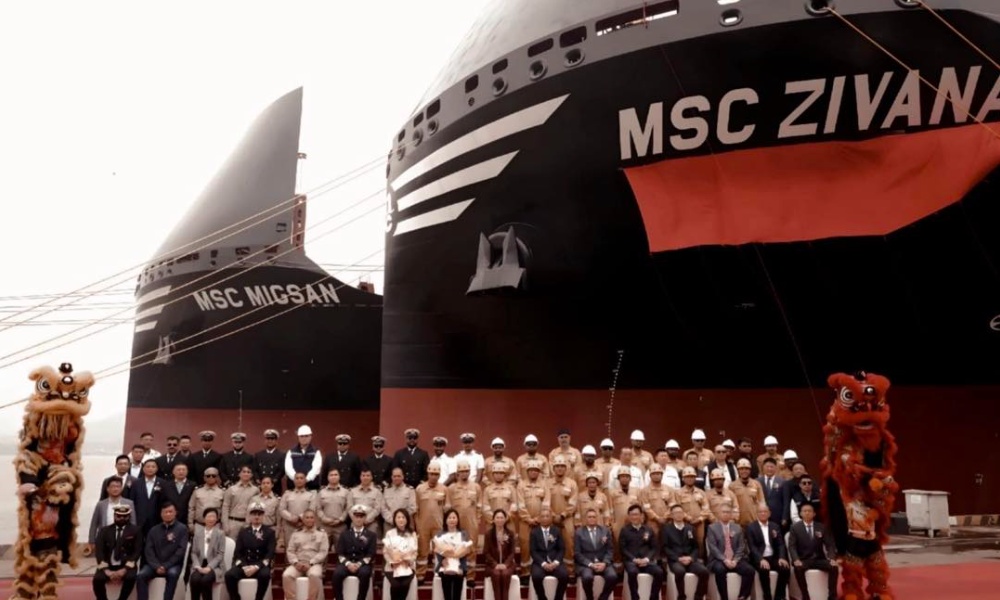
MSC's aggressive programme of secondhand acquisitions and newbuilding orders has been central to its rise to become the world's largest containerline, Splash247 reported. The broader industry trend suggests many carriers now view vessel ownership not simply as an asset strategy, but as a means of protecting operational flexibility in markets where available charter tonnage can disappear quickly.
| Carrier or group | Reported shift in ownership balance since Jan 2020 |
|---|---|
| MSC, HMM, Wan Hai | Largest moves away from chartered tonnage; Wan Hai fully owned |
| Hapag-Lloyd | Almost no change |
| Maersk, COSCO, ZIM | Relatively minor adjustments |
What it means for shippers and forwarders
When charter markets tighten, operators dependent on third-party tonnage face higher hire costs and fewer opportunities to secure ships, according to Sea-Intelligence via Splash247. Carriers with owned fleets, by contrast, have greater control over deployment, capacity additions and network expansion. For freight forwarders and logistics managers, this means the carriers with the largest owned fleets may be better positioned to maintain service reliability and respond to capacity shifts without competing in the spot charter market.
63% — share of operated capacity owned by global carriers today, up from 43% in January 2020, according to Sea-Intelligence.
The divergence also affects how capacity risk is distributed across the industry. Charter-reliant operators are more exposed when vessel supply tightens, and that exposure can translate into rate pressure for shippers served by those lines. Shippers on networks dominated by owned-fleet carriers may see more predictable capacity planning, while routes served by charter-heavy operators could be more vulnerable to disruption.
Watch list
- Whether remaining charter-heavy carriers such as Hapag-Lloyd, Maersk, COSCO and ZIM adjust their ownership strategies if charter availability tightens further.
- The pace of MSC's secondhand acquisitions and newbuilding orderbook, which has been central to its expansion, and whether competitors follow.
- Any return of the operating conditions that defined the past few years — port congestion, Red Sea disruptions, or freight demand swings — which would test the relative resilience of owned-fleet versus charter-dependent operators.
- Changes in the overall owned-capacity ratio, currently 63%, as newbuildings and secondhand purchases continue to reshape carrier fleets.
Sources: