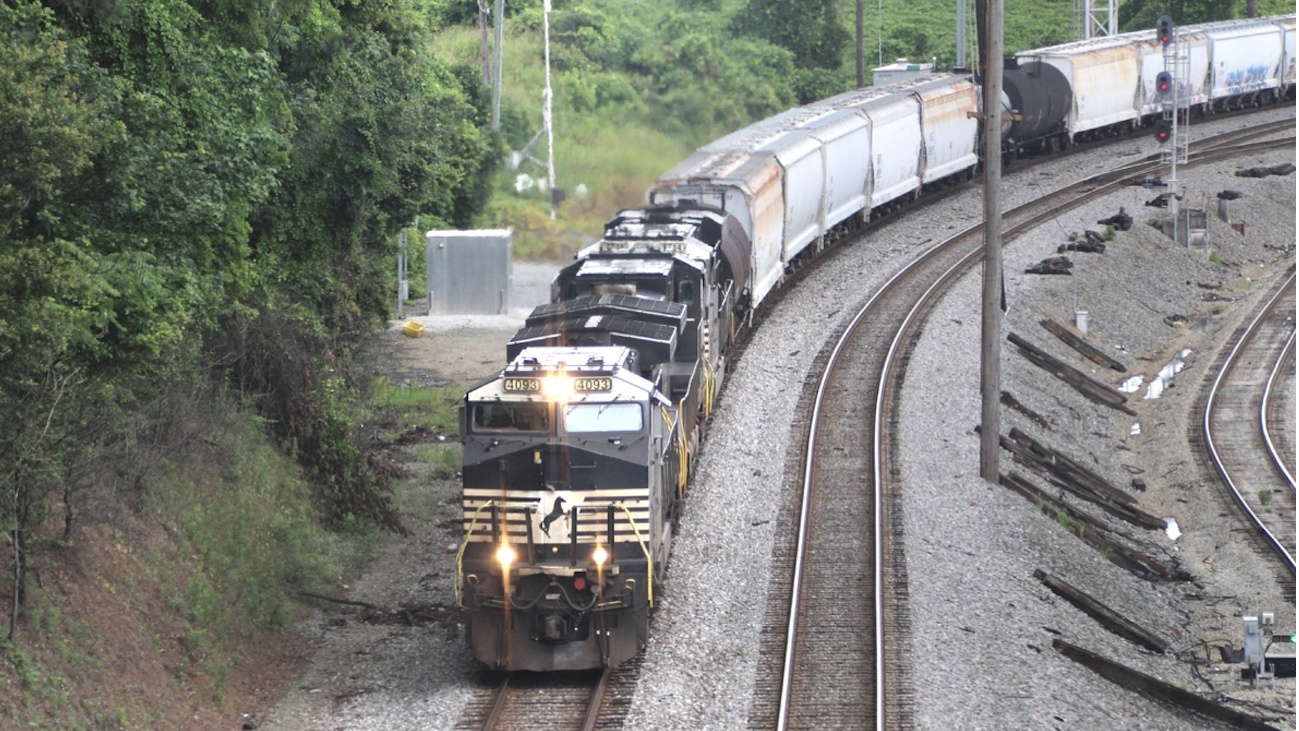
Norfolk Southern (NYSE: NSC) is grappling with crew shortages and rising volumes that have eroded service quality, even as CEO Mark George insists the railroad can simultaneously improve operations and pursue its proposed merger with Union Pacific (NYSE: UNP).
Service Challenges Mount
According to FreightWaves, Norfolk Southern's service is currently falling short of expectations as the railroad struggles with crew shortages and rising volume. Terminal dwell has increased and train speeds have declined since harsh weather in February and a March 7 derailment that shut the railroad’s main line across Pennsylvania for 48 hours. Although operations improved after the traditional volume dip around Memorial Day, those gains were lost over the past two weeks, per the railroad’s latest service data.
| Metric | Status |
|---|---|
| Intermodal on-time performance | Above 95% |
| Merchandise shipments arriving >24 hours late | Roughly one-third in the past week |
CEO: No Trade-Off Between Today and Tomorrow
Mark George wrote in a LinkedIn post on Monday, according to FreightWaves: “From the outset of our announcement to merge strengths with Union Pacific Railroad, we have been clear: Norfolk Southern is not singularly focused on closing a transaction.” He added, “There is no trade-off between evaluating long-term opportunities to strengthen the freight rail network and executing at a high level for customers today.” George acknowledged the recent performance gaps but attributed some to external pressures like weather and macro conditions. “We have taken targeted actions to improve our execution, and to strengthen the resilience of our network,” he wrote.
“The opposite is true,” George wrote. “A strong railroad today is the foundation for any future success, and at the same time, we are looking ahead to ensure we continue to create value and strengthen the network over the long term.”
Merger Rationale and Industry Opposition
George contends that the UP-NS merger will break a structural barrier to rail volume growth: the inability to provide coast-to-coast service. According to his post, directly connecting Eastern and Western railroads without needing to interchange traffic with another carrier will strengthen the U.S. supply chain, support manufacturing, improve transit times, and lower costs for shippers. However, other Class I railroads and some shipper associations have said the merger is not necessary and will reduce rail competition, increase shipping costs, and pose integration-related service risks, as reported by FreightWaves.
Actions and Outlook
Norfolk Southern’s operations team, led by new COO Brian Barr, is focused on stabilizing performance and driving measurable improvement, according to George. The railroad remains committed to improving service consistency, network fluidity, and customer communication. Though the company faces headwinds from crew shortages and weather, George emphasized that the foundation is solid and actions are underway to strengthen network resilience. The proposed merger continues to be a focal point, with industry debate over its competitive impact likely to intensify.
Sources: