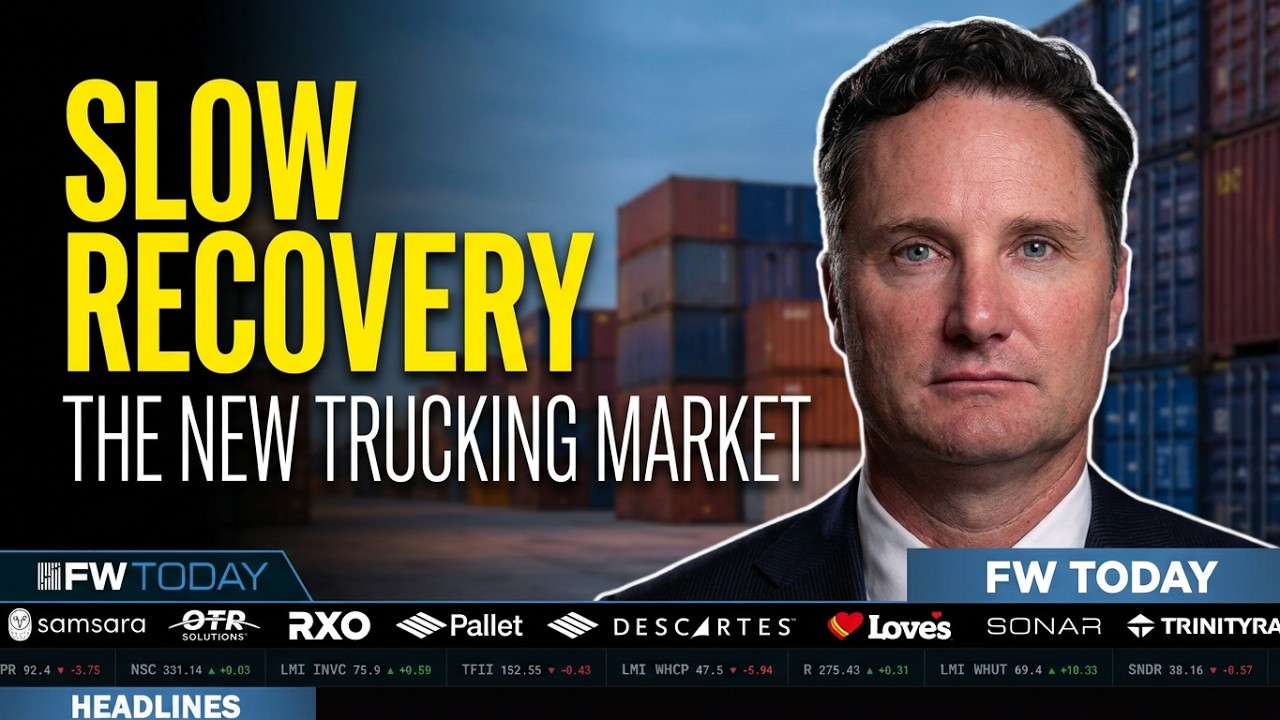
While the broader freight market shows resilience, UPS earnings paint a different picture, raising questions about Amazon's impact and the carrier's restructuring. Truck OEM PACCAR, however, is reporting strong performance, indicating robust demand and favorable pricing ahead.
UPS Restructuring Under Pressure
UPS stock sold off after the parcel giant declined to guide its domestic business meaningfully higher for the second half of the year — a notable omission given resilient consumer demand and robust freight volumes across the broader market. According to Chris Frusciante, portfolio manager at TheStreet Pro and chief investment officer at Tematica, the company's restrained outlook stands out as a red flag relative to what the rest of the industry is reporting. The Amazon overhang remains the central concern. Amazon's earlier announcement that it is moving into business freight and delivery through its Flex service has raised fresh questions about UPS's long-term volume trajectory. UPS attempted to frame its second-quarter results by arguing that, excluding volumes it intentionally ceded to the market, it actually grew. Frusciante was unimpressed, describing the effort as "put lipstick on a pig." He added, "If UPS is saying, oh, on an adjusted basis, if we strip this out, strip that out… — that's not really what happened." UPS continues a prolonged restructuring punctuated by divestitures including the sale of brokerage unit Coyote.
"UPS is not exactly guiding for a much stronger second half of the year compared to the first half. That's a little worrisome to me." — Chris Frusciante
PACCAR Leads with Strong Deliveries and Pricing Power
While UPS stumbles, PACCAR, parent of Kenworth and Peterbilt, stood out as the clearest bright spot. The company reported 105,000 heavy trucks delivered in the first half of the year and guided for 145,000 in the second half — a roughly 38% sequential increase. Frusciante said filling order slots and incremental pricing power prompted him to raise his price target on PACCAR shares. He summarized the bull case as "tight capacity, demand, pricing, better margins, better earnings potentially in the second half of the year."
| Metric | H1 2025 | H2 2025 Guidance | Change |
|---|---|---|---|
| PACCAR heavy-truck deliveries | 105,000 | 145,000 | +38% |
Driver Market and EPA Mandate Shape Capacity
On the carrier side, the tight driver market is constraining capacity expansion and supporting rates. Werner Enterprises CEO Derek Leathers characterized the freight cycle as being in the third inning, citing a tight driver market as a natural cap on capacity growth. Old Dominion reported an operating ratio of 70, underscoring operational efficiency. Veteran drivers at well-run fleets typically receive new equipment first, with one trucking operator noting a goal of keeping average fleet age below two years. That discipline, combined with incremental demand, is expected to support margin improvement across the sector in the back half of 2025.
The 2027 EPA engine mandate is shaping OEM strategy heading into next year. PACCAR signaled it plans to continue selling current engines through 2026 and gradually phase in compliant 2027 powertrains to avoid a sharp pre-order cliff. Frusciante noted the timing of PACCAR's annual model reveal will determine how long 2026 engines remain available. Rising capital expenditures at carriers including Werner and TFI point to a mix of fleet replacement and pre-buy activity ahead of the mandate.
Implications for Freight Operators
For logistics managers and trucking operators, the diverging fortunes of UPS and PACCAR signal a market where capacity remains constrained and pricing power is shifting to carriers. The tight driver market will continue to support rates, while the pre-buy cycle ahead of the EPA mandate is creating near-term equipment demand. Operators should monitor Amazon's Flex expansion as it could further pressure parcel pricing, while those in heavy trucking may benefit from PACCAR's optimistic delivery outlook and the broader industry tailwinds.
Sources: