iGEN
Visit IGEN World Explore IGEN Expo
EXPLORE UPGRADE PLANS
BREAKING
Relay Q: London Startup's AI Microphone Puts Hands-Free Voice Dictation on the Desktop Google Pixel 10a Crowned Best Budget Pixel in WIRED's Updated 2026 Buying Guide Global Steel Wire seeks fresh Santander terminal concession Veritas Shipmanagement books fresh ultramax pair at COSCO yard, Splash247 reports Seanergy linked to fresh newcastlemax at Hengli as dry bulk orderbook grows Weaker rupee may push foreign assets over FAST-DS Rs 1 crore limit, raising tax bill 45 Indian power plants face critically low coal stocks as monsoon hits supply SFL Makes Fresh $363m Car Carrier Play With Four LNG Dual-Fuel Newbuilds Iran Blacklist Threatens Hormuz Shuttle Tanker Lifeline for Gulf Crude Keyfield International Enters Dredging Market with $24.7m Vessel Acquisition Relay Q: London Startup's AI Microphone Puts Hands-Free Voice Dictation on the Desktop Google Pixel 10a Crowned Best Budget Pixel in WIRED's Updated 2026 Buying Guide Global Steel Wire seeks fresh Santander terminal concession Veritas Shipmanagement books fresh ultramax pair at COSCO yard, Splash247 reports Seanergy linked to fresh newcastlemax at Hengli as dry bulk orderbook grows Weaker rupee may push foreign assets over FAST-DS Rs 1 crore limit, raising tax bill 45 Indian power plants face critically low coal stocks as monsoon hits supply SFL Makes Fresh $363m Car Carrier Play With Four LNG Dual-Fuel Newbuilds Iran Blacklist Threatens Hormuz Shuttle Tanker Lifeline for Gulf Crude Keyfield International Enters Dredging Market with $24.7m Vessel Acquisition
Home ›› Regulations Compliance ›› Product Standards ›› Centre proposes complete ban on Carbosulfan insecticide over health, environmental risks

Centre proposes complete ban on Carbosulfan insecticide over health, environmental risks

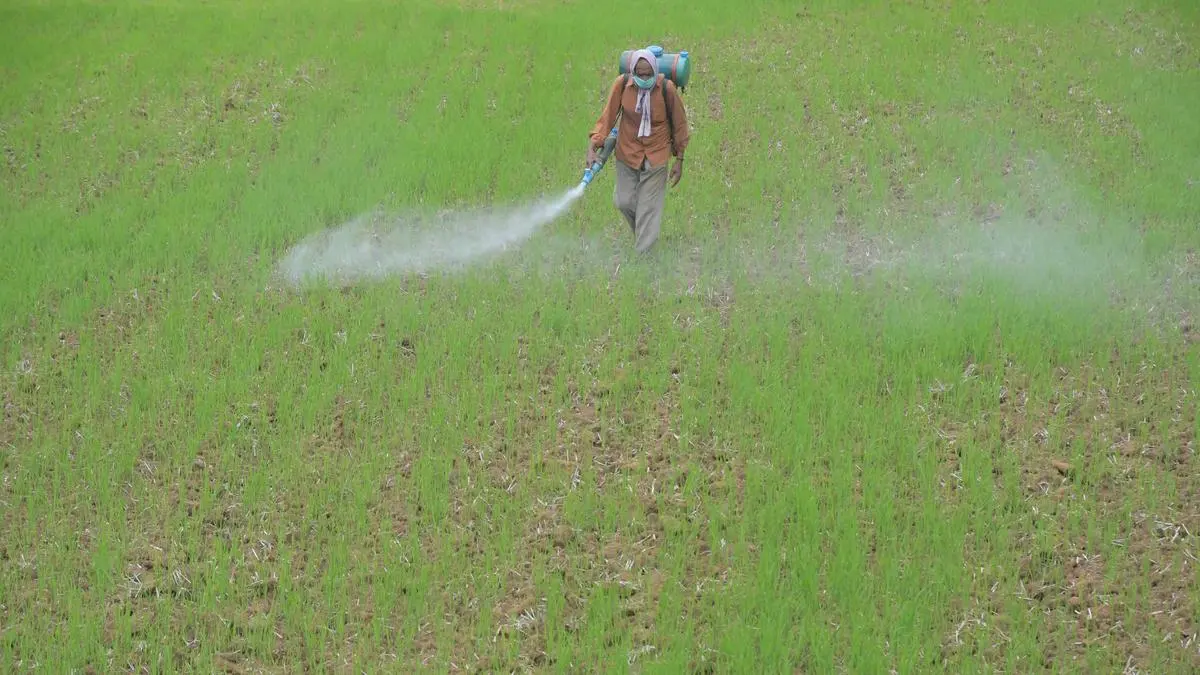
The Union Ministry of Agriculture and Farmers Welfare has proposed a complete ban on the insecticide Carbosulfan, citing its high toxicity and environmental risks. The draft order prohibits import, manufacture, sale, transport, distribution and use, and directs the Registration Committee to recall all certificates of registration.

iG
iGEN Editorial
August 25, 2026
Centre proposes complete ban on Carbosulfan insecticide over health, environmental risks

The Union government has moved to ban Carbosulfan, a carbamate insecticide widely used on paddy, cotton, and horticulture crops in India, according to an official gazette notification issued by the Ministry of Agriculture and Farmers Welfare. The draft order proposes a complete ban on the insecticide, including the prohibition on the import, manufacture, sale, transport, distribution and use of Carbosulfan from the date of its publication.

What the draft order proposes

The draft order directs the Registration Committee to recall all certificates of registration granted for the insecticide. "If any person who holds the certificate of registration fails to return the certificate to the Registration Committee, referred to in clause (2), within a period of three months, action shall be taken under the provisions contained in the said Act," the draft noted. The Centre has urged all State governments to take necessary steps under the provisions of the Act and the rules framed thereunder to implement the order.

The proposed ban covers the entire supply chain within India:

Prohibited activity Scope
Import Barred from the date of publication
Manufacture Barred from the date of publication
Sale Barred from the date of publication
Transport Barred from the date of publication
Distribution Barred from the date of publication
Use Barred from the date of publication

Who is affected

The proposal affects all entities handling Carbosulfan in India, including importers, manufacturers, formulators, distributors, retailers and agricultural users. The insecticide is described as widely used on paddy, cotton, and horticulture crops. Overseas suppliers exporting Carbosulfan to India would also be caught by the import prohibition once the order takes effect.

Regulatory process and timeline

The Ministry of Agriculture and Farmers Welfare formed an Expert Committee on January 14, 2026 to review the continued use of Carbosulfan in India. The committee submitted its report to the government on June 12, 2026. The government then consulted the Registration Committee constituted under the Insecticides Act, 1968. After reviewing the available studies, data and safety concerns, the Registration Committee recommended a complete ban on Carbosulfan in India.

Key date Milestone
January 14, 2026 Expert Committee formed
June 12, 2026 Expert Committee report submitted
August 25, 2026 Gazette notification published

Basis for the recommendation

The notification states: "Registration Committee has noted in its recommendation that Carbosulfan is an intrinsically highly hazardous carbamate insecticide which is rapidly metabolised to carbofuran, a highly toxic metabolite responsible for severe cholinesterase inhibition and acute systemic toxicity; significant toxicity of Carbosulfan to birds, pollinators, aquatic organisms and other non-target species, together with international regulatory actions restricting or prohibiting its use in several countries."

There is no specific antidote to reverse Carbosulfan poisoning.

The committee concluded that continued use of the insecticide could pose significant risks to public health and the environment. Based on these concerns, the Registration Committee recommended an immediate and complete ban on the manufacture, import, transport, distribution, sale and use of Carbosulfan in India under the Insecticides Act, 1968.

Compliance obligations and deadlines

  • Certificate holders must return their certificates of registration to the Registration Committee within three months of the order, failing which action will be taken under the Insecticides Act, 1968.
  • State governments are required to take necessary steps under the Act and its rules to implement the order.
  • Companies holding registrations, import orders, or distribution contracts for Carbosulfan should track the final notification and the three-month certificate return window.

Sources: AGRI_TIO

Keep Reading

Recommended Stories

India Poised to Ban Carbosulfan, Citing Health Risk to Human and Animal Population Regulations & Compliance

India Poised to Ban Carbosulfan, Citing Health Risk to Human and Animal Population

India's Agriculture Ministry has proposed an immediate ban on the insecticide Carbosulfan under the Insecticides Act, 1968, following a Registration Committee recommendation that it poses risks to human and animal health. Stakeholders have until September 19 to submit feedback before the draft order takes effect. The ban would affect FMC India's Marshal brand and comes as FMC Corporation sells its India crop protection business to Crystal Crop Protection for $252 million.

August 25, 2026
India considers restricting Carbosulfan insecticide use weeks after proposing ban on Paraquat Regulations & Compliance

India considers restricting Carbosulfan insecticide use weeks after proposing ban on Paraquat

The Hindu BusinessLine reported that India is considering placing the insecticide Carbosulfan under restricted use by the end of August 2026, after proposing a blanket ban on Paraquat Dichloride in July. The Agriculture Ministry acted on a CIB&RC recommendation; FMC India's Marshal brand and the FMC-Crystal Crop Protection deal are in focus.

August 9, 2026
India proposes blanket ban on Paraquat herbicide, citing severe toxicity risks Commodities

India proposes blanket ban on Paraquat herbicide, citing severe toxicity risks

The Indian government has issued a draft order proposing a complete ban on the herbicide Paraquat Dichloride, citing severe toxicity to humans and animals. The ban would halt manufacture, import, sale, and distribution, affecting millions of farmers and a domestic market that saw sales of 1.05 lakh tonnes in 2023-24. Stakeholders have 30 days to submit feedback before the ban is finalised.

July 14, 2026
Indian industry seeks legal backing of gene editing in proposed Seed Bill Regulations & Compliance

Indian industry seeks legal backing of gene editing in proposed Seed Bill

The Hindu BusinessLine reported that India may formally adopt gene editing in the proposed Seed Bill to avoid the GM crop experience. The government has finalised the Bill with Parliament approval pending, while ASSOCHAM recommended scaling gene editing and Bharatiya Kisan Sangh objected to the term 'transgenic'.

August 3, 2026