Pharmaceutical and biotech supply chains face mounting pressure to maintain product integrity as advanced therapies demand near-zero tolerance for temperature deviations. United Parcel Service (UPS) has invested $48 million to open 27 temperature-controlled truck cross-dock facilities worldwide, directly targeting the handoff points where most cold-chain failures occur, according to FreightWaves.
Strategic Investment in Cold Chain
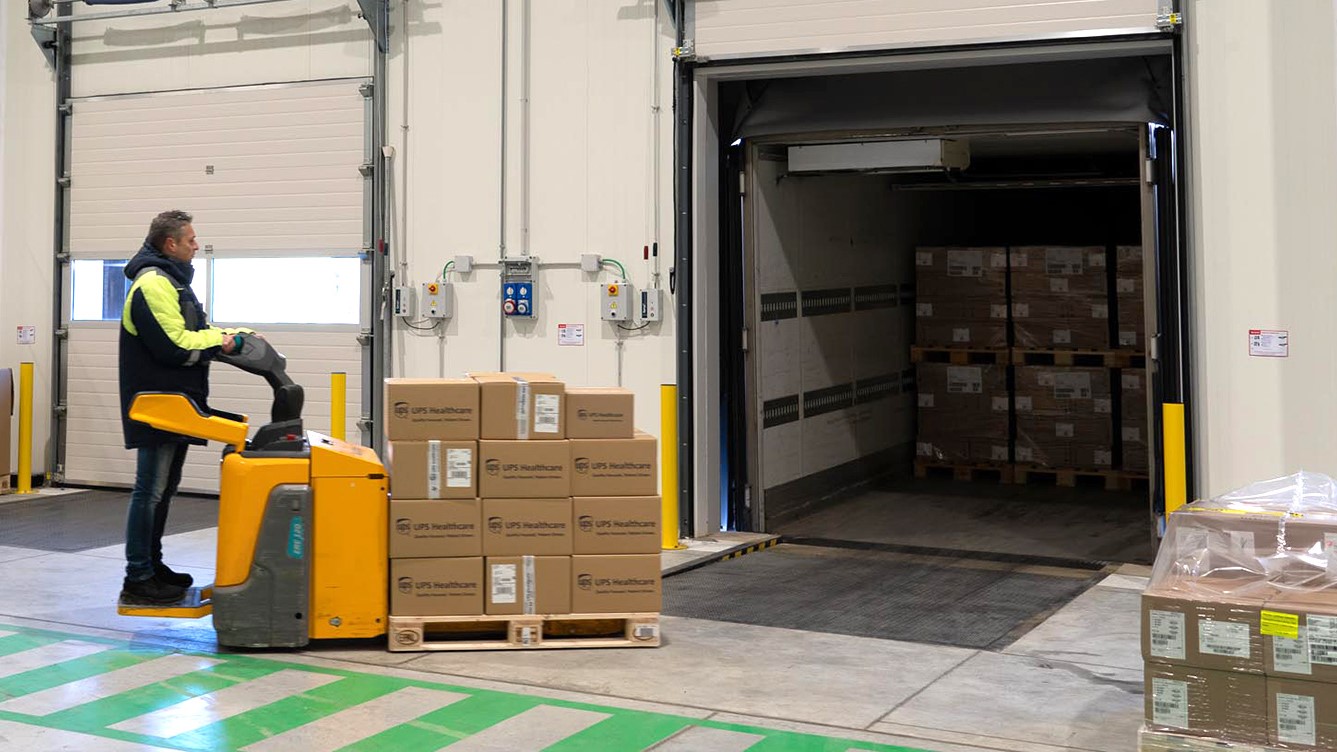
The new facilities are located in Europe, Asia and the Americas near key air and multimodal hubs, designed for rapid air-to-ground and ground-to-ground transfer while minimizing traditional warehouse storage. All comply with pharmaceutical handling standards established by the International Air Transport Association (IATA), UPS said in a Monday news release. In late 2024, the company added two healthcare-focused cross-dock facilities in Milan, Italy, and Frankfurt, Germany.
The expansion builds on a series of acquisitions: the $1.6 billion purchase of Andlauer Healthcare Group in Canada (completed November 2025), the 2022 acquisition of Italian healthcare logistics provider Bomi Group, and the January 2025 purchase of two German temperature-controlled logistics providers — Frigo-Trans and BPL. Additionally, UPS's recently expanded air cargo terminal at Incheon International Airport in Seoul, South Korea, includes a temperature-controlled facility for pharmaceutical and perishable food customers.
Market Demand and Risk Quantification
The fast-growing popularity of advanced therapies — including cell and gene treatments, mRNA vaccines, and GLP-1 weight-loss drugs — has increased demand for precision cold-chain services. According to Growth Market Reports, demand for temperature-sensitive biologics is projected to expand at an 8.3% compound annual growth rate through 2033, reaching an estimated $39.1 billion.
Cold-chain failures remain a critical industry risk. The World Health Organization estimates that such failures cost up to $35 billion per year and contribute to up to 50% of global vaccine waste. Temperature deviations from defined parameters are a major concern for drug makers, especially for next-generation medicines with much higher value and lower tolerance for shipping errors, according to UPS officials.
| Cold-Chain Failure Cost Factors | Annual Impact |
|---|---|
| Global cold-chain failure cost | Up to $35 billion |
| Contribution to global vaccine waste | Up to 50% |
| Projected biologics market (2033) | $39.1 billion (8.3% CAGR) |
| UPS healthcare quarterly revenue (Q1 2026) | Over $3 billion (first time) |
Technology and Monitoring
Each shipment moving through a cross-dock is continually monitored with sensors, allowing staff to quickly intervene if there are signs of temperature changes. "What's new here is greater network integration across air and ground flows, more control at handoff points, historically a major risk area, and faster, more consistent movement of temperature-sensitive freight," said Kiel Harkness, vice president of healthcare strategy, in an email. "It's about closing gaps in how the network operates for complex healthcare shipments. Every time a shipment changes hands or modes, there's potential for delays, temperature excursions and loss of visibility."
Industry Response and Best-Practice Alternatives
UPS has targeted healthcare logistics as a primary growth avenue as demand for traditional, low-yield parcel delivery slows and profit margins erode. Pharmaceutical and life sciences companies are willing to pay a premium for complex services required to maintain ultra-sensitive medicines and biologics at optimum temperature throughout the supply chain journey, according to FreightWaves. The company began expanding its healthcare unit before the COVID-19 pandemic and has since invested heavily in cold-chain distribution facilities, packaging, and transport for handling goods with strict temperature requirements — ranging from 35.6°F to 46.4°F, 59°F to 77°F, and frozen.
Two years ago, UPS said it planned to double revenue in healthcare logistics to $20 billion through organic growth and acquisitions by the end of 2026. Management said during the first-quarter earnings presentation on April 28 that the company recently topped $3 billion in healthcare revenue for a quarter for the first time.
Forward Outlook
For procurement and logistics leaders, the expansion signals that major carriers are investing heavily in integrated, temperature-controlled networks to reduce the risk of excursions at handoff points — the most vulnerable stage in cold-chain transport. The 27 new cross-docks, combined with UPS's acquisition spree and facility upgrades, create a more seamless network for high-value biologics. The $48 million investment is relatively small compared to the $35 billion annual cost of failures, suggesting that such infrastructure can deliver strong ROI by minimizing waste and protecting product integrity. As demand for biologics grows at 8.3% CAGR, logistics providers that can demonstrate superior cold-chain control will command premium contracts from pharmaceutical manufacturers.
Sources: