
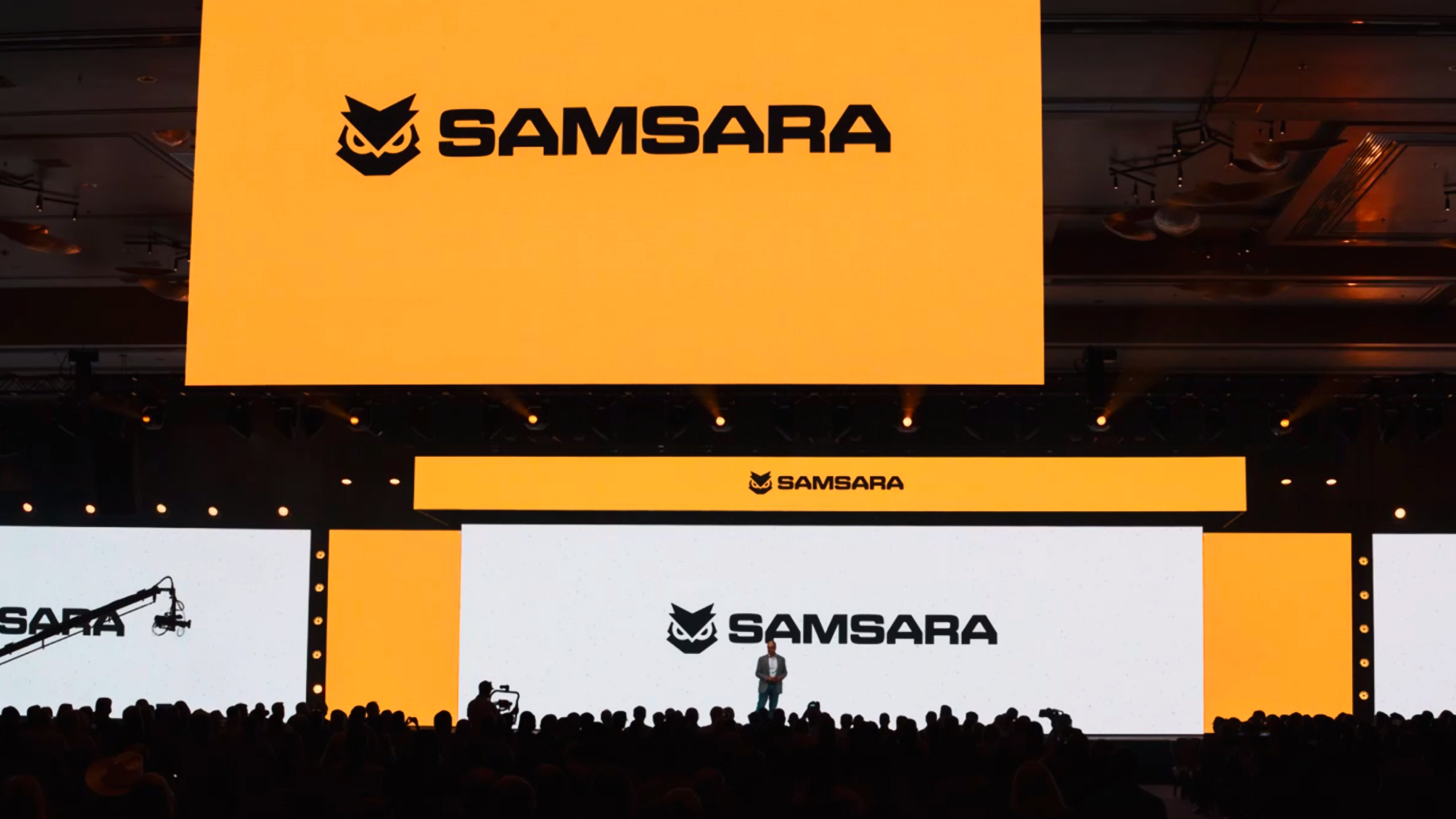
Samsara spent a decade turning telematics data into an AI orchestration layer for the physical economy. Now the company has given that decade a new face.
Earlier this week, the San Francisco-based company unveiled its first major visual overhaul since founding, exchanging its original look for a reimagined owl, a custom typeface built from the handwriting of Samsara’s own engineers, and a high-visibility yellow pulled straight from the worksite, according to FreightWaves. The rebrand lands the same week Samsara disclosed it has crossed $2 billion in annual recurring revenue, growing 30% year over year.
A Brand Built From Operator Feedback
Samsara noted it built the new identity the way it says it builds products: with the people who use them. “We approached the new brand exactly how we build products: side by side with operators,” said Meagen Eisenberg, Samsara’s chief marketing officer, as reported by FreightWaves. “We ran dozens of customer interviews and on-site visits, and that research shaped every detail of the new brand, down to the environments we drew from and the details we chose to include. The result is a brand that matches our customers’ aspirations for the next decade.”
The company grounded the redesign in the visual language of construction sites, truck cabs, and field operations, the places where its customers actually work. Its stated ethos, “Built with operators,” runs through every element of the new look, according to FreightWaves. That research-first approach tracks with how Samsara frames its own evolution: what started as a telematics vendor now serves as what the company calls the AI orchestration layer for construction, logistics, energy, retail, and manufacturing — industries that together account for 80% of the global workforce and more than 40% of global GDP.
Customers Back the New Identity
Samsara brought customers directly into the process, and two of them backed the result on the record. Tom Olitsky, vice president of safety at Performance Food Group (PFG), said: “When it comes to innovation, what matters to PFG is impact, and Samsara delivers. Safer operations. Smarter decisions. Real results for our teams. The new brand reflects that same operators-first approach, and it’s an exciting next chapter for a partner that’s earned our trust.” James Banner, senior vice president of administration and safety at Pike, advised on the identity directly, according to FreightWaves.
Banner added: “Pike builds and maintains critical infrastructure that communities depend on. That’s the work I came up doing starting as a groundman in 1997, and it’s work Samsara understands in a way few technology companies do. They are a rare tech partner where I can see a straight line from operators’ feedback to the products they launch. What stands out now is seeing that same focus and collaboration showing up in the brand itself.”
Financial Growth and Product Momentum
The timing isn’t incidental. Samsara has released more than 200 features annually and has put more than $1 billion into R&D since its founding, funding recent launches including the Samsara Tracking Label, Agent Studio, and AI Multicam, FreightWaves reported. The company says its largest customers are also its fastest-growing, expanding their use of the platform toward running entire operations rather than a single fleet or site.
Emerging products such as AI-powered coaching and asset tracking are collectively approaching $150 million in ARR and already drive more than 20% of net new business — a signal that the growth engine is broadening beyond Samsara’s original telematics core.
Implications for Enterprise Technology Decision-Makers
For CTOs and supply chain technology managers, Samsara’s rebrand and financial milestone underscore the maturation of IoT and AI orchestration platforms in the physical economy. The company’s operator-first approach, mirrored in the rebrand, indicates that technology vendors are increasingly designing for field workers, not just office users. With $2 billion in ARR and 30% annual growth, Samsara demonstrates that connected operations platforms can achieve scale while maintaining high customer expansion. The focus on AI-powered coaching and asset tracking — now approaching $150 million in ARR — suggests that adjacent use cases beyond telematics are becoming meaningful revenue drivers, providing a roadmap for technology buyers evaluating platform investments.
Sources:


