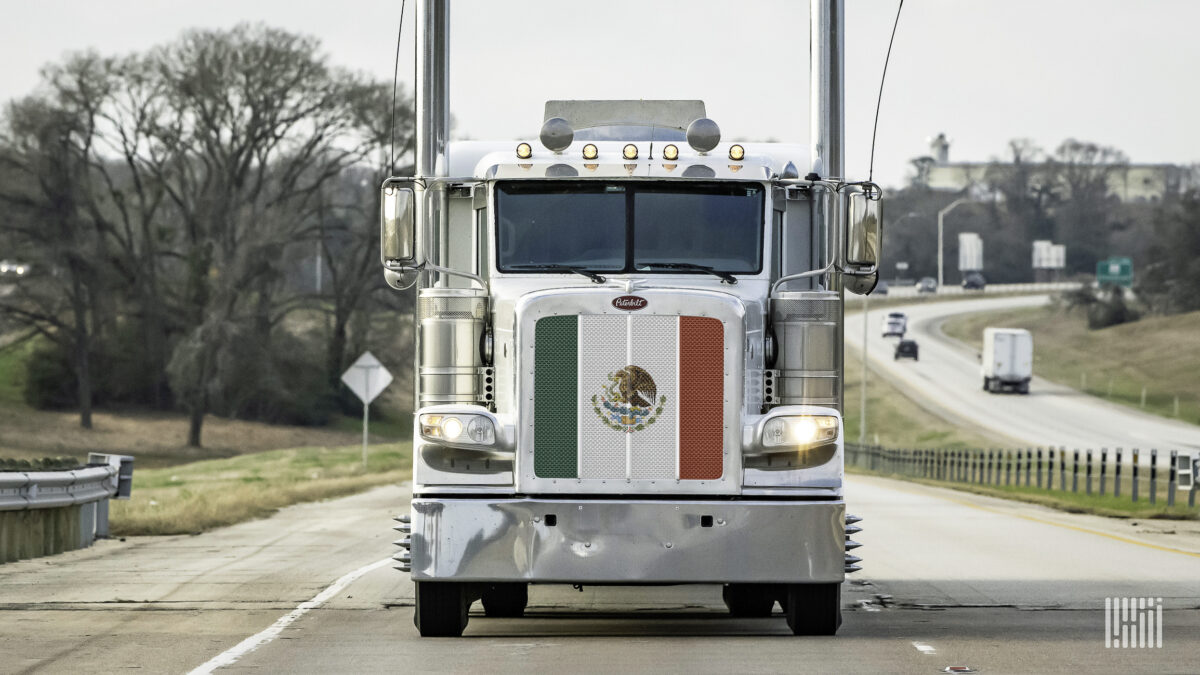
Mexico remained the largest U.S. trading partner in April, extending a streak that began in 2023 and highlighting the continued strength of North American supply chains, according to data from the U.S. Census Bureau analyzed by WorldCity. The surge in cross-border trade continues despite growing uncertainty surrounding the future of the United States-Mexico-Canada Agreement (USMCA) trade pact, according to President Donald Trump.
Trump casts doubt on USMCA renewal
On Wednesday, Trump said the U.S. may not renew the agreement, arguing that the U.S. does not need imports from its North American neighbors and should receive more favorable trade terms. According to Reuters, Trump stated: “I’m not looking to renew it. We don’t need anything that Canada has. We don’t need anything that Mexico has, but they need everything that we have. They have to treat us better.”
Under the agreement, the three countries must approve a renewal by July 1 or signal their intention to withdraw, a process that could trigger a lengthy renegotiation period. Despite Trump’s comments, USMCA negotiations are ongoing. The Office of the U.S. Trade Representative has scheduled a second round of talks with Mexico in Washington on Wednesday and Thursday focused on agriculture and competitive trade practices. It will be followed by additional discussions in Mexico City during the week of July 20.
Mexico extends lead over Canada in U.S. trade rankings
Two-way trade between the U.S. and Mexico totaled $86.04 billion in April, up 23.4% from the same month a year earlier, according to U.S. Census Bureau data analyzed by WorldCity. U.S. exports to Mexico reached $35.34 billion, while imports were $50.69 billion. Mexico accounted for 16.6% of all U.S. trade in April and ranked first among U.S. trading partners in overall commerce, exports, and imports. The April total was the highest monthly trade value with Mexico since WorldCity began tracking the data in 2013.
| Trading Partner | Two-Way Trade (April, $B) | Rank |
|---|---|---|
| Mexico | $86.04 | 1 |
| Canada | $64.80 | 2 |
| Taiwan | $29.60 | 3 |
| China | $29.20 | 4 |
Canada ranked second among U.S. trading partners with $64.8 billion in two-way trade during April, while Taiwan surged to third place at $29.6 billion. China slipped to fourth place at $29.2 billion in trade with the U.S., marking one of its lowest rankings among U.S. trading partners in decades as tariffs and supply-chain diversification continue to reshape global commerce.
Overall U.S. trade totaled $518.45 billion in April, with exports of $218 billion and imports of $300.46 billion. Total trade increased 11.6% compared to April 2025.
Border gateways drive growth
Cross-border land ports continued to dominate U.S.-Mexico commerce. Port Laredo remained the busiest U.S.-Mexico gateway in April, handling $33.35 billion in trade, a 21% increase from a year earlier. The crossing accounted for nearly 39% of all U.S.-Mexico trade by value.
Other leading gateways included:
- Ysleta-Zaragoza International Bridge in El Paso: $12.27 billion
- Otay Mesa, California: $4.99 billion
- Santa Teresa, New Mexico: $4.88 billion
- Eagle Pass, Texas: $4.05 billion
The strength of border trade was also reflected in national rankings. Port Laredo was the busiest U.S. trade gateway overall in April, handling $34.16 billion in commerce with all trading partners, ahead of Chicago O’Hare International Airport ($33.9 billion) and John F. Kennedy International Airport ($29.1 billion).
Sources: